Kek batik (lit. ‘Batik cake‘) is a type of Malaysian no-bake fridge cake dessert inspired by the Scottish tiffin, brought in the country during the British Malaya and Borneo period,[2] and adapted with Malaysian ingredients. This cake is made by mixing broken Marie biscuits combined with a chocolate sauce or runny custard made with egg, butter/margarine, condensed milk, Milo[1] and cocoa powder.[3] The cake is served during special occasions like the Eid al-Fitr, Christmas and other festivities.[2][4]
Origin and background
The cake has origins from the early 1900s Scotland;[2][5] and was initially introduced during British colonial times in Sarawak but gained immense popularity in the neighbouring state of Sabah,[6][7] becoming an essential dessert for numerous festive celebrations in East Malaysia before spreading to West Malaysia as well as neighbouring Brunei and Singapore.[6][7][8] Batik cake gets its name from the pattern of how the cake is cut out, which resembles the motif of batik clothing when the biscuits are broken and mixed with the chocolate mixture, subsequently forming a unique and irregular alternating abstract pattern when cut.[7] It is one of the very few Malaysian desserts that does not use any tropical ingredients, similar to hedgehog slice and the latest Prince William chocolate biscuit cake, although with some different ingredients.[4][7] In Brunei, the Batik cake is covered by green colour topping.[9]
Preparation
The cake is made by breaking Marie biscuits into halves or quarters and preparing its chocolate base in a large pot or wok by melting the butter over medium-low heat for 2–3 minutes,[10] followed by the adding of chicken eggs and vanilla extract. The broken biscuits will then be added to the chocolate mixture and continuously stirred until all of the biscuits are coated, then transferred into a prepared pan covered with parchment paper or aluminium foil in the bottom and left to cool at room temperature before being refrigerated for at least 3–4 hours.[2][10]
Gallery
-
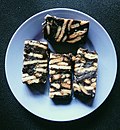 Batik cake cut into several pieces
 -
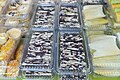 Batik cake sold at the Gaya Street market of Kota Kinabalu District
 -
 Other variety of Batik cake from Brunei with green topping
 -
 Batik cake with chocolate sprinkles


See also


References
- ^ a b Khor, Samantha (19 March 2015). “11 Sinful Recipes That Can Only Be Achieved With A Lot Of MILO”. Says.com. Archived from the original on 19 April 2018. Retrieved 19 April 2018.
- ^ a b c d Aebischer, Camellia Ling (17 April 2023). “Slice off a piece of history with Malaysia’s no-bake batik cake”. SBS Food (Australia). Archived from the original on 7 April 2025. Retrieved 7 April 2025.
- ^ “Kek Batik Coklat” [Chocolate Batik Cake]. mStar (in Malay). 1 August 2014. Archived from the original on 11 May 2016. Retrieved 11 May 2016.
- ^ a b Ragavan, Jane F. (1 August 2014). “No-bake, last-minute desserts for Christmas”. Star2. Archived from the original on 11 May 2016. Retrieved 21 December 2015.
- ^ “Batik Cake Recipe with a Scottish history”. Blue Tea (Australia). 12 July 2023. Archived from the original on 16 June 2026. Retrieved 16 June 2026.
- ^ a b “Kek Batik” [Batik Cake]. QL Kitchen. Archived from the original on 10 March 2026. Retrieved 16 June 2026.
- ^ a b c d Lau, Ian (15 March 2025). “Patterned sweet treat with history blended in”. The Star. Archived from the original on 16 June 2026. Retrieved 16 June 2026.
- ^ Dodd, Seetha Nambiar (4 November 2021). “This batik cake transports me to my Malaysian childhood”. SBS Food (Australia). Archived from the original on 16 June 2026. Retrieved 16 June 2026.
- ^ Ak. Jefferi Pg. Durahman (27 October 2014). “Kekalkan Warisan Kuih Tradisi Brunei” [Preserve the Heritage of Bruneian Traditional Kuih]. Pelita Brunei (in Malay). Archived from the original on 17 November 2016. Retrieved 11 May 2016.
- ^ a b “Kek Batik”. Ash Baber. 4 March 2025. Archived from the original on 16 June 2026. Retrieved 16 June 2026.

| Dishes |
| ||||||||
|---|---|---|---|---|---|---|---|---|---|
| Snacks |
| ||||||||
| Drinks |
| ||||||||

| Articles | |||||||
|---|---|---|---|---|---|---|---|
| Dishes |
| ||||||
| Snacks and desserts | |||||||
| Drinks | |||||||