EPIC (ESA Provided Institutional Crew) is a planned crewed spaceflight mission of the European Space Agency (ESA) to the International Space Station (ISS). The mission is to be flown aboard a Crew Dragon spacecraft provided by SpaceX in early 2028.[1]
Background
The EPIC project was approved by the ESA Council at the conclusion of its 345th meeting on 19 March 2026.[2] According to ESA Director General Josef Aschbacher, the mission aims to provide more flight opportunities to European astronauts during the final years of ISS operations, whose retirement is planned around 2030.[1]
In 2022, the ESA selected five career astronauts with the goal of giving them flight opportunities to the ISS before the end of the program. EPIC is intended to supplement the long-duration mission opportunities already planned or under consideration for these astronauts.[1]
Objectives
The EPIC mission aims to allow the ESA to lead a crewed mission to the ISS in order to conduct scientific research, continue European utilization of the station, and increase the agency’s operational experience in human spaceflight.[1]
According to Daniel Neuenschwander, the mission is also intended to differ from private astronaut missions by having a longer duration and greater crew involvement in ISS maintenance activities, in addition to scientific experiments.[1]
Planned mission
EPIC will consist of the ESA chartering a dedicated Crew Dragon mission to the ISS in early 2028.[1] The crew will consist of four people, comprising ESA astronauts and possibly non-European international partners.[1]
The mission is expected to last approximately one month, significantly longer than typical private astronaut missions to the ISS, which usually last about two weeks.[1] It will be carried out in “close cooperation” with NASA, while being directed and operated by the ESA.[1]
The ESA has not yet announced the crew composition or the anticipated cost of the mission.[1]
Crew
The mission will carry one professional commander who has already flown to the ISS, and three ESA or partner agency astronauts.
References
External links


See also: ISS expeditions, Uncrewed ISS flights | ||
| 1998–2004 |
|  |
| 2005–2009 | ||
| 2010–2014 | ||
| 2015–2019 |
| |
| 2020–2024 |
| |
| Since 2025 | ||
| Future |
| |
| Individuals | ||
| Vehicles |
| |
| ||
| Spacecraft |  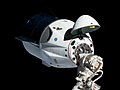 | ||||||
|---|---|---|---|---|---|---|---|
| Hardware | |||||||
| Missions |
| ||||||
| |||||||
| General |          | ||||||||||||||
|---|---|---|---|---|---|---|---|---|---|---|---|---|---|---|---|
| Facilities | |||||||||||||||
| Earth-based activities | |||||||||||||||
| Companies | |||||||||||||||
| Crewed spacecraft |
| ||||||||||||||
| Space stations |
| ||||||||||||||
| Cargo spacecraft |
| ||||||||||||||
| Missions |
| ||||||||||||||
