Mary Henrietta Kingsley (13 October 1862 – 3 June 1900) was an English explorer, travel writer, and ethnographic observer known for her journeys through West Africa and for her influential writings on African societies and colonial policy.
Between 1893 and 1895 she travelled widely in regions of present-day Sierra Leone, Angola, Gabon, and Cameroon, often journeying alone in areas rarely visited by Europeans. During these expeditions she collected zoological specimens for the British Museum and documented local religious practices, social customs, and political systems.
Kingsley later published two widely read books, Travels in West Africa (1897) and West African Studies (1899), which combined travel narrative with ethnographic observation and commentary on British imperial policy. Her writings made her one of the most prominent European commentators on West Africa at the end of the nineteenth century.
Early life
Kingsley was born in Islington, London on 13 October 1862,[1] the daughter and oldest child of physician, traveller and writer George Kingsley and Mary Bailey.[2] She came from a family of writers, as she was also the niece of novelists Charles Kingsley and Henry Kingsley.[2] The family moved to Highgate less than a year after her birth, the same home where her brother Charles George R. (“Charley”) Kingsley was born in 1866; in 1879 they moved to Bexleyheath in Kent and in 1886 to Cambridge.[2]
Her father was a physician and worked for George Herbert, 13th Earl of Pembroke and other aristocrats and was frequently away from home traveling.[2] During these voyages he collected information for his studies. Dr. Kingsley accompanied Lord Dunraven on a trip to North America from 1870 to 1875. During the trip, Dr. Kingsley was invited to accompany United States Army officer George Armstrong Custer‘s expedition against the Sioux. The subsequent Battle of the Little Bighorn terrified the Kingsley family, but they were relieved to learn that bad weather had kept Dr. Kingsley from joining Custer. It is possible that her father’s views on the brutal treatment of Native Americans in the United States helped shape Mary’s later opinions on European colonialism in West Africa.[3]
Mary Kingsley had little formal schooling compared to her brother, other than German lessons at a young age;[4] because, at that time and at her level of society, education was not thought to be necessary for a girl.[5] She did, however, have access to her father’s large library and loved to hear his stories of foreign countries.[6] She did not enjoy novels that were deemed more appropriate for young ladies of the time, such as those by Jane Austen or Charlotte Brontë, but preferred books on the sciences and memoirs of explorers. In 1886, her brother Charley entered Christ’s College, Cambridge, to read law; this allowed Mary to make several academic connections and a few friends.[2]
There is little indication that Kingsley was raised Christian; instead, she was a self-proclaimed believer with, “summed up in her own words […] ‘an utter faith in God'” and even identified strongly with what was described as ‘the African religion’.[7] She is known for criticizing Christian missionaries and their work for supplanting pre-existing African cultures without proving any material benefits in return.[8]
The 1891 England census finds Mary’s mother and her two children living at 7 Mortimer Road, Cambridge, where Charles is recorded as a BA Student at Law and Mary as a Student of Medicine. In her later years, Kingsley’s mother became ill, and she was expected to care for her well-being.[2] Unable to leave her mother’s side, she was limited in her travel opportunities. Soon, her father was also bedridden with rheumatic fever following an excursion.[2]
Kingsley’s father died in February 1892 and her mother died a few months later in April of the same year.[2] Their deaths left her an inheritance of £8,600, to be divided equally with her brother. At the age of 29, with her family obligations ended and financial independence secured, she was finally able to travel.[9]
Travels in Africa
After a preliminary visit to the Canary Islands in 1892, Kingsley decided to travel to the west coast of Africa in August 1893.[2] Generally, the only non-African women who embarked on (often dangerous) journeys to Africa were the wives of missionaries, government officials, or explorers. Exploration had not been seen as a fitting role for English women, though this was changing under the influence of figures such as Isabella Bird and Marianne North. African women were surprised that a woman of Kingsley’s age was travelling without a man, as she was frequently asked why her husband was not accompanying her.
Kingsley landed in Sierra Leone on 17 August 1893 and from there travelled further to Luanda in Angola.[2] She lived with local people, who taught her necessary surviving-skills for living in the wilderness, acted as luggage porters and guides for her travels, and gave her advice. She often went into dangerous areas alone. Her training as a nurse at the Kaiserswerther Diakonie had prepared her for slight injuries and jungle maladies that she would later encounter. Kingsley returned to England via Liverpool in December 1893.[2]
Upon her return, Kingsley secured support and aid from Dr. Albert Günther, a prominent zoologist at the British Museum, as well as a writing agreement with publisher George Macmillan, for she wished to publish her travel accounts.[2]
She sailed to Africa again from 23 December 1894 with more support and supplies from England and in the company of Ethel MacDonald.[2] She longed to study “cannibal” people and their traditional religious practices, commonly referred to as “fetish” during the Victorian Era. In April, she traveled to become acquainted with Scottish missionary Mary Slessor,[2] another European woman living among native African populations with little company and no husband. It was during her meeting with Slessor that Kingsley first became aware of the custom of twin killing, a custom which Slessor was determined to stop. The native people believed that one of the twins was the offspring of the devil who had secretly mated with the mother and since the innocent child was impossible to distinguish, both were killed and the mother was often killed as well for attracting the devil to impregnate her. Kingsley arrived at Slessor’s residence shortly after she had taken in a recent mother of twins and her surviving child.[10]
In May, she traveled to Gabon. There, she canoed up the Ogooué River, where she collected specimens of fish previously unknown to western science, three of which were later named after her.[2] In August she visited Corisco Island.[2] After meeting the Fang people and travelling through uncharted Fang territory, she daringly climbed the 4,040 metres (13,250 ft) Mount Cameroon by a route not previously attempted by any other European.[2] She moored her boat at Donguila.[11]
Return to England
When she returned home on 30 November 1895, Kingsley was greeted by journalists eager to interview her.[2] The reports that were drummed up about her voyage, however, were most upsetting, as the papers portrayed her as a “New Woman“, an image which she did not embrace.[2] Kingsley distanced herself from any feminist movement claims, arguing that women’s suffrage was “a minor question; while there was a most vital section of men disenfranchised women could wait”.[12] Her consistent lack of identification with women’s rights movements may be attributed to a number of causes, such as the attempt to ensure that her work would be received more favorably; in fact, some insist this might be a direct reference to her belief in the importance of securing rights for British traders in West Africa.[13][page needed]
Over the next three years, she toured England, giving lectures about life in Africa to a wide array of audiences. She was the first woman to address the Liverpool and Manchester chambers of commerce.[2]
Kingsley upset the Church of England when she criticised missionaries for attempting to convert the people of Africa and corrupt their religions. In this regard, she discussed many aspects of African life that were shocking to English people, including polygamy, which, she argued was practiced out of necessity.[14] After living with the African people, Kingsley became directly aware how their societies functioned and how prohibiting customs such as polygamy would be detrimental to their way of life. She knew that the typical African wives had too many tasks to manage alone. Missionaries in Africa often required converted men to abandon all but one of their wives, leaving the other women and children without the support of a husband – thus creating immense social and economic problems.[15] Kingsley’s also criticised teetotal missionaries, suggesting that those who drank small quantities of alcohol had better survival rates.[16]
Kingsley’s beliefs about cultural and economic imperialism are complex and widely debated by scholars today. Though, on the one hand, she regarded African people and cultures as those who needed protection and preservation,[14] she also believed in the necessity of indirect rule and the adoption of European culture and technology by indigenous populations, insisting that there was some work in West Africa that had to be completed by white men.[17] Yet in Studies in West Africa she writes: “Although a Darwinian to the core, I doubt if evolution in a neat and tidy perpendicular line, with Fetish at the bottom and Christianity at the top, represents the true state of affairs.”[18] Other, more acceptable, beliefs were variously perceived and used in Western European society – by traders, colonists, women’s rights activists and others – and, articulated as they were in great style, helped shape popular perception of “the African” and “his” land.
Writing and publications
Kingsley wrote two books based on her travels in West Africa: Travels in West Africa (1897)[19] and West African Studies (1899).Travels in West Africa was an immediate commercial success and brought her wide public attention, while both works established her reputation among scholars and commentators interested in African societies and colonial policy.[13][page needed]
Some newspapers declined to review her work. The Times, under its pro-imperialist editor Flora Shaw, refused to publish a review of Travels in West Africa.[12] Scholars have sometimes attributed this reception to Kingsley’s criticism of aspects of missionary activity and colonial policy. However, Kingsley herself supported the activities of European traders in West Africa and advocated systems of indirect rule, positions that complicate simple interpretations of her views as anti-imperialist.[13][page needed][4][page needed]
Travels in West Africa was widely noted for its humour, detailed observation, and lively narrative style. Although often presented as an adventure narrative, Kingsley described her purpose in more scholarly terms, “My motive for going to West Africa was study; this study was that of native ideas and practices in religion and law.”[20]
She explained that the project was also intended to complete research begun by her father, the physician and traveller George Kingsley, whose work had been left unfinished at his death. Kingsley later wrote that her father’s work had seemed to promise “a career of great brilliancy and distinction – a promise which, unfortunately, was never entirely fulfilled”.[21]
Reflecting on her approach to writing about the people she encountered, Kingsley emphasised the importance of portraying individuals sympathetically. “It is merely that I have the power of bringing out in my fellow-creatures, white or black, their virtues, in a way honourable to them and fortunate for me.”[22]
Kingsley’s books combined travel narrative with ethnographic observation and commentary on West African societies, religion, and colonial administration. Through these works she became one of the most widely read European writers on West Africa at the end of the nineteenth century.[23]
Death

After the outbreak of the Second Boer War, Kingsley travelled to Cape Town on the SS Moor in March 1900,[24] and volunteered as a nurse. She was stationed at Simon’s Town hospital, where she treated Boer prisoners of war. After contributing her services to the ill for about two months, she developed symptoms of typhoid and died on 3 June 1900.[2][25][26] An eyewitness reported: “She rallied for a short time but realised she was going. She asked to be left to die alone, saying she did not wish anyone to see her in her weakness. Animals she said, went away to die alone.”[27][page needed]
In accordance with her wishes, she was buried at sea.[2] “This was, I believe, the only favour and distinction that she ever asked for herself; and it was accorded with every circumstance and honour … A party of West Yorkshires, with band before them, drew the coffin from the hospital on a gun carriage to the pier … Torpedo Boat No. 29 put to sea and, rounding Cape Point, committed her to the element in which she had chosen to be laid.”[27][page needed] “A touch of comedy, which would ‘have amused’ Kingsley herself, was added when the coffin refused to sink and had to be hauled back on board then thrown over again weighed down this time with an anchor.”[28]
Legacy
Kingsley’s tales and opinions of life in Africa helped draw attention to British imperial agendas abroad and the native customs of African people that were previously little discussed but misunderstood by people in Europe. The Fair Commerce Party formed soon after her death, pressuring for improved conditions for the natives of British colonies. The Royal African Society was founded in her memory in 1901.[29] Various reform associations were formed in her honour and helped facilitate governmental change. The Liverpool School of Tropical Medicine founded an honorary medal in her name.[30][31] In Sierra Leone, the Mary Kingsley Auditorium at the Institute of African Studies, Fourah Bay College (University of Sierra Leone), was named after her.
A BBC radio documentary broadcast on 31 October 1933, presented by Clifford Collinson, commemorated her voyages.[32]
Published works
Books
- Travels in West Africa, Congo Français, Corisco and Cameroons, London: Macmillan & Co., 1897
- West African Studies, London: Macmillan & Co., 1899
- The Story of West Africa, London: Horace Marshall & Son, 1899 (The Story of the Empire Series)
Articles
- Travels on the western coast of equatorial Africa. Scottish Geographical Magazine. 12 (3): 113–124. 1896.
Gallery
-
 Photographic portrait from Kingsley’s 1901 book West African Studies, published by Macmillan.
 -
 Photographic portrait – profile
 -
 Carved wooden portrait bust (Ibibio sculptor, Nigeria), World Museum Liverpool
 -
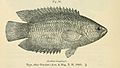 Plate depicting the fish species Ctenopoma kingsleyae – a climbing gourami named for Kingsley
 -

-
 “Avalon”, 22 Southwood Lane, Highgate: Kingsley’s childhood home
 -
 Blue plaque erected in 1975 by Greater London Council at “Avalon”


See also
References
Citations
- ^ “Kingsley, Mary Henrietta, 1862-1900”. Library of Congress. 4 August 2025. Retrieved 20 January 2026.
- ^ a b c d e f g h i j k l m n o p q r s t u v Birkett, D.J. (3 January 2008). “Kingsley, Mary Henrietta”. Oxford Dictionary of National Biography. doi:10.1093/ref:odnb/15620. Retrieved 21 January 2026.
- ^ Frank 2006, pp. 37–38.
- ^ a b Gwynn & Rattray 1932.
- ^ Wilcox 1975, p. 173.
- ^ Frank 2006, p. 28.
- ^ Gwynn & Rattray 1932, p. 362.
- ^ Kingsley 2002, p. xiv.
- ^ Frank 2006, p. 57.
- ^ Frank 2006, pp. 130–131.
- ^ Alexander 1990, p. 254.
- ^ a b Flint 1963, p. 96.
- ^ a b c Flint 1963.
- ^ a b Kingsley 2002, Introduction.
- ^ Frank 2006, pp. 157–159.
- ^ Armston-Sheret, Edward; Walker, Kim (December 2021). “Is alcohol a tropical medicine? Scientific understandings of climate, stimulants and bodies in Victorian and Edwardian tropical travel”. The British Journal for the History of Science. 54 (4): 476. doi:10.1017/S0007087421000649. ISSN 0007-0874. PMID 34558394.
- ^ Kingsley 2002, p. 454.
- ^ Kingsley 1901, p. 101.
- ^ “Kingsley, Mary H. (1862–1900)”. Encyclopedia.com. Retrieved 21 March 2026.
- ^ Kingsley 1901, p. xi.
- ^ Kingsley, George Henry; Kingsley, Mary Henrietta (1900). Notes on Sport and Travel. Macmillan & Co. p. 22.
- ^ Kingsley 1901, p. viii.
- ^ Frank 2006, pp. 160–170.
- ^ “The War in South Africa – Embarcation of Troops”. The Times. No. 36087. London. 12 March 1900. p. 7.
- ^ “Mary Kingsley”. Women in European History. Retrieved 18 October 2017.
- ^ “Death of Mary Kingsley”. History Today. Retrieved 18 October 2017.
- ^ a b Gwynn 1940.
- ^ Frank 2006, pp. 298–299.
- ^ Westcott, Nick (14 June 2021). “Africa, Britain and the Royal African Society: 120 Years of Change”. Royal African Society. Retrieved 20 January 2026.
- ^ “Mary Kingsley Medal”. LSTM. Retrieved 10 February 2026.
- ^ “Awards of the Mary Kingsley Medal”. Nature. 142 (3605): 988–988. 1 December 1938. doi:10.1038/142988b0. ISSN 1476-4687.
- ^ “Some More pioneers of Exploration – V”. Radio Times (526): 269. 29 October 1933. Archived from the original on 31 March 2025.
Sources
- Alexander, Caroline (1990). One dry season: in the footsteps of Mary Kingsley. Knopf. ISBN 978-0-394-57455-4.
- Flint, J.E. (1963). “Mary Kingsley — a reassessment”. The Journal of African History. 4 (1): 95–104. doi:10.1017/S002185370000373X. ISSN 0021-8537. S2CID 162460204.
- Frank, Katherine (2006). A Voyager Out: The Life of Mary Kingsley. Tauris Parke. ISBN 978-1-84511-020-8.
- Gwynn, Stephen; Rattray, R.S. (1932). “The Life of Mary Kingsley”. Journal of the Royal African Society. 31 (125): 354–365. JSTOR 716893.
- Gwynn, Stephen (1940). The Life of Mary Kingsley. Hammondswoth, Middlesex, England: Penguin Books. p. 174. ASIN B0014IGN0S.
- Kingsley, George Henry; Kingsley, Mary Henrietta (1900). Notes on Sport and Travel. Macmillan & Co.
- Kingsley, Mary Henrietta (1901). West African Studies (2nd ed.). Macmillan & Co.
- Kingsley, Mary Henrietta (2002) [1897]. Travels in West Africa (Adventure Classics ed.). National Geographic Society. ISBN 0-7922-6638-2.
- Lévi-Strauss, Claude (1967). Tristes Tropiques: an anthropological study of primitive societies in Brazil. New York: Atheneum.
- Wilcox, Desmond (1975). Ten who dared. Little, Brown. ISBN 978-0-913948-09-5.
Further reading
- Bausch, Richard (2009). Hello to the Cannibals: A Novel. New York: HarperCollins. ISBN 978-0-06-188208-1. (A fictional account involving Mary Kingsley).
- Birkett, Dea (1992). Mary Kingsley: Imperial Adventuress. Macmillan. ISBN 978-0-333-48920-8.
- Birkett, D. J. (3 January 2008). “Kingsley, Mary Henrietta”. Oxford Dictionary of National Biography (online ed.). Oxford University Press. doi:10.1093/ref:odnb/15620. (Subscription, Wikipedia Library access or UK public library membership required.)
- Blunt, Alison (1994). Travel, Gender, and Imperialism: Mary Kingsley and West Africa. Guilford Press. ISBN 978-0-89862-546-2.
- Brisson, Ulrike (Fall 2005). “Fish and Fetish: Mary Kingsley’s Studies of Fetish in West Africa”. Journal of Narrative Theory. 35 (3): 326–340. doi:10.1353/jnt.2006.0009. S2CID 161641683.
- Davidson, L.C. (1889). Hints to Lady Travellers. London.
{{cite book}}: CS1 maint: location missing publisher (link) - Flint, J.E. (1965). “Mary Kingsley”. African Affairs. 64 (256): 150–161. doi:10.1093/oxfordjournals.afraf.a095373.
- Ingemanson, Birgitta M. (1993). Bonnie Frederick; Sarah H. McLeod (eds.). “Under Cover: The Paradox of Victorian Women’s Travel Costume”. Women and the Journey: The Female Travel Experience. Pullman, WA: Washington State University Press.
- Lloyd, Clare (1985). The Travelling Naturalists. Croom Helm. ISBN 978-0-7099-1658-1. A study of 18th Century Natural History – includes Charles Waterton, John Hanning Speke, Henry Seebohm and Mary Kingsley. Contains colour and black and white reproductions. ISBN 0-7099-1658-2
- McLoone, Margo (1997). Women explorers in Africa: Christina Dodwell, Delia Akeley, Mary Kingsley, Florence von Sass Baker, and Alexandrine Tinne. Capstone. ISBN 978-1-56065-505-3.
- Middleton, Dorothy (1973). “Some Victorian Lady Travellers”. The Geographical Journal. 139 (1): 65–75. Bibcode:1973GeogJ.139…65M. doi:10.2307/1795796. ISSN 0016-7398. JSTOR 1795796.
- Murray, Sabina (2011). Tales of the New World. Black Cat. ISBN 978-0-8021-7083-5. (The opening short story, Fish, is a fictional account of Kingsley’s life)
- Myer, Valerie Grosvenor (1989). A Victorian lady in Africa: the story of Mary Kingsley. Ashford, Buchan & Enright. ISBN 978-1-85253-099-0.
- Woolf, Virginia (1938). Three Guineas. Hogarth Press. (An interesting look at women, race, and civilization, though not directly related to Mary Kingsley).
External links
- Mary Henrietta Kingsley Papers (MS 1485). Manuscripts and Archives, Yale University Library.
- “Archival material relating to Mary Kingsley”. UK National Archives.
- Mary H. Kingsley, 1862-1900 at the Tom Perry Special Collections, Brigham Young University
- Works by Mary Henrietta Kingsley at Project Gutenberg
- Works by or about Mary Kingsley at the Internet Archive
- Works by Mary Kingsley at LibriVox (public domain audiobooks)

