The clade[1][2][3][4] Multicrustacea constitutes the largest superclass of crustaceans, containing approximately four-fifths of all described non-hexapod crustacean species, including crabs, lobsters, crayfish, shrimp, krill, prawns, woodlice, barnacles, copepods, amphipods, mantis shrimp and others. The largest branch of Multicrustacea is the class Malacostraca (see below).
Classification
- Superclass Multicrustacea Regier, Shultz, Zwick, Hussey, Ball, Wetzer, Martin & Cunningham, 2010[5]
- Class Unknown
- Order Unknown
- †Family Priscansermarinidae Newman, 2004
- Order Unknown
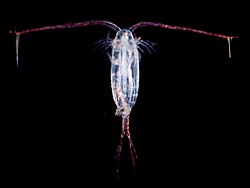
- Class Copepoda Milne-Edwards, 1840 – Copepods[a]
- Infraclass Neocopepoda Huys & Boxshall, 1991
- Superorder Gymnoplea Giesbrecht, 1882
- Order Calanoida Sars GO, 1903
- Superorder Podoplea Giesbrecht, 1882
- Order Cyclopoida Burmeister, 1834
- Order Gelyelloida Huys, 1988
- Order Harpacticoida G. O. Sars, 1903
- Order Misophrioida Gurney, 1933
- Order Monstrilloida Sars, 1901
- Order Mormonilloida Boxshall, 1979
- Order Polyarthra Lang, 1944 (=Canuelloida Khodami, Vaun MacArthur, Blanco-Bercial & Martinez Arbizu, 2017 )
- Order Siphonostomatoida Thorell, 1859
- Superorder Gymnoplea Giesbrecht, 1882
- Infraclass Progymnoplea Lang, 1948
- Order Platycopioida Fosshagen, 1985
- Infraclass Neocopepoda Huys & Boxshall, 1991
- Class Thecostraca Gruvel, 1905[7][a]
- Subclass Ascothoracida Lacaze-Duthiers, 1880
- Order Dendrogastrida Grygier, 1987
- Order Laurida Grygier, 1987
- Subclass Cirripedia Burmeister, 1834
- Infraclass Acrothoracica Gruvel, 1905
- Order Cryptophialida Kolbasov, Newman & Hoeg, 2009
- Order Lithoglyptida Kolbasov, Newman & Hoeg, 2009
- Infraclass Rhizocephala Müller, 1862
- Infraclass Thoracica Darwin, 1854
- Superorder Phosphatothoracica Gale, 2019
- Order Iblomorpha Buckeridge & Newman, 2006
- †Order Eolepadomorpha Chan et al., 2021
- Superorder Thoracicalcarea Gale, 2015
- Order Balanomorpha Pilsbry, 1916
- Order Calanticomorpha Chan et al., 2021
- Order Pollicipedomorpha Chan et al., 2021
- Order Scalpellomorpha Buckeridge & Newman, 2006
- Order Verrucomorpha Pilsbry, 1916
- †Order Archaeolepadomorpha Chan et al., 2021
- †Order Brachylepadomorpha Withers, 1923
- Superorder Phosphatothoracica Gale, 2019
- Infraclass Acrothoracica Gruvel, 1905
- Subclass Facetotecta Grygier, 1985
- Subclass Ascothoracida Lacaze-Duthiers, 1880
- Class Tantulocarida Boxshall & Lincoln, 1983
- Family Basipodellidae Boxshall & Lincoln, 1983
- Family Cumoniscidae Nierstrasz & Brender à Brandis, 1923 (=Deoterthridae Boxshall & Lincoln, 1987)
- Family Doryphallophoridae Huys, 1991
- Family Microdajidae Boxshall & Lincoln, 1987
- Family Onceroxenidae Huys, 1991
- Class Malacostraca Latreille, 1802
- Subclass Eumalacostraca Grobben, 1892
- Superorder Eucarida Calman, 1904
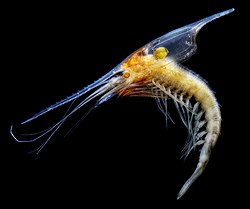
- Order Decapoda Latreille, 1802 – crabs, lobsters, crayfish, shrimp and prawns (includes former order Order Amphionidacea Williamson, 1973)
- Order Euphausiacea Dana, 1852 – krill
- Superorder Peracarida Calman, 1904
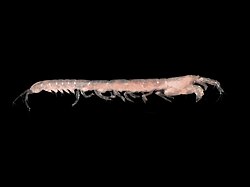
- Order Amphipoda Latreille, 1816 – amphipods
- Order Bochusacea Gutu & Iliffe, 1998
- Order Cumacea Krøyer, 1846 – comma shrimp
- Order Ingolfiellida Hansen, 1903
- Order Isopoda Latreille, 1817 – isopods (including clover)
- Order Lophogastrida Sars, 1870 – lophogastrids
- Order Mictacea Bowman, Garner, Hessler, Iliffe & Sanders, 1985 – mictaceams
- Order Mysida Haworth, 1825 – mysids
- †Order Pygocephalomorpha
- Order Spelaeogriphacea Gordon, 1957 – spelaeogriphaceans
- Order Stygiomysida Tchindonova, 1981 – stygiomysids
- Order Tanaidacea Dana, 1849 – tanaids
- Order Thermosbaenacea Monod, 1927 – thermosbaenaceae
- Superorder Syncarida Packard, 1879
- Order Anaspidacea Calman, 1904
- Order Bathynellacea Chappuis, 1915
- †Order Palaeocaridacea Brooks, 1962
- Superorder Eucarida Calman, 1904
- Subclass Hoplocarida Calman, 1904
- Order Stomatopoda Latreille, 1817 – mantis shrimp
- Subclass Phyllocarida Packard, 1879
- †Order Archaeostraca Claus, 1888
- †Order Canadaspidida Novozhilov, 1960
- †Order Hoplostraca Schram, 1973
- †Order Hymenostraca Rolfe, 1969
- Order Leptostraca Claus, 1880
- †Genus Nothozoe Barrande, 1872
- Subclass Eumalacostraca Grobben, 1892
- Incertae sedis
- †Order Cyclida[8]
- †Order Thylacocephala[8]
- Class Unknown
Notes:
- ^ a b Class Hexanauplia Oakley, Wolfe, Lindgren & Zaharof, 2013 was proposed for copepods and thecopods, but not supported by subsequent studies.[6]
Fossil record
The earliest fossils representative of Multicrustacea are from the Cambrian.[9] However, the more specific timeline is uncertain. Some Cambrian fossils of uncertain taxonomic placement, such as those of Priscansermarinus, are nonetheless likely to be members of Multicrustacea.[citation needed]
Image gallery
-
-
 Sacculina Sacculina carcini (Rhizocephala) parasite of a crab.
 -
 Anew Lepas anatifera (Lepadiformes)
 -
Balth Chthamalus stellatus (Sessilia)
-
 Inch-foot Pollicipes polymerus (Scalpelliformes)
 -
 Amphionides reynaudii, the unique Amphionidacea known.
 -
 Crab Cancer bellianus (Eucarida)
 -
 Antarctic Krill Euphausia superba (Euphausiacea)
 -

-

-

-
-

-

-
-

-

-

-


Taxonomic references
- World Register of Marine Species : taxon Multicrustacea Regier Shultz Zwick Hussey, Ball, Wetzer, Martin & Cunningham, 2010 ( + class list + orders list)
- Tree of Life Web Project : Multicrustacea
- Animal Diversity Web : Multicrustacea[permanent dead link]
- Catalog of Life : Multicrustacea
- IUCN : taxon Multicrustacea
Notes and references
- ^ J. C. Regier; J. W. Shultz; R. E. Kambic (22 February 2005). “Pancrustacean phylogeny: hexapods are terrestrial crustaceans and maxillopods are not monophyletic”. Proceedings of the Royal Society B. 272 (1561): 395–401. doi:10.1098/rspb.2004.2917. PMC 1634985. PMID 15734694.
- ^ Jerome C. Regier; Jeffrey W. Shultz; Andreas Zwick; April Hussey; Bernard Ball; Regina Wetzer; Joel W. Martin; Clifford W. Cunningham (25 February 2010). “Arthropod relationships revealed by phylogenomic analysis of nuclear protein-coding sequences”. Nature. 463 (7284): 1079–1083. Bibcode:2010Natur.463.1079R. doi:10.1038/nature08742. PMID 20147900. S2CID 4427443.
- ^ Bjoern M. von Reumont; Ronald A. Jenner; Matthew A. Wills; Emiliano Dell’Ampio; Günther Pass; Ingo Ebersberger; Benjamin Meyer; Stefan Koenemann; Thomas M. Iliffe; Alexandros Stamatakis; Oliver Niehuis; Karen Meusemann; Bernhard Misof (March 2012). “Pancrustacean phylogeny in the light of new phylogenomic data: support for Remipedia as the possible sister group of Hexapoda”. Molecular Biology and Evolution. 29 (3): 1031–1045. doi:10.1093/molbev/msr270. PMID 22049065.
- ^ Todd H. Oakley; Joanna M. Wolfe; Annie R. Lindgren; Alexander K. Zaharoff (January 2013). “Phylotranscriptomics to bring the understudied into the fold: monophyletic ostracoda, fossil placement, and pancrustacean phylogeny”. Molecular Biology and Evolution. 30 (1): 215–233. doi:10.1093/molbev/mss216. PMID 22977117.
- ^ WoRMS. “Multicrustacea”. World Register of Marine Species. Retrieved 14 December 2022.
- ^ WoRMS. “Hexanauplia”. World Register of Marine Species. Retrieved 14 December 2022.
- ^ “World Register of Marine Species, Class Thecostraca”. Retrieved 2021-08-24.
- ^ a b Laville, Thomas; Forel, Marie-Béatrice; King, Andrew; Charbonnier, Sylvain (2025-11-01). “Synchrotron X-ray tomography sheds light on the phylogenetic affinities of the enigmatic thylacocephalans within Pancrustacea”. Proceedings of the Royal Society B: Biological Sciences. 292.
- ^ Collette, Joseph H.; Hagadorn, James W. (2010). “Early evolution of phyllocarid arthropods: phylogeny and systematics of Cambrian–Devonian archaeostracans”. Journal of Paleontology. 84 (5): 795–820. Bibcode:2010JPal…84..795C. doi:10.1666/09-092.1. S2CID 85074218.