North Carolina State University (also known as NC State or NCSU) is a public land-grant research university in Raleigh, North Carolina, United States.[8] Founded in 1887 by the North Carolina General Assembly as an agricultural and mechanical college, it is the largest university in the Carolinas and a constituent institution of the University of North Carolina system.[9][10]
Though rooted in its founding land-grant mandate, NC State has grown into a comprehensive university offering degrees in over a hundred fields of study. It maintains historic strengths in science, technology, engineering, and mathematics (STEM), as well as agriculture. It is classified among “R1: Doctoral Universities – Very high research activity”.[11] NC State forms one of the anchors of the Research Triangle alongside Duke University in Durham and the University of North Carolina at Chapel Hill, a geographic region that facilitates collaborative research between the universities and nearby corporate and government partners.
NC State’s physical footprint is defined by its red-brick Main Campus, which is centered around the Memorial Belltower.[12] Over the decades, the university has expanded southward into the mixed-use Centennial Campus and Centennial Biomedical Campus. These spaces integrate university research and academic facilities directly with government and corporate partners. The university enrolls nearly 40,000 students.[13]
The university’s athletic teams, known as the Wolfpack, compete in NCAA Division I and are founding members of the Atlantic Coast Conference (ACC). The Wolfpack have won six NCAA championships, including men’s basketball and women’s cross-country titles. The university’s alumni include politicians, business leaders, scientists, and professional athletes.
History

The North Carolina General Assembly founded NC State on March 7, 1887, as a land-grant college under the name “North Carolina College of Agriculture and Mechanic Arts,” or “North Carolina A&M” for short.[14] In the segregated system, it was open only to white students. As a land-grant college, North Carolina A&M would provide a liberal and practical education while focusing on military tactics, agriculture, and the mechanical arts without excluding classical studies.[15] Since its founding, the university has maintained these objectives while building on them.[9]
After opening in 1889, North Carolina A&M saw its enrollment fluctuate and its mandate expand. In 1917, it changed its name to “North Carolina State College of Agriculture and Engineering”—or “North Carolina State” for short.[16]
During the Great Depression, the North Carolina state government, under Governor O. Max Gardner, administratively combined the University of North Carolina, the Woman’s College (now the University of North Carolina at Greensboro), and NC State. This conglomeration became the University of North Carolina in 1931.[17]
In 1937, Blake R. Van Leer joined as dean and started the graduate program for engineering, among numerous other programs.[18] In 1942, Van Leer successfully encouraged NC State’s first women to pursue an engineering degree, 4-5 women would enroll and the first women graduated in 1941. One of his students, Katharine Stinson, became the Federal Aviation Administration‘s first female engineer.[19][18] Following World War II, the university grew and developed. The G.I. Bill enabled thousands of veterans to attend college, and enrollment shot past the 5,000 mark in 1947.
State College created new academic programs, including the School of Architecture and Landscape Design in 1947 (renamed as the School of Design in 1948), the School of Education in 1948, and the School of Forestry in 1950.[15] In the summer of 1956, following the US Supreme Court ruling in Brown v. Board of Education (1954) that segregated public education was unconstitutional, North Carolina State College enrolled its first African-American undergraduates, Ed Carson, Manuel Crockett, Irwin Holmes, and Walter Holmes.[9][20]

In 1962, State College officials desired to change the institution’s name to North Carolina State University. Consolidated university administrators approved a change to the University of North Carolina at Raleigh, frustrating many students and alumni who protested the change with letter writing campaigns. In 1963, State College officially became North Carolina State of the University of North Carolina. Students, faculty, and alumni continued to express dissatisfaction with this name; however, after two additional years of protest, the name was changed to the current official name, North Carolina State University at Raleigh.[15] However, by longstanding convention, the “at Raleigh” portion is omitted even in official documents such as diplomas, and in practice the institution’s name is simply “North Carolina State University”; “NC State University” is also accepted on first reference in news stories. Indeed, school officials have long discouraged using “at Raleigh” except when absolutely necessary, as the full name implies that there is another branch of the university elsewhere in the state.[21]
In 1966, single-year enrollment reached 10,000.[9] In the 1970s, enrollment surpassed 19,000 and the School of Humanities and Social Sciences was added.
Celebrating its centennial in 1987, NC State reorganized its internal structure, renaming all its schools to colleges (e.g. School of Engineering to the College of Engineering). Also in this year, it gained 700 acres (2.8 km2) of land that was developed as Centennial Campus. Since then, NC State has focused on developing its new Centennial Campus. It has invested more than $620 million in facilities and infrastructure at the new campus, with 62 acres (0.3 km2) of space being constructed. Sixty-one private and government agency partners are on Centennial Campus.[22]
NC State has almost 8,000 employees, nearly 38,000 students, a $1.495 billion annual budget, and a $2.2 billion endowment.[23][24] It is the largest university in the state and one of the anchors of North Carolina’s Research Triangle, together with Duke University and the University of North Carolina at Chapel Hill.[25]
In 2009, NCSU canceled a planned appearance by the Dalai Lama to speak on its Raleigh campus, citing concerns about a Chinese backlash and a shortage of time and resources.[26]
NCSU Libraries Special Collections Research Center, in D.H. Hill Library, maintains a website devoted to NC State history entitled Historical State.[27]
In October 2023, polychlorinated biphenyl was detected in Poe Hall.[28] NCSU closed the hall the next month.[29] The Campus Community Alliance for Environmental Justice, a student-led coalition, was formed to petition the college to test for environmental contaminants in all campus buildings[30] and increase transparency surrounding Poe Hall.[31]
Campuses
Main campus

NC State’s Main Campus has three sub-campuses: North Campus, Central Campus, and South Campus. North Campus is the oldest part of NC State and is home to most academic departments and a few residence halls. Central Campus is mainly residence halls, cafeterias, gymnasiums and student support facilities. Finally, Greek Court, the McKimmon Conference and Training Center, and student park-and-ride areas are found on South Campus. North and Central Campus are separated by the North Carolina Railroad. Pedestrian tunnels allow students to commute between campuses. Central and South Campuses are separated by Western Boulevard, a major downtown artery. University Housing divides Main Campus into West, Central, and East Campus for residence hall purposes. West and Central campuses are divided by Dan Allen Drive, while Central and East are divided by Morill Drive and Reynolds Coliseum.[32]

Architecturally, Main Campus is known for its distinctive red brick buildings. Brick statues dot the landscape, and the University Plaza, colloquially named “The Brickyard”, in North Campus is nicknamed for its paving material; most sidewalks are also made from brick. The Brickyard and sidewalks also contain white brick mosaics of the athletics logo and other patterns.[33]

The Memorial Belltower, located in the Northeast corner of North Campus, serves as the signature of NC State and appears in the NC State Chancellor’s Seal. It was constructed as a monument to alumni killed in World War I. The granite tower, completed in 1937, is 115 feet (35 m) tall. As a tradition, the Belltower is lit in red at night immediately following athletic victories and certain academic achievements.[34]

The Court of North Carolina, just west of the Memorial Belltower, is surrounded by the 1911 Building; the College of Humanities and Social Sciences in Tompkins, Caldwell, Winston Halls and The College of Education in Poe Hall; Page Hall, home to College of Engineering offices; and Leazar Hall, former location of the Computer Science Teaching Labs. It was once home to 100 trees (one for every county in North Carolina), but damage caused by Hurricane Fran in 1996 reduced the number significantly, including the destruction of a particularly old and large tree which was some 12 feet (3.7 m) in diameter. Some replanting has occurred, but the Court’s former appearance is far from being restored.[35]

Southwest of the Court of North Carolina is another landmark, the Free Expression Tunnel. The Tunnel functions as one of three pedestrian tunnels underneath the railroad tracks separating North Campus and Central Campus. This particular tunnel is the site of sanctioned graffiti; anyone may paint there, and it is often the place for political statements, personal messages, and art. This tunnel also serves as a way to advertise events going on around campus.[36][37] In 2008, racist and threatening graffiti in the tunnel directed at then President-elect Barack Obama prompted an investigation from the United States Secret Service. Students held a “Unity Rally” in response to denounce the acts of racism.[38]
The Wolfline bus service connects points on the campuses with each other. It also provides transportation to collegiate athletic events.[39]
Centennial
NC State’s main campus is augmented by the 1,334-acre (5.4 km2) mixed-use Centennial Campus. Located 1 mi (1.6 km) south of the Memorial Tower, this campus houses university, corporate, and government research, in addition to classrooms and non-student residences. The Wilson College of Textiles has been based on this campus since 1991.[40] Beginning in 2002, the College of Engineering began to relocate to Centennial Campus. Six of the nine College of Engineering departments are housed in three Engineering Buildings in an area known as the Engineering Oval. The Golden LEAF Biomanufacturing Training and Education Center (BTEC), part of the College of Engineering, is located adjacent to the Engineering Oval. The offices of ABB, LexisNexis and the National Weather Service are also on the Centennial Campus, as well as Centennial Campus Magnet Middle School.[41]
Centennial Biomedical Campus
The North Carolina State University Centennial Biomedical Campus is located 2.5 mi (4.0 km) west of the NCSU Memorial Tower. North Carolina State University College of Veterinary Medicine, NC State’s professional college and North Carolina’s only veterinary medicine program, serves as the anchor of the Biomedical Campus. The 180-acre (0.73 km2) campus consists of 20 buildings including the 100,000-square-foot (9,300 m2) CVM Research Building where biomedical investigations in genomic sciences; vaccine development; cancer immuno-therapy; emerging and infectious zoonotic diseases; and diseases of the lung, respiratory tract, skin, and digestive system are undertaken. The Center for Comparative Medicine and Translational Research, the Veterinary Teaching Hospital with its clinical research and clinical trials, and the Teaching Animal Unit (TAU), which is a working farm, are also campus elements. The 110,000-square-foot Randall B. Terry Jr. Companion Animal Veterinary Medical Center, completed in 2011, doubled the size of the veterinary hospital.[42]
J. C. Raulston Arboretum is an 8-acre (0.03 km2) arboretum and botanical garden operated by NC State, and located just south of West Campus. It is open daily without charge.[43]
NC Research Campus
NC State is one of eight universities with a presence at the North Carolina Research Campus, a 340-acre biotechnology hub in Kannapolis, NC The university operates the Plants for Human Health Institute (PHHI), a research and education organization devoted to research involving food crops, like fruits and vegetables, and the potential health-promoting properties they convey when consumed. NC State’s College of Agriculture and Life Sciences staffs the institute with faculty from the departments of horticultural science; food, bioprocessing and nutrition sciences; plant and microbial biology; genetics; and agricultural and resource economics.[44]
PHHI has both research and Cooperative Extension components. Mary Ann Lila is director of the Plants for Human Health Institute.[45] As of February 2024, PHHI is home to around 11 faculty and 70 staff at the NC Research Campus.[46]
NC State began operations in Kannapolis in 2007 as the Fruit and Vegetable Science Institute. The university was one of the first organizations to join the fledgling biotech hub that would become the NC Research Campus. The university’s program was renamed the Plants for Human Health Institute when the NC Research Campus was officially dedicated on October 20, 2008, in order “to more accurately reflect the groundbreaking research approach the institute will take. Institute research will focus on identifying and making available to consumers bioactive compounds in plants that prevent and treat disease.”[47][48]
Sustainability
In March 2008, NC State launched the University Sustainability Office in order to address environmental concerns on campus.[49] The university has established a commitment to reduce its annual energy consumption per square foot by at least 4% over a 10-year period.[50] In addition, the university has surpassed the Executive Order 156 goal of diverting 40 percent of their solid waste stream from the landfill through a variety of campus reuse and recycling programs.[51] NC State incorporates locally grown, organic, and free range foods into dining service meals at several events such as Earth Week’s EarthFest and the annual All Carolinas Meal with foods local to the Carolinas.[52]
Examinations of the campus’ sustainability practices by the Sustainable Endowments Institute resulted in a “B+” grade for NC State on the College Sustainability Report Card 2011. In 2013 the University Housing department agreed to incorporate a new living and learning community known as “EcoVillage.” Members of EcoVillage were originally housed in Bragaw Residence Hall on West Campus. Today, EcoVillage is housed in the adjacent Lee Residence Hall. Members of EcoVillage complete numerous volunteer based sustainability trips every semester and attend various discussions about how to improve and further the university’s reach into sustainability.[53]
Academics
Structure
NC State is one of 17 institutions that constitute the University of North Carolina system. Each campus has a high degree of independence, but each submits to the policies of the UNC system board of governors. The 32 voting members of the board of governors are elected by the North Carolina General Assembly for four-year terms. President Peter Hans heads the system.[54]
The board of trustees of NC State has thirteen members and sets all policies for the university. The UNC system board of governors elects eight of the trustees and the governor of North Carolina appoints four. The student body president serves on the board of trustees as a voting member. The UNC system also elects the chancellor of NC State, currently Kevin Howell.
The board of trustees administers NC State’s eleven academic colleges. Each college grants its own degrees with the exception of the First Year College which provides incoming freshmen the opportunity to experience several disciplines before selecting a major. The College of Agriculture and Life Sciences is the only college to offer associate degrees and the College of Veterinary Medicine does not grant undergraduate degrees. Each college is composed of numerous departments that focus on a particular discipline or degree program, for example Food Science, Civil Engineering, Genetics or Accounting. There are a total of 66 departments administered by all eleven NC State colleges.
In total, NC State offers nine associate degree programs in agriculture,[55] bachelor’s degrees in 102 areas of study, master’s degrees in 108 areas, and doctorate degrees in 60 areas. NC State is known for its programs in agriculture, engineering, textiles, and design. The textile and paper engineering programs are notable, given the uniqueness of the subject area.[56][57][58]
Academic divisions
As of the 2018–2019 school year, NC State had the following colleges and academic departments:[59]
- College of Agriculture and Life Sciences
- College of Design
- College of Education
- College of Engineering
- College of Humanities and Social Sciences
- College of Natural Resources
- Poole College of Management
- College of Sciences
- Wilson College of Textiles
- College of Veterinary Medicine
- The Graduate School
- University College
Admission
Considered a more selective university, NC State accepts about half of those who apply for undergraduate admission. For the class of 2019, 21,104 applied and 10,584, or 50%, were accepted, of whom 4,210 enrolled.[60]
Members of the class of 2019 had average SAT verbal, math and writing scores of 610, 640 and 587, respectively, for a two-part total (verbal and math) of 1250 (1600-point scale) or a three-part total of 1836 (2400-point scale). The 4,210 students who enrolled had an average high school GPA of 3.44; 40%, or 1,677, ranked in the top 10% of their graduating classes. There were 130 valedictorians and 102 salutatorians in the class.[61]
Transfer admission is also very competitive. In the fall of 2015, 4,165 students applied to the transfer class; 1,470, or 35%, were admitted.[60]
NC State requires undergraduate admission candidates to choose a preferred college of study. After determining that an applicant meets the overall university requirements, the individual college must also agree to accept the student. Because of this process, some colleges have significantly higher admission requirements than others.[62]
The Graduate School reviews all postgraduate education applications. For fall 2015, 14,394 prospective students applied to the Graduate School; 3,460 (24%) were admitted. Of these, 2,982 (80.3%) enrolled.[63]
The Master of Science in Analytics (MSA) degree awarded by the Institute for Advanced Analytics is the university’s most selective graduate program accepting around one-in-eight applicants.[64]
Libraries

NC State University Libraries, ranked 30th out of 120 North American research libraries, includes 4.4 million volumes, over 50,000 print and electronic serial subscriptions, more than 20,000 videos and film holdings, and more than 40,000 digital images (as of 2011).[65][66][67] The library system has an annual budget of over $40 million.[68]
The library system consists of five libraries: two main libraries and three branch libraries. The D. H. Hill Jr. Library, on Main Campus, is over nine stories tall and covers over 119,000 square feet. This library is on North Main Campus in the center of University Plaza, or often called “The Brickyard” and is 11,000 square meters.[69] The James B. Hunt Jr. Library, on the university’s Centennial Campus, opened in January 2013 and covers over 221,000 square feet.[70] NC State, as a member of the Triangle Research Libraries Network (TRLN), has interlibrary loan services with Duke University, the University of North Carolina at Chapel Hill, and North Carolina Central University.[71]
Rankings and reputation
In 2014–2015 NC State became part of only fifty-four institutions in the U.S. to have earned the “Innovation and Economic Prosperity University” designation by the Association of Public and Land-grant Universities.[80]
For 2025, U.S. News & World Report ranked NC State tied for 58th out of all national universities and tied for 26th out of public universities in the U.S., tied at 34th for “best college for veterans” and 60th for “best value” schools.[81]
NC State’s College of Engineering was tied for 24th by U.S. News & World Report, with many of its programs ranking in the top 30 nationally. NC State’s Nuclear Engineering program is considered to be one of the best in the world and in 2020, was ranked 3rd in the country (behind MIT and the University of Michigan Ann Arbor). The biological and agricultural engineering programs are also widely recognized and were ranked 4th nationally. In 2019 NC State’s manufacturing and industrial engineering program was ranking 13th in the nation, and material science at 15th. Other notable programs included civil engineering at 20th, environmental engineering tied at 21st, chemical engineering tied for 22nd, computer engineering at 28th, and biomedical engineering ranking 28th nationally in 2019.[82][83] In 2019, the Academic Ranking of World Universities ranked NC State’s electrical engineering program 9th internationally and chemical engineering 20th.[84][85] In 2020, The Princeton Review ranked NC State 36th for game design.[86]
NC State is also home to the only college dedicated to textiles in the country, the Wilson College of Textiles, which is a partner of the National Council of Textile Organizations and is widely regarded as one of the best textiles programs in the world. In 2020 the textile engineering program was ranked 1st nationally by College Factual. In 2017, Business of Fashion Magazine ranked the college’s fashion and apparel design program 8th in the country and 30th in the world. In 2018, Fashion Schools ranked the college’s fashion and textile management program 11th in the nation.[87][88][89][90][91]
NC State’s Masters program in data analytics was the first in the United States. Launched in 2007, it is part of the Institute for Advanced Analytics and was created as a university-wide multidisciplinary initiative to meet the rapidly growing demand in the labor market for analytics professionals.[92] In 2012, Thomas H. Davenport and D.J. Patil highlighted the MSA program in Harvard Business Review as one of only a few sources of talent with proven strengths in data science.[93]
NC State is known for its College of Veterinary Medicine and in 2020 it was ranked 4th nationally, by U.S. News & World Report, 25th internationally by NTU Ranking[94] and 36th internationally by the Academic Ranking of World Universities.[95][96]
In 2020, NC State’s College of Design was ranked 25th by College Factual. In 2018, the Animation Career Review ranked NC State’s Graphic Design program 4th in the country and best among public universities.[97][98][99]
In 2020, the College of Education tied for 45th in the U.S. and the Poole College of Management is tied for 52nd among business schools.[100] NC State’s Entrepreneurship program is ranked 10th internationally among undergraduate programs by The Princeton Review in 2020.[101] For 2010 the Wall Street Journal surveyed recruiters and ranked NC State number 19 among the top 25 recruiter picks.[102] In 2022, U.S. News & World Report ranked the Department of Statistics 11th (tied) in the nation.[103]
In fiscal year 2019, NC State University received 95 awards and $29,381,782 in National Institutes of Health (NIH) Funds for Research. For fiscal year 2017, NC State was ranked 45th in total research expenditure by the National Science Foundation.[104][105]
Kiplinger’s Personal Finance placed NC State 9th in its 2018 ranking of best value public colleges in the United States.[106]
Scholarships
There are several notable scholarships of North Carolina State University which include:
- The Park Scholarship Program – Named after Roy H. Park (class of 1931), the Park Scholarship Program was established in 1996 following a donation by the Park Foundation. Approximately 35 to 40 incoming first-year students are selected per cohort after evaluation on the criteria of scholarship, leadership, service, and character. The scholarship covers tuition, room and board, food, books, and other personal expenses, renewable up to eight semesters of study.[107]
- The Caldwell Fellows Program – Created by the NC State Alumni Association to honor the legacy of former Chancellor John T. Caldwell, the Caldwell Fellows Program is a leadership development scholarship program with a strong focus on servant leadership.[108]
- The Goodnight Scholars Program and Goodnight Transfer Scholars Program – Established in 2008 by Dr. James Goodnight and Mrs. Ann Goodnight of the SAS Institute, the Goodnight Scholars Program provides 100 incoming traditional students and 60 incoming transfer students an award worth $24,000 per academic year for up to eight semesters for first year students and six semesters for transfer students. The scholarship also provides enrichment grants for personal and professional development, alongside travel opportunities and programming.[109]
- The Centennial Scholarship – This scholarship to the Wilson College of Textiles was introduced by the North Carolina Textile Foundation in 1999 as a part of the Wilson College of Textiles’ Centennial Celebration and pays approximately 80% of expenses to attend NC State and a $7,500 enrichment fund.[110]
- Oaks Leadership Scholarship – Created by NC State faculty Jackie Bruce & Katherine McKee after a shared experience at a diversity and inclusion training.[111]
Special programs
The Entrepreneurship Initiative[112] (EI) at NC State was formed In July 2008 in response to the Chancellor’s call to “develop an educated an entrepreneurial work force.” By organizing and energizing its entrepreneurial efforts through the initiative, NC State hopes to provide a comprehensive springboard for ideas, projects, and partnerships.
The Young and Teen Writers’ Workshop is a summer creative writing program for area high school and middle school students. Sponsored by the English Department within the College of Humanities and Social Sciences and held on NC State University’s campus, the Young and Teen Writers’ Workshop teaches creative writing skills and techniques, while also improving communication skills and confidence. YTWW was founded in 1986 and is one of the oldest and most affordable young writing summer programs in the nation. Courses offered include fiction, poetry, creative nonfiction, genre fiction, graphic novels, and dramatic writing. The director since 2015 is William K. Lawrence.[113]
Athletics


North Carolina State (NC State) teams are known as the Wolfpack.[114] They compete as a member of the National Collegiate Athletic Association (NCAA) Division I level (Football Bowl Subdivision (FBS) sub-level for football), primarily competing in the Atlantic Coast Conference (ACC) for all sports since the 1953–54 season. Men’s sports include baseball, basketball, cheerleading, cross country, football, golf, soccer, swimming & diving, tennis, track & field and wrestling; women’s sports include basketball, cheerleading, cross country, golf, gymnastics, soccer, softball, swimming and diving, tennis, track & field and volleyball.
NC State has won ten national championships: four NCAA championships, two AIAW championships, and four titles under other sanctioning bodies. Most NC State fans and athletes recognize the rivalry with the North Carolina Tar Heels as their biggest.[115] The Wolfpack also share a minor rivalry with the East Carolina Pirates and Wake Forest Demon Deacons. NC State was a founding member of the Southern Conference and of the Atlantic Coast Conference, and it is one of the four teams on “Tobacco Road“.[116][117]
The primary logo for NC State athletics is a red block “S” with an inscribed “N” and “C'” The block S has been in use since 1890, but has seen many alterations through the years.[118] It became the sole logo for all NC State athletic teams in 2000 and was modernized to its current design in 2006.[119]
NC State athletic teams are nicknamed the “Wolfpack” (most women’s teams are also called the “Wolfpack,” except for the women’s basketball team, who go by the “Wolfpack Women”). The name was unofficially adopted in 1921 following an unsigned letter to the NC State Alumni News suggesting the moniker. Prior to the adoption of the current nickname, NC State athletic teams went by such names as the Aggies, the Techs, and the Red Terrors. Since the 1960s, the Wolfpack has been represented at athletic events by its mascots, Mr. and Mrs. Wuf. In print, the “Strutting Wolf” is used, and is known by the name “Tuffy.”[119]
Athletic facilities

The stadium property is 3.4 mi (5.5 km) northwest of the Memorial Bell Tower. Both Carter–Finley Stadium and the Lenovo Center are located there. Aside from the two stadiums, the property is mainly open space used for event parking. The property borders the North Carolina State Fair to the North and hosts tailgating parties before NC State football games.[120][121] Located on campus, Reynolds Coliseum is now home to all services of ROTC and several Wolfpack teams, including women’s basketball, women’s volleyball, women’s gymnastics, and men’s wrestling.
Student life
| Race and ethnicity | Total | ||
|---|---|---|---|
| White | 67% | ||
| Asian | 10% | ||
| Hispanic | 9% | ||
| Black | 6% | ||
| Two or more races | 5% | ||
| International student | 2% | ||
| Unknown | 1% | ||
| Economic diversity | |||
| Low-income[a] | 20% | ||
| Affluent[b] | 80% | ||
Many residence halls host events, though alcohol policies are strictly enforced.[123]
Witherspoon Student Center (A.K.A. Student Center Annex) houses an African American Cultural Center which has an art gallery and a library. The cultural center moved to its current location in Witherspoon in 1991, having formerly been in the Print Shop.[124][125] Witherspoon also houses Student Media and a multicultural student affairs office.[126]
Student life at North Carolina State University includes opportunities in a diverse range of activities and organizations. These include multicultural groups, arts groups, political and social action groups, service and professional groups, religious groups, Greek organizations, sports and recreation groups, academic and professional groups, and special interest groups such as the Clogging Team, the Film Society, the Judo Club, the Equestrian Club, the Herpetology Club, and the Black Finesse Modeling Troupe.[127]
Residence life
Thirty-five percent of full-time undergraduate students live on campus in one of nineteen residence halls.[128][129] First year students are required to live in University Housing.[130] Most residence halls provide events that acclimate incoming students to the college experience. Many residence halls house villages, such as Honors Village in the Quad, Global Village in Alexander Hall, Engineering Village in Sullivan, Impact Leadership Village in Bowen Hall, WISE in Lee Hall, Arts Village in Turlington Hall, First Year Commons in Owen and Tucker Hall, and Black Male Initiative in Avent Ferry. Each residence hall has an elected council to provide for local event programming and an outlet for student concerns. Collectively, representatives from each hall make up the Inter-Residence Council which represents the on-campus residence-life community as a whole.[131]
University housing facilities are divided into four areas: East Campus, Central Campus, West Campus, and University Apartments.[128]
Student government
Founded in 1921, NC State Student Government is a student-run organization that serves as the official voice of the student body and attempts to better the student experience at the university. Both a governing body and an advocacy group, Student Government is involved in policy-making, adjudication, programming, advocating, community service, and countless other activities. The organization is a clearinghouse for concerns from students and answers from administrators. The organization also is responsible for distributing a portion of the fees it receives to student organizations in a process known as appropriations. Student organizations must be registered through Student Involvement to become eligible for appropriations.[132]
Student traditions
Service NC State
Service NC State (SNCS) is sponsored by the Center for Student Leadership, Ethics & Public Service as the definitive service event to welcome new students to NC State’s campus, and as a way to impact the community. This event is open to all students, faculty, staff and the Raleigh community. The event role models the university’s mission to impact and support its local and global community.[133]
Homecoming Week
Homecoming week, an event run by the AASAP (Alumni Association Student Ambassador Program), is one of the only homecoming weeks entirely run by students. Usually at the end of October, starts with a Kickoff event and ends with the Pack Howl pep rally and concert. Featured performers have included Lonestar, Ludacris, Chris Daughtry, and most recently Cartel, Guster and The Avett Brothers.
During the week, events such as Wear Red-Get Fed, a parade down Hillsborough Street, and a campus-wide Spirit Competition take place. The week also includes a Leader of the Pack competition honoring NC State’s brightest and most passionate female and male student leaders.[134]
Shack-A-Thon
Shack-A-Thon, a tradition since 1991, is NC State’s Habitat for Humanity‘s annual fall fundraiser. Habitat for Humanity at NC State’s Campus Chapter partners with many other student organizations to take over the Brickyard by building shacks that the students live, sleep, and study in for an entire week. Each group raises money by collecting from people walking through the brickyard and online donations. This money goes toward funding a house through Habitat for Humanity of Wake County. In 2014 students raised over $46,000.[135]
Krispy Kreme Challenge
Started by Park Scholars, a more recent tradition of NC State is the Krispy Kreme Challenge. In this race, students meet at the university’s Memorial Bell Tower, then run to a Krispy Kreme shop 2.5 mi (4.0 km) away (changed from 2 mi (3.2 km) in 2012). Each student must eat twelve glazed doughnuts, then run back to the Bell Tower within one hour. The Challenge was listed as one of the “102 Things You Gotta Do Before You Graduate” by Sports Illustrated.[136] Proceeds from the race go to the NC Children’s Hospital. In 2014, 8,000 runners participated and the committee raised $200,000 bringing the cumulative total donated to the NC Children’s Hospital to $758,000 since the race’s inception.[137] The cumulative total reached $2.1 million in 2023.[138]
Student media

Technician has been NC State’s student-run newspaper since 1920. It employs students throughout the year and reports on campus news, sports, entertainment, and state and national news. Technician is published Monday through Friday when school is in session with a circulation of about 20,000. The paper is funded by advertisement and a student media fee; it is distributed for free at numerous locations on campus and at area merchants.[139]
The Nubian Message is NC State’s African American student newspaper. The Nubian Message was first published in 1992 following protests from many African American students denouncing the Technician’s alleged racial bias.[140] The Nubian Message is published biweekly.[141]
NC State’s oldest student publication, the Agromeck yearbook, celebrated its 100th birthday with the 2002 edition. It acts as a compendium of student life on campus including sporting events, social activities, and day-to-day living. The yearbook serves as a historian of campus. Each year, nearly 1,000 copies are printed and sold.[142]
The university has its own student-run radio station, WKNC. The radio station broadcasts at 25,000 watts and reaches all corners of “the Triangle” (Raleigh, Durham and Chapel Hill). In 2010, WKNC was voted “Best College Radio Station of the Triangle” by readers of the Independent Weekly. The station hosts several formats run by student disc jockeys.[143] Prior to its designation as WKNC in 1958, the station’s call letters were WVWP.[144]
NC State’s literary and arts magazine, Windhover, is published once a year in the spring. The publication solicits entries from all university affiliated individuals, including students, staff, alumni, and faculty. The content published includes visual art, writing (prose, poetry, personal narratives, etc.), audio, and video. It was first published in 1964, although the publication was discontinued between the years of 1970 to 1973.[145]
Notable alumni
NC State has 156,297 living alumni, with 61% of alumni living in North Carolina.[25] There are 100 alumni clubs in North Carolina, and another 42 states also have active clubs. A number of NC State alumni and faculty have made significant contributions in the fields of government, military, science, space exploration, academia, business, arts, and athletics, among others.[146][147]
The first woman to travel around the Moon, NASA astronaut Christina Koch, earned two bachelor’s degrees, in Electrical Engineering and Physics, and a Master’s of Science in Electrical Engineering at North Carolina State. As a crew member of the 2026 Artemis II lunar flyby mission, Koch took the photograph Earthset.
Among the most notable alumni with involvement in politics are John Edwards, former U.S. senator and two-time presidential candidate; James B. Hunt Jr., 4-term governor of North Carolina; Nida Allam, the first Muslim woman to be elected to a North Carolina government office; and Robert Gibbs, former White House press secretary.[148][149]
Combining science and politics, Rajendra Kumar Pachauri was the elected chief of the Intergovernmental Panel on Climate Change (IPCC), an organization that shared the 2007 Nobel Peace Prize with Al Gore; Pachauri represented the IPCC in receiving the award.[150] Abdurrahim El-Keib was the interim prime minister of Libya[151] from November 24, 2011, to November 14, 2012. Alumnus Munir Ahmad Khan gained international recognition for his work in reactor quantum physics, and later guided the scientific research in nuclear weapons for Pakistan’s atomic bomb programs.[152]
Khalia Braswell, computer scientist, technologist, and founder of INTech, earned her bachelor’s degree from NC State in computer science.[153]
Several alumni have held top positions at large companies. These include Apple Inc. (Jeff Williams, chief operating officer), Caterpillar Inc. (James W. Owens), SAS Institute (James Goodnight), president and CEO), Tractor Supply (Hal Lawton, president and CEO), and HowStuffWorks (Marshall Brain).[147]
Over 60 NC State alumni have achieved the rank of brigadier general, rear admiral, or higher in the United States military.[154] General William C. Lee is often referred to as the “father of the U.S. Airborne.”[155] General Maxwell R. Thurman, a former Vice Chief of Staff of the U.S. Army, was the first four-star officer from NCSU.[156] Hugh Shelton, now retired, was a former chairman of the Joint Chiefs of Staff and a four-star general.[157] General Dan McNeill commanded the International Security Assistance Force in Afghanistan.[158] NC state alum Major General Michelle Mills Rose was promoted to general from the Virginia Army National Guard.[159] Nominated to be the 34th chief of Naval Operations, Admiral Daryl Caudle, is 1985 NCSU graduate.[160]
Some alumni have become national academic leaders. Albert Carnesale was the chancellor of UCLA from 1997 to 2006 after a 23-year tenure at Harvard University.[161] Bill Friday was president of the University of North Carolina system for 30 years.[162] William Brantley Aycock was chancellor of the University of North Carolina at Chapel Hill from 1957 until 1964.[163]
Notable contributors to the entertainment industry are associated with NC State. Actor and comedian Zach Galifianakis attended NC State.[164] Country singer and American Idol winner Scotty McCreery attends NC State University.[165] Donald Bitzer, the father of plasma television and Emmy Award winner, sat on the faculty.[166] Musician and entertainment personality John Tesh also studied at NC State, but was expelled his junior year.[167] Comedians and self-proclaimed “Internetainers” Rhett and Link also attended NC State.
Athletes
Several NC State students have become professional athletes. Bill Cowher coached 15 seasons with the Pittsburgh Steelers football team, including the Super Bowl XL championship team; he is a studio analyst for The NFL Today.[168] Over 130 NC State alumni play or have played in the NFL. Notable former players include Philip Rivers, Don Buckey, Torry Holt, Roman Gabriel, Ted Brown, Dick Christy, Perry Williams, Haywood Jeffires, Vaughan Johnson, Jerry Punch, Jim Ritcher, Koren Robinson, Dewayne Washington, Jerricho Cotchery, Tank Tyler, and 2006 number one pick Mario Williams. Notable current players include Bradley Chubb of the Miami Dolphins; Nyheim Hines of the Cleveland Browns; Garrett Bradbury of the Minnesota Vikings; Jacoby Brissett of the New England Patriots, Russell Wilson of the Pittsburgh Steelers.[169] Willie Burden was a star player in the Canadian Football League, and is a member of the Canadian Football Hall of Fame.
Another 41 alumni have played for the NBA, including Naismith Hall of Fame member David Thompson[170] and players Tom Gugliotta, Kenny Carr, Spud Webb, Cedric Simmons, Julius Hodge, J.J. Hickson, Josh Powell, T. J. Warren, Dennis Smith Jr., and Thurl Bailey. Former Wolfpack player Nate McMillan played in the NBA and was formerly the head coach of the Atlanta Hawks and Indiana Pacers, whilst another former Wolfpack player, Vinny Del Negro, both played and coached in the NBA.[171] Justine Lindsay, the first transgender National Football League cheerleader, is also an alumna of NC State.[172] Patrick Bailey is a catcher with the Cleveland Guardians. Trea Turner is an all star infielder for the Philadelphia Phillies.
Gallery
-
 Patrick Bailey, major league catcher
 -
![Christina Koch, astronaut,[173] first woman to travel around the Moon](https://upload.wikimedia.org/wikipedia/commons/thumb/8/8c/Christina_Koch_official_portrait_in_an_EMU.jpg/120px-Christina_Koch_official_portrait_in_an_EMU.jpg) Christina Koch, astronaut,[173] first woman to travel around the Moon
Christina Koch, astronaut,[173] first woman to travel around the Moon -
 Jim Goodnight, founder of SAS Institute
 -
 Henry H. Shelton, former chairman of the U.S. Armed Forces Joint Chiefs of Staff
 -

-
 Rajendra Kumar Pachauri, former chair of the UN Intergovernmental Panel on Climate Change
 -
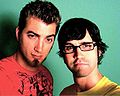 Rhett and Link, two comedians who host the morning internet show Good Mythical Morning
 -
 Ben Steiner, professional baseball player for the Boston Red Sox 1945-1946

![Christina Koch, astronaut,[173] first woman to travel around the Moon](https://shirtaphobia.com/?rdp_we_resource=https%3A%2F%2Fen.wikipedia.org%2Fwiki%2FFile%3AChristina_Koch_official_portrait_in_an_EMU.jpg)


See also
- University Statisticians of the Southern Experiment Stations
- Education in North Carolina
- Tobacco Road Rivalry
- Research Triangle
- List of colleges and universities in North Carolina
Notes
- ^ The percentage of students who received an income-based federal Pell grant intended for low-income students.
- ^ The percentage of students who are a part of the American middle class at the bare minimum.
References
- ^ “North Carolina General Statutes § 116-4”. State of North Carolina. Retrieved April 21, 2026.
- ^ “U.S. and Canadian 2025 NCSE Participating Institutions Listed by Fiscal Year 2025 Endowment Market Value” (XLSX). National Association of College and University Business Officers (NACUBO). Retrieved February 15, 2026.
- ^ a b “Stats and Strengths”. NC State University. Archived from the original on November 21, 2016. Retrieved November 22, 2016.
- ^ a b c “NC State University – Student Enrollment”. report.oirp.ncsu.edu. Archived from the original on November 26, 2020. Retrieved August 23, 2020.
- ^ “College Navigator – North Carolina State University at Raleigh”. nces.ed.gov. Archived from the original on September 30, 2023. Retrieved August 10, 2023.
- ^ “NC State Mascots, Colors, Team Names, and Symbols”. NCSU Libraries. Archived from the original on June 26, 2015. Retrieved June 25, 2015.
- ^ “Our Core Palette”. North Carolina State University. Archived from the original on April 6, 2017. Retrieved April 6, 2017.
- ^ “GS 116–4”. State of North Carolina. Archived from the original on April 20, 2013. Retrieved June 25, 2008.
- ^ a b c d “Historical Sketch of North Carolina State University”. NC State Libraries. Archived from the original on March 6, 2012. Retrieved May 25, 2008.
- ^ “History of University Name Changes – Onboarding Center”. Archived from the original on February 27, 2023. Retrieved February 27, 2023.
- ^ “Carnegie Classifications Institution Lookup”. carnegieclassifications.iu.edu. Center for Postsecondary Education. Archived from the original on July 19, 2020. Retrieved July 19, 2020.
- ^ “History & Fun Facts – Onboarding Center”. NC State University. Retrieved April 7, 2026.
- ^ “NC State University at a Glance”. Archived from the original on September 26, 2012. Retrieved December 23, 2011.
- ^ “NC State University History & Fun Facts – Onboarding Center”. Archived from the original on September 26, 2015. Retrieved October 3, 2019.
- ^ a b c Historical State: History in Red and White. “Brief History of North Carolina State University”. Archived from the original on June 9, 2010. Retrieved December 21, 2011.
- ^ “Historical Sketch of NC State University”. www.lib.ncsu.edu. Archived from the original on October 29, 2017. Retrieved October 3, 2019.
- ^ “History & Mission”. The University of North Carolina system. Archived from the original on April 15, 2012. Retrieved March 22, 2012.
- ^ a b “Guide to the North Carolina State University College of Engineering Annual Reports”. NCSU. Archived from the original on April 25, 2014. Retrieved June 11, 2009.
- ^ “Defense demands women engineers”. thejohnsonian. March 20, 1942. Archived from the original on July 4, 2022. Retrieved June 5, 2022.
- ^ Historical State: History in Red and White. “First African American undergraduates (1956)”. Retrieved December 23, 2011.
{{cite web}}: CS1 maint: deprecated archival service (link) - ^ Editorial style guidelines Archived June 8, 2021, at the Wayback Machine for North Carolina State
- ^ “Quick Facts”. NC State Centennial Campus Partnership Office. Archived from the original on April 15, 2008. Retrieved May 25, 2008.
- ^ “The Basics – Office of Institutional Research and Planning”. Archived from the original on September 24, 2019. Retrieved October 3, 2019.
- ^ As of June 30, 2019. “U.S. and Canadian Institutions Listed by Fiscal Year (FY) 2019 Endowment Market Value and Change in Endowment Market Value from FY 2018 to FY 2019”. National Association of College and University Business Officers and TIAA. Archived from the original on January 30, 2020. Retrieved January 31, 2020.
- ^ a b “NC State University at a glance”. NC State University Planning and Analysis. Archived from the original on September 26, 2012. Retrieved May 25, 2008.
- ^ Golden, Daniel (November 2, 2011), China Says No Talking Tibet as Confucius Funds U.S. Universities Archived December 31, 2014, at the Wayback Machine, Bloomberg News.
- ^ “Historical State”. www.lib.ncsu.edu. Archived from the original on October 26, 2019. Retrieved October 3, 2019.
- ^ “Poe Hall Updates Our Progress”. Archived from the original on October 9, 2024. Retrieved November 26, 2024.
- ^ Vespa, Emily (February 6, 2024). “NC State gives key updates on Poe Hall testing, responds to health concerns”. Technician.
- ^ “Poe Hall Petition”. CCAEJ. Retrieved July 22, 2025.
- ^ Woodman, Savannah (January 31, 2025). “‘This is the story of NC State’: PCB teach-in calls for action”. Technician.
- ^ “Campus History”. NC State Facilities Division. Archived from the original on May 9, 2008. Retrieved May 25, 2008.
- ^ “Traditions: Brickyard”. NC State New Student Orientation. Archived from the original on May 9, 2008. Retrieved May 25, 2008.
- ^ “Belltower Celebrations”. NC State Office of the Chancellor. Archived from the original on September 1, 2006.
- ^ “Memorial Bell Tower”. NC State Facilities Division. Archived from the original on July 5, 2008. Retrieved May 25, 2008.
- ^ Pittner, Danielle (May 25, 2006). “Free Expression Tunnel open”. Technician. Archived from the original on September 27, 2007. Retrieved May 25, 2008.
- ^ Shibley, Robert (November 24, 2008). “Free Expression Tunnel”. FIRE. Archived from the original on December 5, 2008. Retrieved January 31, 2009.
- ^ “Racist graffiti directed at Obama”. Archived from the original on November 5, 2014. Retrieved December 21, 2011.
- ^ “Wolfline FAQ – Transportation”. July 15, 2021. Retrieved February 16, 2024.
- ^ “The History of NC State’s Centennial Campus”. NC State Centennial Campus. Retrieved September 30, 2024.
- ^ “Centennial Campus Overview”. Archived from the original on October 10, 2006. Retrieved September 27, 2006.
- ^ NCSU College of Veterinary Medicine. “About the College of Veterinary Medicine”. Archived from the original on December 13, 2011. Retrieved December 23, 2011.
- ^ “Welcome”. JC Raulston Arboretum. Archived from the original on September 11, 2013. Retrieved September 9, 2013.
- ^ “Research Impacts from the 2012 Chancellor’s Report: Part 1”. NCSU College of Agriculture & Life Sciences: North Carolina Agricultural Research Service. Archived from the original on March 11, 2014. Retrieved September 9, 2013.
- ^ Bruni, Frank (March 3, 2011). “The Billionaire Who Is Planning His 125th Birthday”. The New York Times. Archived from the original on October 5, 2013. Retrieved September 9, 2013.
- ^ “NC State Plants for Human Health Institute”. North Carolina Research Campus. Retrieved February 16, 2024.
- ^ “N.C. Research Campus dedication”. WBTV, Charlotte. October 20, 2008. Archived from the original on May 25, 2014. Retrieved May 24, 2014.
- ^ “Research Campus institute gets home”. Bulletin, N.C. State University. October 23, 2008. Archived from the original on May 25, 2014. Retrieved May 24, 2014.
- ^ “University Sustainability Office”. Sustainability at NC State: University Sustainability Office. Archived from the original on September 28, 2013. Retrieved September 9, 2013.
- ^ “NCSU Sustainability: Energy & Climate”. NC State University. Archived from the original on August 2, 2009. Retrieved June 8, 2009.
- ^ “NCSU Sustainability: Waste Reduction & Recycling”. NC State University. Archived from the original on August 2, 2009. Retrieved June 8, 2009.
- ^ “NCSU Sustainability: Dining”. NC State University. Archived from the original on August 2, 2009. Retrieved June 8, 2009.
- ^ “College Sustainability Report Card 2009”. Sustainable Endowments Institute. Archived from the original on November 5, 2014. Retrieved November 4, 2014.
- ^ Long, Brian (May 1, 2018). “State Board elects Peter Hans president of NC Community College System”. NC Community Colleges. Archived from the original on December 3, 2020. Retrieved July 21, 2022.
- ^ “AGI Curriculum”. NCSU. Archived from the original on June 12, 2010. Retrieved January 12, 2010.
- ^ “North Carolina State University Institutional Profile” (PDF). University of North Carolina. Archived from the original (PDF) on July 20, 2011. Retrieved June 5, 2007.
- ^ “NC State Co-Op Employer Information”. Archived from the original on May 2, 2007. Retrieved June 5, 2007.
- ^ “GE Foundation Makes $500,000 Grant to North Carolina State University to Help Diverse Students Realize Math Potential”. U.S. Newswire. January 4, 2004. Retrieved June 5, 2007. [dead link]
- ^ “Colleges and Academic Departments”. NC State University. 2018. Archived from the original on March 29, 2016. Retrieved April 4, 2016.
- ^ a b “Final Undergraduate Admission Totals, Fall Semester”. N.C. State Office of Institutional Research and Planning. Archived from the original on September 11, 2016. Retrieved September 5, 2016.
- ^ “N.C. State Freshman Profile, 10-year Trend Fall Semester First-Time-In-College Bachelor’s Degree Students Overall Applied, Admitted, and Enrolled” (PDF). N.C. State Office of Institutional Research and Planning. Archived from the original (PDF) on May 24, 2016. Retrieved September 5, 2016.
- ^ McNichol, Beth. “The Right Stuff: Getting in at NC State” (PDF). NC State Magazine. Summer 2005. Archived from the original (PDF) on September 1, 2006. Retrieved July 20, 2006.
- ^ “Final Graduate Admission Totals, Fall Semester”. North Carolina State University Office of Institutional Research and Planning. Archived from the original on September 7, 2016. Retrieved September 5, 2016.
- ^ “About the Institute – Master of Science in Analytics | Institute for Advanced Analytics”. Archived from the original on April 4, 2021. Retrieved March 28, 2021.
- ^ NCSU Libraries. “About the Collections”. Archived from the original on November 13, 2011. Retrieved December 23, 2011.
- ^ Association of Research Libraries. “ARL Index, 2009–2010”. Archived from the original on October 8, 2011. Retrieved December 23, 2011.
- ^ “Association of Research Libraries Rankings”. www.lib.ncsu.edu. Retrieved February 21, 2025.
- ^ “Expenditures”. www.lib.ncsu.edu. Retrieved February 21, 2025.
- ^ “D.H. Hill Library”. Archived from the original on November 21, 2005. Retrieved November 23, 2005.
- ^ “The James B. Hunt Jr. Library”. Archived from the original on February 2, 2013. Retrieved February 13, 2013.
- ^ “NCSU Libraries Fact Sheet: NCSU Libraries”. Archived from the original on March 12, 2012. Retrieved March 22, 2012.
- ^ “America’s Top Colleges 2025”. Forbes. August 26, 2025. Retrieved November 12, 2025.
- ^ “2025-2026 Best National Universities Rankings”. U.S. News & World Report. September 23, 2025. Retrieved November 12, 2025.
- ^ “2025 Best Colleges for Your Tuition (and Tax) Dollars”. Washington Monthly. August 25, 2025. Retrieved November 12, 2025.
- ^ “2026 Best Colleges in the U.S.” The Wall Street Journal/College Pulse. September 29, 2025. Retrieved November 12, 2025.
- ^ “2025 Academic Ranking of World Universities”. ShanghaiRanking Consultancy. August 15, 2025. Retrieved November 12, 2025.
- ^ “QS World University Rankings 2026”. Quacquarelli Symonds. June 19, 2025. Retrieved November 12, 2025.
- ^ “World University Rankings 2026”. Times Higher Education. October 9, 2025. Retrieved November 12, 2025.
- ^ “2025-2026 Best Global Universities Rankings”. U.S. News & World Report. June 17, 2025. Retrieved November 12, 2025.
- ^ Edelson, David. “IEP Designees”. www.aplu.org. Retrieved June 11, 2016.
- ^ “US News and World Report 2025 College Rankings–North Carolina State”.
- ^ “North Carolina State University—Raleigh Rankings”. U.S. News & World Report. Archived from the original on July 18, 2019. Retrieved September 13, 2019.
- ^ “Institutional Strategy and Analysis”. Archived from the original on June 12, 2020.
- ^ “ShanghaiRanking’s Global Ranking of Academic Subjects 2020 – Chemical Engineering | Shanghai Ranking – 2020”. www.shanghairanking.com. Archived from the original on July 1, 2017. Retrieved June 12, 2020.
- ^ “ShanghaiRanking’s Global Ranking of Academic Subjects 2020 – Electrical & Electronic Engineering | Shanghai Ranking – 2020”. www.shanghairanking.com. Archived from the original on August 16, 2019. Retrieved June 12, 2020.
- ^ “Top 50 Colleges for Game Design”. www.princetonreview.com. Archived from the original on May 24, 2019. Retrieved June 14, 2020.
- ^ “Industry Partners”. Archived from the original on June 12, 2020.
- ^ “Textile Engineering Ranking”. 2020. Archived from the original on June 12, 2020.
- ^ “Admitted Students”. Archived from the original on June 12, 2020.
- ^ “Global Fashion School Ranking 2017”. Archived from the original on July 15, 2020.
- ^ “Top 50 Fashion Merchandising Schools and Colleges in the US – 2018 Rankings”. Archived from the original on June 20, 2020.
- ^ “About the Institute – Master of Science in Analytics | Institute for Advanced Analytics”. Archived from the original on April 4, 2021. Retrieved March 29, 2021.
- ^ Brynjolfsson, Andrew McAfee and Erik (October 1, 2012). “Data Scientist: The Sexiest Job of the 21st Century”. Harvard Business Review. ISSN 0017-8012. Archived from the original on June 14, 2017. Retrieved March 29, 2021.
- ^ “NTU Ranking 2019”. Archived from the original on June 12, 2020.
- ^ “North Carolina State University—Raleigh Grad Schools”. U.S. News & World Report. Archived from the original on July 11, 2019. Retrieved July 11, 2019.
- ^ “ShanghaiRanking’s Global Ranking of Academic Subjects 2020 – Veterinary Sciences | Shanghai Ranking – 2020”. www.shanghairanking.com. Archived from the original on July 1, 2017. Retrieved June 12, 2020.
- ^ “2020 Best Colleges for Design & Applied Arts”. Archived from the original on August 5, 2020.
- ^ “Collaborative Sponsored Studios”. Archived from the original on June 12, 2020.
- ^ “Top 50 Graphic Design Schools and Colleges in the U.S. – 2018 Rankings: Animation Career Review”. www.animationcareerreview.com. Archived from the original on May 29, 2019. Retrieved May 29, 2019.
- ^ “North Carolina State University–Raleigh – Overall Rankings”. US News. Archived from the original on July 11, 2019. Retrieved August 10, 2023.
- ^ “Top Schools for Entrepreneurship Studies 2020 Press Release: The Princeton Review”. www.princetonreview.com. Archived from the original on November 17, 2017. Retrieved December 9, 2019.
- ^ “The Top 25 Recruiter Picks”. The Wall Street Journal. September 13, 2010. Archived from the original on December 26, 2014. Retrieved August 8, 2017.
- ^ “Best Statistics Programs”. Archived from the original on August 12, 2021. Retrieved June 14, 2020.
- ^ “NIH Awards by Location & Organization”. Archived from the original on June 12, 2020.
- ^ “Academic Institution Profile: North Carolina State University”. National Science Foundation. 2017. Archived from the original on June 12, 2020.
- ^ “Kiplinger’s Best College Values: College Rankings, 2018”. Kiplinger’s Personal Finance. December 2017. Archived from the original on December 18, 2016. Retrieved February 21, 2016.
- ^ “About”. Park Scholarships. Retrieved December 17, 2024.
- ^ “NC State University : WebAuth : Login Required”. Archived from the original on January 24, 2024. Retrieved May 29, 2015.
- ^ “NC State University · Goodnight Scholars Program”. goodnight.ncsu.edu. Archived from the original on February 2, 2017. Retrieved January 27, 2017.
- ^ “Centennial Scholarship Program”. Archived from the original on April 27, 2004. Retrieved April 27, 2004.
{{cite web}}: CS1 maint: bot: original URL status unknown (link) - ^ “Oaks Leadership Scholars Program”. Archived from the original on January 21, 2022. Retrieved January 21, 2022.
- ^ “NC State Entrepreneurship Initiative – Program Partners”. ncsu.edu. Archived from the original on April 16, 2011. Retrieved December 11, 2006.
- ^ “Young and Teen Writers’ Workshops”. NC State Department of English. Archived from the original on December 24, 2015. Retrieved January 9, 2016.
- ^ “NC State University Athletics – Official Athletics Website”. NC State University Athletics. Archived from the original on October 3, 2019. Retrieved October 3, 2019.
- ^ Doyel, Gregg (September 25, 2001). “A new perspective on Wolfpack-Heels rivalry”. The Charlotte Observer. Archived from the original on December 8, 2008. Retrieved June 13, 2008.
- ^ ACC Basketball, Walker 2011
- ^ Fellenzer, Jeff (March 21, 1989). “Taking A Trip Down Tobacco Road: North Carolina Basketball Isn’t a Game, It’s a State of Mind”. Los Angeles Times. Retrieved June 13, 2008.
{{cite news}}: CS1 maint: deprecated archival service (link) - ^ “NCSU Timelines”. historicalstate.lib.ncsu.edu. Archived from the original on September 14, 2019. Retrieved October 3, 2019.
- ^ a b “Timeline of Athletics at NCSU”. NC State University. Archived from the original on October 12, 2008. Retrieved June 13, 2008.
- ^ “RBC Center Description”. Archived from the original on October 21, 2006.
- ^ “Carter-Finley Stadium Description”. Archived from the original on October 5, 2006. Retrieved September 27, 2006.
- ^ “College Scorecard: North Carolina State University at Raleigh”. College Scorecard. United States Department of Education. Retrieved September 1, 2025.
- ^ NCSU Housing. “Alcohol & Beverage Container Rules”. Archived from the original on January 26, 2012. Retrieved January 5, 2012.
- ^ Historical State: History in Red and White; NCSU Libraries Special Collections Research Center. “New African American Cultural Center (1974)”. Archived from the original on September 8, 2012. Retrieved January 5, 2012.
- ^ Historical State: History in Red and White; NCSU Libraries Special Collections Research Center. “African-American Cultural Center opens (1991)”. Raleigh, NC. Retrieved January 5, 2012.
{{cite web}}: CS1 maint: deprecated archival service (link) - ^ “African American Cultural Center at NCSU”. Archived from the original on February 8, 2007.
- ^ “Get Involved at NC State – Organizations”. getinvolved.ncsu.edu. Archived from the original on February 3, 2017. Retrieved February 2, 2017.
- ^ a b NCSU Housing. “Residence Halls”. Archived from the original on February 2, 2003. Retrieved January 5, 2012.
- ^ NCSU Housing. “Fast Facts”. Archived from the original on January 26, 2012. Retrieved January 5, 2012.
- ^ “First-Year Requirement”. University Housing. Archived from the original on September 15, 2025. Retrieved October 8, 2025.
- ^ “Inter-Residence Council”. Archived from the original on July 28, 2009. Retrieved July 12, 2010.
- ^ “History | Student Government”. orgs.ncsu.edu. Archived from the original on August 2, 2021. Retrieved August 2, 2021.
- ^ “Service NC State- Center for Student Leadership, Ethics, & Public Service”. Archived from the original on July 1, 2010.
- ^ “Homecoming events finish in full swing”. Archived from the original on May 4, 2008.
- ^ “Shack-A-Thon at NCSU”. Archived from the original on May 26, 2007.
- ^ “102 More Things You Gotta Do Before You Graduate (South)”. SI on Campus. September 27, 2005.
- ^ “Krispy Kreme Challenge”. Archived from the original on May 23, 2015. Retrieved May 29, 2015.
- ^ “Tips to complete NC State’s Krispy Kreme Challenge”. CBS17.com. February 1, 2024. Retrieved February 25, 2024.
- ^ “About Us”. Technician. Retrieved May 25, 2008.
{{cite web}}: CS1 maint: deprecated archival service (link) - ^ Historical State: History in Red and White. “Nubian Message begins publication (1992)”. Archived from the original on February 2, 2014. Retrieved December 23, 2011.
- ^ “About”. Nubian Message. Retrieved February 25, 2024.
- ^ “Agromeck Yearbook History”. NC State Student Media. Archived from the original on May 9, 2008. Retrieved May 25, 2008.
- ^ Teel, Mark. “The history of WKNC”. WKNC 88.1: The Revolution. Archived from the original on April 24, 2008. Retrieved May 25, 2008.
- ^ Historical State: History in Red and White. “WVWP becomes WKNC (1958)”. Retrieved December 23, 2011.
{{cite web}}: CS1 maint: deprecated archival service (link) - ^ “History – Windhover”. Retrieved February 25, 2024.
- ^ “NC State Alumni”. NC State University. Archived from the original on June 9, 2008. Retrieved June 11, 2008.
- ^ a b “NC State Notable Alumni”. NC State University. Archived from the original on October 18, 2007. Retrieved June 11, 2008.
- ^ “John Edwards Biography”. Biography.com. Archived from the original on August 7, 2007. Retrieved June 11, 2008.
- ^ “James B. Hunt” (PDF). US Department of Education. Archived from the original (PDF) on July 24, 2008. Retrieved June 11, 2008.
- ^ “Alumnus Shares 2007 Nobel Peace Prize”. NC State University. Archived from the original on May 16, 2008. Retrieved June 11, 2008.
- ^ Jay, Price (November 3, 2011). “Can an engineer from N.C. State rebuild Libya as prime minister?”. News and Observer. Archived from the original on January 4, 2012. Retrieved March 16, 2012.
- ^ Ahmad, Ishtiaq (April 21–27, 2006). “Remembering Munir Ahmad Khan”. Weekly Pulse. Archived from the original on March 21, 2012. Retrieved November 14, 2012.
- ^ “West Charlotte native Khalia Braswell is bridging the digital divide with INTech”. CLTure. June 20, 2020. Archived from the original on April 22, 2021. Retrieved April 9, 2021.
- ^ read, Jimmy Ryals 3-min. “Leaders From the Pack”. NC State News. Retrieved October 8, 2025.
{{cite web}}: CS1 maint: numeric names: authors list (link) - ^ “Aviation: From Sand Dunes to Sonic Booms”. National Park Service. Archived from the original on June 11, 2008. Retrieved June 11, 2008.
- ^ “Military Ties”. NC State Alumni Association. Archived from the original on December 11, 2008. Retrieved June 11, 2008.
- ^ “General Hugh Shelton Elected to Red Hat Board of Directors”. Red Hat, Inc. April 30, 2003. Archived from the original on November 13, 2008. Retrieved June 11, 2008.
- ^ “General Dan K McNeill”. North Atlantic Treat Organization. August 27, 2007. Archived from the original on June 13, 2008. Retrieved June 11, 2008.
- ^ “Maj. Gen. Rose caps off over 3 decades of service”. www.army.mil. February 10, 2025. Retrieved October 8, 2025.
- ^ Shelbourne, Mallory (June 18, 2025). “Fleet Forces Caudle Picked for CNO, ACMC Mahoney Nominated for Joint Chiefs Vice Chair”. USNI News. Retrieved October 8, 2025.
- ^ “Albert Carnesale”. UCLA. Archived from the original on May 19, 2008. Retrieved June 11, 2008.
- ^ “William Friday”. UNC-TV. Archived from the original on June 13, 2002. Retrieved June 11, 2008.
- ^ “William Aycock”. UNC Library. Archived from the original on December 8, 2008. Retrieved June 11, 2008.
- ^ Wray, John (May 31, 2009). “The Making of Zach Galifianakis”. The New York Times. Archived from the original on April 22, 2017. Retrieved February 25, 2017.
- ^ Halpern, Jessica (April 3, 2013). “Scotty McCreery attending N.C. State gets cheers, shrugs”. The News & Observer. Archived from the original on May 11, 2012.
- ^ “ECE Alumni Win Emmy”. University of Illinois at Urbana-Champaign. Archived from the original on December 8, 2008. Retrieved June 11, 2008.
- ^ Workman, Bob (October 5, 2010). “John Tesh says being expelled from N.C. State was turning point in his life”. The Wilmington Star. Archived from the original on May 22, 2013. Retrieved January 15, 2013.
- ^ “Bill Cowher Profile”. Scout.com. Archived from the original on July 16, 2011. Retrieved June 11, 2008.
- ^ “NFL Players who attended North Carolina State University”. Database Football. Archived from the original on March 7, 2008. Retrieved June 11, 2008.
- ^ “David Thompson Stats”. Basketball-Reference.com. Archived from the original on May 9, 2012. Retrieved February 26, 2019.
- ^ “NBA/ABA Players who attended North Carolina State University”. Basketball Reference. Archived from the original on April 10, 2008. Retrieved June 11, 2008.
- ^ “Who is Justine Lindsay? What to Know About the Transgender NFL Cheerleader”. June 7, 2022. Archived from the original on June 7, 2022. Retrieved June 10, 2022.
- ^ Tonnessen, Heather (November 27, 2015). “Christina Hammock Koch NASA Astronaut”. NASA. Archived from the original on March 18, 2019. Retrieved May 15, 2021.
External links
- Official website

- North Carolina State Athletics website
- Guide to the Robert Jackson Fetner Photographs of North Carolina State College and Pullen Park 1936, undated
| |||||||||
| Colleges | | ||||||||
| Campus | |||||||||
| Athletics |
| ||||||||
| Student life | |||||||||
| Affiliates | |||||||||
| |||||||||

| |||||||||||||


| International | |
|---|---|
| National | |
| Geographic | |
| Other | |