The Medicine Portal

Medicine is the science and practice of caring for patients, managing the diagnosis, prognosis, prevention, treatment and palliation of their injury or disease, while promoting their health. Medicine encompasses a variety of health care practices which evolved to maintain and restore health through the prevention and treatment of illness. Contemporary medicine applies biomedical sciences, biomedical research, genetics, and medical technology to diagnose, treat, and prevent injury and disease, typically through various pharmaceuticals or surgery, but also through therapies such as psychotherapy, external splints and traction, medical devices, biologics, and ionizing radiation, amongst others.
Medicine has been practiced since prehistoric times, and for most of this time it was an art (an area of creativity and skill), frequently having connections to the religious and philosophical beliefs of local culture. For example, a medicine man would apply herbs and say prayers for healing, or an ancient philosopher and physician would apply bloodletting according to the theories of humorism, or the four humors. In recent centuries, since the advent of modern science, most medicine has become a combination of art and science (both basic and applied, under the umbrella of medical science). For example, while stitching technique for sutures is an art learned through practice, knowledge of what happens at the cellular and molecular level in the tissues being stitched arises through science.
Prescientific forms of medicine, now known as traditional medicine or folk medicine, remain commonly used in the absence of scientific medicine and are thus called alternative medicine. Alternative treatments outside of scientific medicine with ethical, safety and efficacy concerns are termed quackery or being based on fringe science. (Full article…)
 Featured articles –

-

Dementia with Lewy bodies (DLB) is a type of dementia characterized by changes in sleep, behavior, cognition, movement, and regulation of automatic bodily functions. Unlike some other dementias, memory loss may not be an early symptom. The disease worsens over time and is usually diagnosed when cognitive impairment interferes with normal daily functioning. Together with Parkinson’s disease dementia, DLB is one of the two Lewy body dementias. It is a common form of dementia, but the prevalence is not known accurately and many diagnoses are missed. The disease was first described on autopsy by Kenji Kosaka in 1976, and he named the condition several years later.
REM sleep behavior disorder (RBD)—in which people lose the muscle paralysis (atonia) that normally occurs during REM sleep and act out their dreams—is a core feature. RBD may appear years or decades before other symptoms. Other core features are visual hallucinations, marked fluctuations in attention or alertness, and parkinsonism (slowness of movement, trouble walking, or rigidity). A presumptive diagnosis can be made if several disease features or biomarkers are present; the diagnostic workup may include blood tests, neuropsychological tests, imaging, and sleep studies. A definitive diagnosis usually requires an autopsy. (Full article…) -
Coeliac disease (Commonwealth English) or celiac disease (American English) is a chronic autoimmune disease, mainly affecting the small intestine. It is caused by an abnormal immune system response to gluten, a protein found in wheat and other grains such as barley and rye. Coeliac disease causes a wide range of symptoms and complications that can affect multiple organs outside the gastrointestinal tract.
The classic form of the disease can affect any age group, but is usually diagnosed in early childhood and causes symptoms of malabsorption such as weight loss, diarrhoea, and stunted growth. Non-classic coeliac disease is more commonly seen in adults, characterised by vague abdominal symptoms and complications in organs outside the gastrointestinal tract, such as bone disease, anaemia, and other consequences of nutritional deficiencies. In people with a genetic predisposition to the condition, eating gluten causes inflammation in the small intestine, damaging its lining and leading to malabsorption. The development of coeliac disease is believed to be influenced by other environmental factors, such as infections. (Full article…) -
Buruli ulcer (/bəˈruːli/) is an infectious disease characterized by the development of painless open wounds. The disease is limited to certain areas of the world, with most cases occurring in Sub-Saharan Africa and Australia. The first sign of infection is a small painless nodule or area of swelling, typically on the arms or legs. The nodule grows larger over days to weeks, eventually forming an open ulcer. Deep ulcers can cause scarring of muscles and tendons, resulting in permanent disability.
Buruli ulcer is caused by skin infection with bacteria called Mycobacterium ulcerans. The mechanism by which M. ulcerans is transmitted from the environment to humans is not known but may involve the bite of an aquatic insect or the infection of open wounds. Once in the skin, M. ulcerans grows and releases the toxin mycolactone, which blocks the normal function of cells, resulting in tissue death and immune suppression at the site of the ulcer. (Full article…) -
Hepatorenal syndrome (HRS) is a life-threatening medical condition that consists of rapid deterioration in kidney function in individuals with cirrhosis or fulminant liver failure. HRS is usually fatal unless a liver transplant is performed, although various treatments, such as dialysis, can prevent advancement of the condition.
HRS can affect individuals with cirrhosis, severe alcoholic hepatitis, or liver failure, and usually occurs when liver function deteriorates rapidly because of a sudden insult such as an infection, bleeding in the gastrointestinal tract, or overuse of diuretic medications. HRS is a relatively common complication of cirrhosis, occurring in 18% of people within one year of their diagnosis, and in 39% within five years of their diagnosis. Deteriorating liver function is believed to cause changes in the circulation that supplies the intestines, altering blood flow and blood vessel tone in the kidneys. The kidney failure of HRS is a consequence of these changes in blood flow, rather than direct damage to the kidney. The diagnosis of hepatorenal syndrome is based on laboratory tests of individuals susceptible to the condition. Two forms of hepatorenal syndrome have been defined: Type 1 HRS entails a rapidly progressive decline in kidney function, while type 2 HRS is associated with ascites (fluid accumulation in the abdomen) that does not improve with standard diuretic medications. (Full article…) -
Helicobacter pylori, previously known as Campylobacter pylori, is a gram-negative bacterium. Its helical body (from which the genus name Helicobacter derives) is thought to have evolved to penetrate the mucous lining of the stomach, helped by its flagella, and thereby establish infection. Mutants can have a rod or curved rod shape that exhibits less virulence. While many earlier reports of an association between bacteria and the ulcers had existed, such as the works of John Lykoudis, it was only in 1983 when the bacterium was formally described for the first time in the English-language Western literature as the causal agent of gastric ulcers by Australian physician-scientists Barry Marshall and Robin Warren. In 2005, the pair was awarded the Nobel Prize in Physiology or Medicine for their discovery.
Infection of the stomach with H. pylori does not necessarily cause illness: over half of the global population is infected, but most individuals are asymptomatic. Persistent colonization with more virulent strains can induce a number of gastric and non-gastric disorders. Gastric disorders due to infection begin with gastritis, or inflammation of the stomach lining. When infection is persistent, the prolonged inflammation will become chronic gastritis. Initially, this will be non-atrophic gastritis, but the damage caused to the stomach lining can bring about the development of atrophic gastritis and ulcers within the stomach itself or the duodenum (the nearest part of the intestine). At this stage, the risk of developing gastric cancer is high. However, the development of a duodenal ulcer confers a comparatively lower risk of cancer. Helicobacter pylori are class 1 carcinogenic bacteria, and potential cancers include gastric MALT lymphoma and gastric cancer. Infection with H. pylori is responsible for an estimated 89% of all gastric cancers and is linked to the development of 5.5% of all cases cancers worldwide. H. pylori is the only bacterium known to cause cancer. (Full article…) -
Prostate cancer is the uncontrolled growth of cells in the prostate, a gland in the male reproductive system below the bladder. Abnormal growth of prostate tissue is usually detected through screening tests, typically blood tests that check for prostate-specific antigen (PSA) levels. Those with high levels of PSA in their blood are at increased risk for developing prostate cancer.
Diagnosis requires a biopsy of the prostate. If cancer is present, the pathologist assigns a Gleason score; a higher score represents a more dangerous tumor. Medical imaging is performed to look for cancer that has spread outside the prostate. Based on the Gleason score, PSA levels, and imaging results, a cancer case is assigned a stage 1 to 4. A higher stage signifies a more advanced, more dangerous disease. (Full article…) -
A virus is a submicroscopic infectious agent that replicates only inside the living cells of an organism. Viruses infect all life forms, from animals and plants to microorganisms, including bacteria and archaea. Viruses are found in almost every ecosystem on Earth and are the most numerous type of biological entity. Since Dmitri Ivanovsky‘s 1892 article describing a non-bacterial pathogen infecting tobacco plants and the discovery of the tobacco mosaic virus by Martinus Beijerinck in 1898, more than 16,000 of the millions of virus species have been described in detail. The study of viruses is known as virology, a subspeciality of microbiology.
When infected, a host cell is often forced to rapidly produce thousands of copies of the original virus. When not inside an infected cell or in the process of infecting a cell, viruses exist in the form of independent viral particles, or virions, consisting of (i) genetic material, i.e., long molecules of DNA or RNA that encode the structure of the proteins by which the virus acts; (ii) a protein coat, the capsid, which surrounds and protects the genetic material; and in some cases (iii) an outside envelope of lipids. The shapes of these virus particles range from simple helical and icosahedral forms to more complex structures. Most virus species have virions too small to be seen with an optical microscope and are one-hundredth the size of most bacteria. (Full article…) -
The 1966 New York City smog was a major air-pollution episode and environmental disaster, coinciding with that year’s Thanksgiving holiday weekend. Smog covered the city and its surrounding area from November 23 to 26, filling the city’s air with damaging levels of several toxic pollutants. It was the third major smog in New York City, following events of similar scale in 1953 and 1963.
On November 23, a large mass of stagnant air over the East Coast trapped pollutants in the city’s air. For three days, New York City was engulfed in dangerously high levels of carbon monoxide, sulfur dioxide, smoke, and haze. Pockets of air pollution pervaded the greater New York metropolitan area, including parts of New Jersey and Connecticut. By November 25, the smog became severe enough that regional leaders announced a “first-stage alert”. During the alert, leaders of local and state governments asked residents and industry to take voluntary steps to minimize emissions. Health officials advised people with respiratory or heart conditions to remain indoors. The city shut off garbage incinerators, requiring massive hauling of garbage to landfills. A cold front dispersed the smog on November 26, and the alert ended. (Full article…) -
Genetics is the study of genes, genetic variation, and heredity in organisms. It is an important branch in biology because heredity is vital to organisms’ evolution. Gregor Mendel, a Moravian Augustinian friar working in the 19th century in Brno, was the first to study genetics scientifically. Mendel studied “trait inheritance”, patterns in the way traits are handed down from parents to offspring over time. He observed that organisms (pea plants) inherit traits by way of discrete “units of inheritance”. This term, still used today, is a somewhat ambiguous definition of what is referred to as a gene.
Trait inheritance and molecular inheritance mechanisms of genes are still primary principles of genetics in the 21st century, but modern genetics has expanded to study the function and behavior of genes. Gene structure and function, variation, and distribution are studied within the context of the cell, the organism (e.g. dominance), and within the context of a population. Genetics has given rise to a number of subfields, including molecular genetics, epigenetics, population genetics, and paleogenetics. Organisms studied within the broad field span the domains of life (archaea, bacteria, and eukarya). (Full article…) -

Bupropion, formerly called amfebutamone, and sold under the brand name Wellbutrin among others, is an atypical antidepressant that is indicated in the treatment of major depressive disorder and seasonal affective disorder and to support smoking cessation. It is a norepinephrine–dopamine reuptake inhibitor (NDRI). Some evidence-based guidelines support first-line use. It is also popular as an add-on medication in the cases of “incomplete response” to the first-line selective serotonin reuptake inhibitor (SSRI) antidepressant. Bupropion has several features that distinguish it from other antidepressants: It does not usually cause sexual dysfunction, it is not associated with weight gain or sleepiness, and it is more effective than SSRIs at improving symptoms of hypersomnia and fatigue. Bupropion, particularly the immediate-release formulation, carries a higher risk of seizure than many other antidepressants; hence, caution is recommended in patients with a history of seizure disorder. The medication is taken by mouth.
Common adverse effects of bupropion with the greatest difference from placebo are dry mouth, nausea, constipation, insomnia, anxiety, tremor, and excessive sweating. Raised blood pressure is notable. Rare but serious side effects include seizures, liver toxicity, psychosis, and risk of overdose. Bupropion use during pregnancy may be associated with increased likelihood of congenital heart defects. (Full article…) -
Ray Fletcher Farquharson MBE (4 August 1897 – 1 June 1965) was a Canadian medical doctor, university professor, and medical researcher. Born in Claude, Ontario, he attended and taught at the University of Toronto for most of his life, and was trained and employed at Toronto General Hospital. With co-researcher Arthur Squires, Farquharson was responsible for the discovery of the Farquharson phenomenon, an important principle of endocrinology, which is that administering external hormones suppresses the natural production of that hormone.
He served in the First and Second World Wars, earning appointment as a Member of the Order of the British Empire for his medical work during the latter. He chaired the Penicillin Committee of Canada and served as a medical consultant for the Royal Canadian Air Force. He was awarded the Queen’s Coronation Medal in 1953 for his work for the Defence Review Board. Farquharson was also a charter member of the Royal College of Physicians and Surgeons of Canada. (Full article…) -
Rhabdomyolysis (shortened as rhabdo) is a condition in which damaged skeletal muscle breaks down rapidly. Symptoms may include muscle pains, weakness, vomiting, and confusion. There may be tea-colored urine or an irregular heartbeat. Some of the muscle breakdown products, such as the protein myoglobin, are harmful to the kidneys and can cause acute kidney injury.
The muscle damage is usually caused by a crush injury, strenuous exercise, medications, or a substance use disorder. Other causes include infections, electrical injury, heat stroke, prolonged immobilization, lack of blood flow to a limb, or snake bites as well as intense or prolonged exercise, particularly in hot conditions. Statins (a class of prescription drugs to lower cholesterol) are considered a small risk. Some people have inherited muscle conditions that increase the risk of rhabdomyolysis. The diagnosis is supported by a urine test strip which is positive for “blood” but the urine contains no red blood cells when examined with a microscope. Blood tests show a creatine kinase activity greater than 1000 U/L, with severe disease being above 5000–15000 U/L. (Full article…) -
Frances Gertrude McGill (November 18, 1882 – January 21, 1959) was a Canadian forensic pathologist, criminologist, bacteriologist, allergologist and allergist. Nicknamed “the Sherlock Holmes of Saskatchewan” for her deductive skills and public fame, McGill influenced the development of forensic pathology in Canadian police work and was internationally noted for her expertise in the subject.
After completing her medical degree at the University of Manitoba in 1915, McGill moved to Saskatchewan, where she was hired first as the provincial bacteriologist and then as the provincial pathologist. She worked extensively with the Royal Canadian Mounted Police (RCMP) and local police forces for more than thirty years, and was instrumental in establishing the first RCMP forensic laboratory. She directed the RCMP laboratory for three years, and trained new RCMP recruits in forensic detection methods. After retiring in 1946, McGill was appointed Honorary Surgeon for the RCMP by the Canadian Minister of Justice, becoming one of the first official female members of the force, and she continued to act as a consultant to the RCMP until her death in 1959. (Full article…) -

Menstrual cycle
The menstrual cycle is a series of natural changes in hormone production and the structures of the uterus and ovaries of the female reproductive system that makes pregnancy possible. The ovarian cycle controls the production and release of eggs and the cyclic release of estrogen and progesterone. The uterine cycle governs the preparation and maintenance of the lining of the uterus (womb) to receive an embryo. These cycles are concurrent and coordinated, normally last between 21 and 35 days, with a median length of 28 days. Menarche (the onset of the first period) usually occurs around the age of 12 years; menstrual cycles continue for about 30–45 years.
Naturally occurring hormones drive the cycles; the cyclical rise and fall of the follicle stimulating hormone prompts the production and growth of oocytes (immature egg cells). The hormone estrogen stimulates the uterus lining (endometrium) to thicken to accommodate an embryo should fertilization occur. The blood supply of the thickened lining provides nutrients to a successfully implanted embryo. If implantation does not occur, the lining breaks down and blood is released. Triggered by falling progesterone levels, menstruation (commonly referred to as a “period”) is the cyclical shedding of the lining, and is a sign that pregnancy has not occurred. (Full article…) -
John Rolph (4 March 1793 – 19 October 1870) was a Canadian physician, lawyer, and political figure. As a politician, he was considered the leader of the Reform faction in the 1820s and helped plan the Upper Canada Rebellion. As a doctor, he founded several medical schools and incorporated new teaching techniques and medical procedures into his lectures. However, his actions against rival medical schools decreased public confidence in the ability of medical professionals to regulate themselves.
Rolph grew up in England and was educated in medicine and law. He immigrated to Upper Canada in 1813 and lived on his father’s farm in Port Talbot, where he practiced law and medicine concurrently and opened a medical school called the Talbot Dispensary. In 1824, Rolph was elected to the Parliament of Upper Canada and returned to England to petition the Colonial Office to allow the naturalization of American citizens in Canada. He was elected as an alderman to Toronto‘s first city council, though he resigned after his council colleagues did not select him to be the city’s mayor. (Full article…)


Selected image –

Photo credit: public domain (by Felix-felix)
WikiProject

Get involved by joining WikiProject Medicine. We discuss collaborations and all manner of issues on our talk page.
Related portals


 Good articles –

-

Biotin (also known as vitamin B7 and Vitamin H) is one of the B vitamins – a group of essential dietary micronutrients. Present in every living cell, it is involved as a cofactor for enzymes in numerous metabolic processes, both in humans and in other organisms, primarily related to the biochemistry of fats, carbohydrates, and amino acids.
When isolated, biotin is a white, needle-like crystalline solid. Biotin is obtained from foods, particularly meats and liver, and is sold as a dietary supplement. (Full article…) -

Joseph Bolivar DeLee (October 28, 1869 – April 2, 1942) was an American physician who became known as the father of modern obstetrics. DeLee founded the Chicago Lying-in Hospital, where he introduced the first portable infant incubator. Early in his career, he was associated with the medical school at Northwestern University. After 1929, he was employed by the medical school at the University of Chicago.
An early proponent of hygienic standards during childbirth, DeLee even advocated for the construction of separate hospital buildings for labor and delivery. He was an influential figure in the discussion of whether childbirth required medical interventions to ensure a healthy mother and baby; in 1920, he proposed a standardized, invasive approach to childbirth known as the “prophylactic forceps operation”. DeLee believed that mechanical intervention (such as forceps delivery) could prevent the poor outcomes that sometimes resulted from childbirth in the late nineteenth and early twentieth centuries. His advocacy of such active techniques is sometimes blamed for the rise in mechanical interventions during childbirth. (Full article…) -
Alice Litman (23 February 2002 – c. 26 May 2022) was an English transgender woman. Her suicide, following 1,023 days on the waiting list for her first appointment with the Gender Identity Development Service (GIDS), led to an inquest, which found numerous failures in her care. She has been mourned at numerous events including the benefit concert Trans Mission. (Full article…) -
Tracheobronchial injury is damage to the tracheobronchial tree (the airway structure involving the trachea and bronchi). It can result from blunt or penetrating trauma to the neck or chest, inhalation of harmful fumes or smoke, or aspiration of liquids or objects.
Though rare, TBI is a serious condition; it may cause obstruction of the airway with resulting life-threatening respiratory insufficiency. Other injuries accompany TBI in about half of cases. Of those people with TBI who die, most do so before receiving emergency care, either from airway obstruction, exsanguination, or from injuries to other vital organs. Of those who do reach a hospital, the mortality rate may be as high as 30%. (Full article…) -

Martha Maria “Mattie” Hughes Cannon (July 1, 1857 – July 10, 1932) was a Welsh-American politician, physician, Utah women’s rights advocate, suffragist, and a polygamous wife. Her family immigrated to the United States as converts to the Church of Jesus Christ of Latter-day Saints (LDS Church) and traveled West to settle in the Utah Territory with other church members. She started working at the age of fourteen, and at sixteen she enrolled in the University of Deseret (now called the University of Utah), receiving a bachelor’s degree in Chemistry. She later attended the University of Michigan and received an M.D.
She became the fourth of six wives in a polygamous marriage to Angus M. Cannon, a prominent Latter-day Saint leader during the anti-polygamy crusade. Cannon exiled herself to Europe so she wouldn’t have to testify against her husband and others. Upon returning to Utah, Cannon worked as a doctor and fought for women’s rights. She helped put women enfranchisement into Utah’s constitution when it was granted statehood in 1896. On November 3, 1896, Cannon became the first female state senator elected in the United States, defeating her own husband, who was also on the ballot. Cannon was the author of Utah sanitation laws and was a founder and member of Utah’s first State Board of Health. (Full article…) -
Shingles, also known as herpes zoster or zona, is a viral disease characterized by a painful skin rash with blisters in a localized area. Typically the rash occurs in a single, wide mark either on the left or right side of the body or face. Two to four days before the rash occurs, there may be tingling or local pain in the area. Other common symptoms are fever, headache, and tiredness. The rash usually heals within two to four weeks, but some people develop ongoing nerve pain which can last for months or years, a condition called postherpetic neuralgia (PHN). In those with poor immune function the rash may occur widely. If the rash involves the eye, vision loss may occur.
Shingles is caused by the varicella zoster virus (VZV) that also causes chickenpox. In the case of chickenpox, also called varicella, the initial infection with the virus typically occurs during childhood or adolescence. Once the chickenpox has resolved, the virus can remain dormant (inactive) in human nerve cells (dorsal root ganglia or cranial nerves) for years or decades, after which it may reactivate and travel along nerve bodies to nerve endings in the skin, producing blisters. During an outbreak of shingles, exposure to the varicella virus found in shingles blisters can cause chickenpox in someone who has not yet had chickenpox, although that person will not suffer from shingles, at least on the first infection. How the virus subsequently re-activates is not well understood. (Full article…) -
Paulina Luisi Janicki (Spanish: [/paʊˈliːnə ˈluːizi ˈjænɪski/]; 22 September 1875 – 16 July 1950) was a Uruguayan physician, suffragist and political activist who played a prominent role in advancing the feminist movement in Uruguay and participated in international efforts for women’s rights.
Born in Colón, Argentina, to a Polish mother and an Italian father, Luisi moved to Uruguay at an early age. She studied teaching and medicine, becoming the first woman in Uruguay to earn a medical degree. She later represented Uruguay in international women’s conferences and traveled throughout Latin America and Europe. She is considered one of the principal figures in the Pan-American feminist movement, having helped to found the Pan-American Women’s Auxiliary. However, she frequently clashed with other major figures in the movement, including members of the International Woman Suffrage Alliance (IWSA) such as Carrie Chapman Catt and Bertha Lutz. (Full article…) -
Theophilus Oladipo Ogunlesi Listen(12 July 1923 – 19 January 2023) was a Nigerian academic and medical doctor recognized as the first professor of medicine in Nigeria. Born in Sagamu, Ogun State, Ogunlesi began his education at St. Paul Primary School, Sagamu, before attending CMS Grammar School, Lagos, where he obtained his secondary school certificate in 1940. He continued his studies at Yaba Higher College, for pre-medical and medical training. He later attended the University of London and University of Minnesota where he obtained his postgraduate degrees.
Ogunlesi returned to Nigeria and joined the Western Nigeria Civil Service, serving as a medical officer from 1950 to 1956. In 1961, he became a lecturer at the University of Ibadan (UI), where he made history four years later by becoming the first Nigerian professor of medicine. He played a key role in the development of medical education in Nigeria, serving as the pioneer head of the University College Hospital (UCH) Ibadan, and the National Postgraduate Medical College of Nigeria. (Full article…) -
Asthma is a common long-term inflammatory disease of the airways. It is characterized by variable and recurring symptoms and reduced lung function. Symptoms include episodes of wheezing, coughing, chest tightness, and shortness of breath. A sudden worsening of asthma symptoms sometimes called an ‘asthma attack’ or an ‘asthma exacerbation’ can occur when allergens, pollen, dust, or other particles, are inhaled into the lungs, causing the bronchioles to constrict and produce mucus, which then restricts oxygen flow to the alveoli. These may occur a few times a day or a few times per week. Depending on the person, asthma symptoms may become worse at night or with exercise.
Asthma is thought to be caused by a combination of genetic and environmental factors. Environmental factors include exposure to air pollution and allergens. Other potential triggers include medications such as aspirin and beta blockers. Diagnosis is usually based on the pattern of symptoms, response to therapy over time, and spirometry lung function testing. Asthma is classified according to the amount of medication required to control symptoms or mechanisms underlying the condition. (Full article…) -
Tracheal intubation, usually simply referred to as intubation, is the placement of a flexible plastic tube into the trachea (windpipe) to maintain an open airway or to serve as a conduit through which to administer certain drugs. It is frequently performed in critically injured, ill, or anesthetized patients to facilitate ventilation of the lungs, including mechanical ventilation, and to prevent the possibility of asphyxiation or airway obstruction.
The most widely used route is orotracheal, in which an endotracheal tube is passed through the mouth and vocal apparatus into the trachea. In a nasotracheal procedure, an endotracheal tube is passed through the nose and vocal apparatus into the trachea. Other methods of intubation involve surgery and include the cricothyrotomy (used almost exclusively in emergency circumstances) and the tracheotomy, used primarily in situations where a prolonged need for airway support is anticipated. (Full article…) -

The Planned Parenthood Federation of America, Inc. (PPFA), or simply Planned Parenthood, is an American nonprofit organization that provides reproductive and sexual healthcare and sexual education in the United States and globally. It is a member of the International Planned Parenthood Federation (IPPF).
PPFA has its roots in Brooklyn, New York, where Margaret Sanger opened the first birth control clinic in the United States, in 1916. Sanger founded the American Birth Control League in 1921, and 14 years after her exit as its president, ABCL’s successor organization became Planned Parenthood in 1942. (Full article…) -
The global COVID-19 pandemic (also known as the coronavirus pandemic), caused by severe acute respiratory syndrome coronavirus 2 (SARS-CoV-2), began with an outbreak in Wuhan, China, in December 2019. It spread to other parts of Asia and then worldwide in early 2020. The World Health Organization (WHO) declared the outbreak a public health emergency of international concern (PHEIC) on 30 January 2020, and assessed it as having become a pandemic on 11 March. The WHO declared that the public health emergency caused by COVID-19 had ended in May 2023.
COVID-19 symptoms range from asymptomatic to deadly, but most commonly include fever, sore throat, nocturnal cough, and fatigue. Transmission of the virus is often through airborne particles. Mutations have produced many strains (variants) with varying degrees of infectivity and virulence. COVID-19 vaccines were developed rapidly and deployed to the general public beginning in December 2020, made available through government and international programmes such as COVAX, aiming to provide vaccine equity. Treatments include novel antiviral drugs and symptom control. Common mitigation measures during the public health emergency included travel restrictions, lockdowns, business restrictions and closures, workplace hazard controls, mask mandates, quarantines, testing systems, and contact tracing of the infected. (Full article…) -
Johannes Leimena (often abbreviated as J. Leimana; 6 March 1905 – 29 March 1977), more colloquially referred to as Om Jo, was an Indonesian politician, physician, and national hero. He was one of the longest-serving government ministers in Indonesia, and was the longest-serving under President Sukarno. He filled the roles of Deputy Prime Minister and Minister of Health. An Ambonese Christian, he served in the People’s Representative Council and the Constitutional Assembly during the 1950s, and was the chairman of the Indonesian Christian Party from 1951 until 1960.
Leimena was born in Ambon, Maluku, but he grew up in Cimahi and later Batavia (today Jakarta). He became involved in Indonesian nationalist movements through the Ambonese youth group Jong Ambon, and he took part in the two Youth Congresses in 1926 and 1928. In addition, he participated in the Christian ecumenical movement during his time at Batavia’s medical school (STOVIA), from which he graduated in 1930. After briefly working in a Batavian hospital, he moved to work at a missionary hospital in Bandung. In 1941, he became a chief physician of hospitals in Purwakarta and Tangerang throughout the Japanese occupation, during which he was briefly arrested and imprisoned. (Full article…) -
Nial O’Glacan (Irish: Niall Ó Glacáin; c. 1563 – 1653) was an Irish physician and plague doctor who worked to treat victims of bubonic plague outbreaks throughout continental Europe. He was a physician to Hugh Roe O’Donnell and King Louis XIII.
Working as a physician to the prominent O’Donnell clan during the Nine Years’ War, he may have followed their chief to Spain after the Siege of Kinsale, where he spent two decades practicing medicine. He moved to France in the 1620s, settling in Toulouse to publish his work Tractatus de Peste, a treatise on plague treatment. Later in life he took up a post at the University of Bologna as Professor of Medicine. (Full article…) -
In Senegal, abortion is illegal unless the life of the mother is in danger. Senegal is one of the only countries whose criminal code completely bans abortion. An exception requires a medical certificate and the approval of three doctors. Illegal abortion is punishable by fines and prison. Nearly all abortions in the country are unsafe. Post-abortion care is widely available.
Abortion was banned in the colonial era. In 1967, an exception was made in the case of threat to life. After concerns about unsafe abortion as a public health crisis in the 1990s, Senegal ratified the International Conference on Population and Development and the Maputo Protocol. In 2005, the National Assembly declared that women have a right to post-abortion care. Efforts for this law to legalize abortion in the cases of rape or incest failed. In 2013, a group of NGOs called the Task Force formed with the goal of aligning Senegal’s abortion law with the Maputo Protocol. The National Assembly considered a bill in 2024 that would guarantee legal access to medical abortion. International organizations have called for abortion law reform. Domestically, religious families and organizations influence widespread opposition to abortion due to Islamic beliefs. (Full article…)


Did you know –
- …the symptoms of Alzheimer’s disease as a distinct entity were first identified by Emil Kraepelin, and the characteristic neuropathology was first observed by Alois Alzheimer, a German psychiatrist, in 1906? In this sense, the disease was co-discovered by Kraepelin and Alzheimer, who worked in Kraepelin’s laboratory. Because of the overwhelming importance Kraepelin attached to finding the neuropathological basis of psychiatric disorders, Kraepelin made the generous decision that the disease would bear Alzheimer’s name.
- …bariatrics is the branch of medicine that deals with the causes, prevention, and treatment of obesity?
- In 2006, according to the World Health Organization, at least 171 million people worldwide suffer from diabetes?

General images –
-
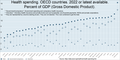 Health spending by country. Percent of GDP (Gross domestic product). For example: 11.2% for Canada in 2022. 16.6% for the United States in 2022. (from Health care)
 -
 Jackson Memorial Hospital in Miami, the primary teaching hospital of the University of Miami‘s Miller School of Medicine and the largest hospital in the United States with 1,547 beds (from Health care)
 -
 “Diagram of the causes of mortality in the army in the East” by Florence Nightingale (from History of medicine)
 -
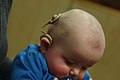 A cochlear implant is a common kind of neural prosthesis, a device replacing part of the human nervous system. (from History of medicine)
 -
 Seven named physicians and botanists of the Classical world from Vienna Dioscurides. Clockwise from top center: Galen, Dioscorides, Nicander, Rufus of Ephesus, Andreas of Carystus, Apollonius Mus or of Pergamon, Crateuas (from History of medicine)
 -
 Patient, Surrey County Lunatic Asylum, c. 1850–58. The asylum population in England and Wales rose from 1,027 in 1827 to 74,004 in 1900. (from History of medicine)
 -
 Yarrow, a medicinal plant found in human-occupied caves in the Upper Palaeolithic period (from History of medicine)
 -
 Galen (129–216 CE), known for his wide insights into anatomy (from History of medicine)
 -
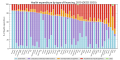 Health expenditure funding types (from Health insurance)
 -
 Infographic showing how healthcare data flows within the billing process (from Medical billing)
 -
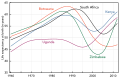 Most countries have seen a tremendous increase in life expectancy since 1945. However, in southern Africa, the HIV epidemic beginning around 1990 has eroded national health. (from History of medicine)
 -
 The Edwin Smith Papyrus, written in the 17th century BCE, contains the earliest recorded reference to the brain. (from History of medicine)
 -
 Global concentrations of health care resources, as depicted by the number of physicians per 10,000 individuals, by country. Data is sourced from a WHO indicator and is from 2017-2023. (from Health care)
 -
-
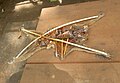 Sometimes traditional medicines include parts of endangered species, such as the slow loris in Southeast Asia. (from Traditional medicine)
 -
 An American billing clerk preparing a detailed invoice. (1992) (from Medical billing)
 -

-
 Sketch of Muslim physician Abu Bakr al-Razi (from History of medicine)
 -
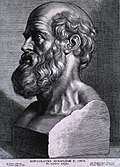 Hippocrates (c. 460–370 BCE). Known as the “father of medicine”. (from History of medicine)
 -
 A Ukrainian monument to the HIV pandemic (from History of medicine)
 -
 Life expectancy vs healthcare spending of rich OECD countries. US average of $10,447 in 2018. (from Health care)
 -
 AMA Code of Medical Ethics (from Medical ethics)
 -
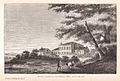 The Quaker-run York Retreat, founded in 1796, gained international prominence as a centre for moral treatment and a model of asylum reform following the publication of Samuel Tuke‘s Description of the Retreat (1813). (from History of medicine)
 -
 A cuneiform terracotta tablet describing a medicinal recipe for poisoning (c. 18th century BCE). Discovered in Nippur, Iraq.
 -
 Neo-Assyrian cuneiform tablet fragment describing medical text, c. 9th to 7th century BCE (from History of medicine)
 -
 A 12th-century manuscript of the Hippocratic Oath in Greek, one of the most famous aspects of classical medicine that carried into later eras (from History of medicine)
 -
 The emergency room is often a frontline venue for the delivery of primary medical care. (from Health care)
 -
 The plinthios brochos as described by Greek physician Heraklas, a sling for binding a fractured jaw. These writings were preserved in one of Oribasius‘ collections. (from History of medicine)
 -
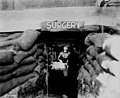 American combat surgery during the Pacific War, 1943 (from History of medicine)
 -
 Medical personnel place sterilized covers on the arms of the daVinci Xi surgical system, a minimally-invasive robotic surgery system, at the William Beaumont Army Medical Center. (from History of medicine)
 -
 Curandera performing a limpieza in Cuenca, Ecuador (from Traditional medicine)
 -
 Mexico City epidemic of 1737, with elites calling on the Virgin of Guadalupe (from History of medicine)
 -
 National Hospital for Neurology and Neurosurgery in London, United Kingdom is a specialist neurological hospital. (from Health care)
 -
 Statue of Robert Koch, father of medical bacteriology, at Robert-Koch-Platz (Robert Koch square) in Berlin (from History of medicine)
 -
-
 Mandrake (written ‘ΜΑΝΔΡΑΓΟΡΑ’ in Greek capitals). Naples Dioscurides, 7th century (from History of medicine)
 -
 Traditional medicine in a market in Antananarivo, Madagascar (from Traditional medicine)
 -
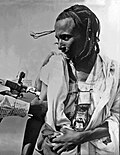 Smallpox vaccination in Niger, 1969. A decade later, this was the first infectious disease to be eradicated. (from History of medicine)
 -
 Depiction of smallpox in Franciscan Bernardino de Sahagún‘s history of the conquest of Mexico, Book XII of the Florentine Codex, from the defeated Aztecs’ point of view (from History of medicine)
 -
 Life Expectancy of the total population at birth among several OECD member nations. Data source: OECD’s iLibrary (from Health insurance)
 -
 healthcare expenditure in Japan by age group (from Health insurance)
 -
 Botánicas such as this one in Jamaica Plain, Boston, cater to the Latino community and sell folk medicine alongside statues of saints, candles decorated with prayers, lucky bamboo, and other items. (from Traditional medicine)
 -
 Emil Kraepelin (1856–1926), the founder of modern scientific psychiatry, psychopharmacology and psychiatric genetics (from History of medicine)
 -
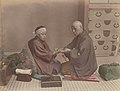 A doctor checks a patient’s pulse in Meiji-era Japan. (from History of medicine)
 -
 Guy’s Hospital in 1820 (from History of medicine)
 -
 Medicine during the First World War – medical transport (from History of medicine)
 -
 Charite in Berlin (from History of medicine)
 -
 Ethical prayer for medical wisdom by Dr Edmond Fernandes (from Medical ethics)
 -
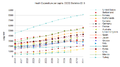 Health Expenditure per capita (in PPP-adjusted US$) among several OECD member nations. Data source: OECD’s iLibrary (from Health insurance)
 -
 “More Doctors Smoke Camels than Any Other Cigarette” advertisement for Camel cigarettes in the 1940s (from Medical ethics)
 -
 Zhang Zhongjing – a Chinese pharmacologist, physician, inventor of the Eastern Han dynasty (from History of medicine)
 -
 Primary care may be provided in community health centers. (from Health care)
 -
 18th-century medical remedies collected by a British Gentry family (from History of medicine)
 -
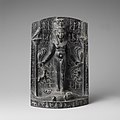 Magical stela or cippus of Horus inscribed with healing encantations (c. 332 to 280 BCE) (from History of medicine)
 -
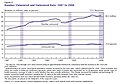 The numbers of Americans lacking health insurance and the uninsured rate from 1987 to 2008 (from Health insurance)
 -
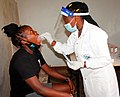 COVID-19 swab testing in Rwanda (2021) (from History of medicine)
 -
 Taoist symbol of Yin and Yang (from Medical ethics)
 -

-

-
 Total healthcare cost per person. Public and private spending. US dollars PPP. For example: $6,319 for Canada in 2022. $12,555 for the US in 2022. (from Health care)


More Did you know (auto generated)

- … that Frederick Warren Freer switched from studying medicine to art after becoming partially deaf?
- … that Mary Robertson was the first woman to receive a Doctor of Science degree in medicine from the University of Cape Town?
- … that Plotkin’s Vaccines was written by the inventor of the rubella vaccine because he felt that vaccinology had become a distinct field of medicine?
- … that Jessie Wright, director of physical medicine at the D.T. Watson Home for Crippled Children, helped invent the rocking bed as a treatment for polio?
- … that medicine dean Sjahriar Rasad was accused of being involved in a conspiracy to assassinate Indonesian president Sukarno?
- … that film director Orlando Bagwell initially thought that he would enter a career in medicine?
Topics


Categories

Recognized content
Extended content
|
|---|
Featured articles
Good articles
Featured pictures
Former featured pictures
|


Associated Wikimedia
The following Wikimedia Foundation sister projects provide more on this subject:
-
 Commons
Free media repository -
 Wikibooks
Free textbooks and manuals -
 Wikidata
Free knowledge base -
 Wikinews
Free-content news -
 Wikiquote
Collection of quotations -
 Wikisource
Free-content library -
 Wikiversity
Free learning tools -
 Wiktionary
Dictionary and thesaurus


