The Modern History Portal
Modern history encompasses the following topics:
- Early modern period – 1450–1750
- Modern era – 1750–1945
- Contemporary history – 1945–present (Full article…)
Selected articles –
-

Spain in the 19th century was a country in turmoil. Under Napoleonic Spain from 1808 to 1814, the massively destructive “Peninsular War” ensued. Following the Spanish Constitution of 1812, Spain was divided between the constitution’s liberal principles and the absolutism personified by the rule of Ferdinand VII, who repealed the 1812 Constitution for the first time in 1814, only to be forced to swear over the constitution again in 1820 after a liberal pronunciamiento, giving way to the brief Trienio Liberal (1820–1823). This brief period came to an abrupt end with Ferdinand again abolishing the 1812 constitution and the start of the Ominous Decade (1823–1833) of absolutist rule for the last ten years of his reign.
Economic transformations throughout the century included the privatisation of communal municipal lands—not interrupted but actually intensified and legitimised during the Fernandine absolutist restorations —as well as the confiscation of Church properties. The early century saw the loss of the bulk of the Spanish colonies in the New World in the 1810s and 1820s, except for Cuba and Puerto Rico.
The regency of Maria Christina and the reign of Isabella II brought reforms repealing the extremes of the absolutist Ominous Decade. Civil wars broke out in the country—the so-called Carlist Wars—pitting the government forces against the reactionary Carlists, a legitimist movement in favour of the ancien régime. Disaffection with Isabella’s government and high disapproval from many people led to repeated military intervention in political affairs and to several revolutionary attempts against the government, including the 1854 revolution. The 1868 Glorious revolution deposed Isabella and installed a provisional government, leading up to the election of a constituent assembly under universal manhood suffrage that elaborated the 1869 constitution of the Kingdom of Spain. The brief spell of Amadeo of Savoy as constitutional monarch was followed after his abdication by the proclamation of the First Spanish Republic, which was replaced after a 1874 coup by the reign of Alfonso XII, bringing the Bourbon dynasty back to power. (Full article…) -
The French Fourth Republic (French: Quatrième république française) was the republican government of France from 27 October 1946 to 4 October 1958, governed by the fourth republican constitution of 13 October 1946. Essentially a reestablishment and continuation of the French Third Republic which governed from 1870 during the Franco-Prussian War to 1940 during World War II, it suffered many of the same problems which led to its end. The French Fourth Republic was a parliamentary republic.
Despite political dysfunction, the Fourth Republic saw an era of great economic growth in France and the rebuilding of the nation’s social institutions and industry after World War II, with assistance from the United States through the Marshall Plan. It also saw the beginning of the rapprochement with France’s longtime enemy Germany, which led to Franco-German co-operation and eventually to the European Union.
The new constitution made some attempts to strengthen the executive branch of government to prevent the unstable situation before the war, but instability remained and the French Fourth Republic saw frequent changes of government – there were 21 administrations in its 12-year history. Moreover, the government proved unable to make effective decisions regarding decolonization of the numerous remaining French colonies. After a series of crises culminating in the Algerian crisis of 1958, the French Fourth Republic collapsed. Wartime leader Charles de Gaulle returned from retirement to preside over a transitional administration empowered to design a new French constitution. The Fourth Republic was dissolved on 5 October 1958 following a public referendum which established the current French Fifth Republic with a strengthened presidency. (Full article…) -
A History of the Modern World is a work initially published by the distinguished American historian at Princeton and Yale universities Robert Roswell Palmer in 1950. The work has since been extended by Joel Colton (from its second edition, 1956) and Lloyd S. Kramer (from its ninth edition, 2001), and currently counts 12 editions. First published in 1950, and translated into six languages, the book is used in more than 1,000 colleges and universities, as well as many high school advanced placement courses.
The second edition (1956), comprises two volumes, 20 main chapters and 110 sub-chapters. The author focuses on World History from a European perspective, and the newer editions also exists under the title “A History of Europe in the Modern World”. (Full article…) -

The Italian colonization of Libya began in 1911 and it lasted until 1943. The country, which was previously an Ottoman possession, was occupied by Italy in 1911 after the Italo-Turkish War, which resulted in the establishment of two colonies: Italian Tripolitania and Italian Cyrenaica. In 1934, the two colonies were merged into one colony which was named the colony of Italian Libya. In 1937, this colony was divided into four provinces, and in 1939, the coastal provinces became a part of metropolitan Italy as the Fourth Shore. The colonization lasted until Libya’s occupation by Allied forces in 1943, but it was not until the 1947 Paris Peace Treaty that Italy officially renounced all of its claims to Libya’s territory. (Full article…) -
Cyprus was part of the British Empire, under military occupation from 1914 to 1925, and a Crown colony from 1925 to 1960. Cyprus became an independent nation in 1960. Cyprus became a republic in the Commonwealth of Nations during the 1961 Commonwealth Prime Ministers’ Conference in March 1961. (Full article…)
-
The Italian colonial empire (Italian: Impero coloniale italiano), sometimes known as the Italian Empire (Impero italiano), was a colonial empire that existed between 1882 and 1960. It comprised the colonies, protectorates, concessions and dependencies of the Kingdom of Italy in the 19th and 20th centuries. At its peak, between 1936 and 1941, the empire in Africa included the territories of present-day Libya, Eritrea, Somalia and Ethiopia (the latter three officially grouped under the name Africa Orientale Italiana, AOI). Outside Africa, Italy controlled the Dodecanese Islands, Albania, and territories in China (only their concession in Tianjin was under full control in their Chinese territories). During World War II, the empire exercised control over four puppet states and occupied several additional territories, although these were not formally annexed.
The Fascist government that came to power under the leadership of the dictator Benito Mussolini after 1922 sought to increase the size of the Italian empire and it also sought to satisfy the claims of Italian irredentists. Systematic “demographic colonization” was encouraged by the government, and by 1939, Italian settlers numbered 120,000–150,000 in Italian Libya and 165,000 in Italian East Africa.
During World War II, Italy allied itself with Nazi Germany in 1940 and it also occupied British Somaliland, western Egypt, much of Yugoslavia, parts of south-eastern France and most of Greece; however, it then lost those conquests and its African colonies to the invading Allied forces by 1943. In 1947, Italy officially relinquished claims on its former colonies. In 1950, former Italian Somaliland, then under British administration, was turned into the Italian Trust Territory of Somaliland until it became independent in 1960. (Full article…) -
During the early modern period, from the Renaissance (c. 1500–1550) to the Revolution (1789–1804), the Kingdom of France was a monarchy ruled by the House of Bourbon (a Capetian cadet branch). This corresponds to the so-called Ancien Régime (“old rule”). The territory of France during this period increased until it included essentially the extent of the modern country, and it also included the territories of the first French colonial empire overseas.
The period is dominated by the figure of the “Sun King”, Louis XIV (his reign of 1643–1715 being one of the longest in history), who managed to eliminate the remnants of medieval feudalism and established a centralized state under an absolute monarch, a system that would endure until the French Revolution and beyond. (Full article…) -
The French Third Republic (French: Troisième République, sometimes written as La IIIe République) was the system of government adopted in France from 4 September 1870, when the Second French Empire collapsed during the Franco-Prussian War, until 10 July 1940, after the Fall of France during World War II led to the formation of the Vichy government. The French Third Republic was a parliamentary republic.
The early days of the French Third Republic were dominated by political disruption caused by the Franco-Prussian War of 1870–1871, which the Third Republic continued to wage after the fall of Emperor Napoleon III in 1870. Social upheaval and the Paris Commune preceded the final defeat. The German Empire, proclaimed by the invaders in the Palace of Versailles, annexed the French regions of Alsace (keeping the Territoire de Belfort) and Lorraine (the northeastern part, i.e. present-day department of Moselle). The early governments of the French Third Republic considered re-establishing the monarchy, but disagreement as to the nature of that monarchy and the rightful occupant of the throne could not be resolved. Consequently, the Third Republic, originally envisioned as a provisional government, instead became the permanent form of government of France.
The French constitutional laws of 1875 defined the composition of the Third Republic. It consisted of a Chamber of Deputies and a Senate to form the legislative branch of government and a president to serve as head of state. Calls for the re-establishment of the monarchy dominated the tenures of the first two presidents, Adolphe Thiers and Patrice de MacMahon. However, growing support for the republican form of government among the French populace and a series of republican presidents in the 1880s gradually quashed prospects of a restoration with the republic being seen as, in the words of Thiers, “the form of government that divides us the least”. (Full article…) -
Habsburg Spain was at the height of its power and cultural influence at the beginning of the 17th century, but military, political, and economic difficulties were already being discussed within Spain. In the coming decades these difficulties grew and saw France gradually taking Spain’s place as Europe’s leading power through the later half of the century. Many different factors, including the decentralized political nature of Spain, inefficient taxation, a succession of weak kings, power struggles in the Spanish court and a tendency to focus on the American colonies instead of Spain’s domestic economy, all contributed to the decline of the Habsburg rule of Spain.
The end of the century also brought the end of Habsburg rule. The 18th century began with the War of the Spanish Succession, which concluded in the establishment of the Bourbon dynasty in Spain. (Full article…) -

Big Pit National Coal Museum Wales
The modern history of Wales starts in 1800 and continues until the present day. In the 19th century, South Wales became heavily industrialised with ironworks; this, along with the spread of coal mining to the Cynon and Rhondda valleys from the 1840s, led to an increase in population. The social effects of industrialisation resulted in armed uprisings against the mainly English owners. Socialism developed in South Wales in the latter part of the century, accompanied by the increasing politicisation of religious Nonconformism. The first Labour Party MP, Keir Hardie, was elected as a junior member for the Welsh constituency of Merthyr Tydfil and Aberdare in 1900.
The first decade of the 20th century was the period of the coal boom in South Wales, when population growth exceeded 20 per cent. Demographic changes affected the language frontier; the proportion of Welsh speakers in the Rhondda valley fell from 64 per cent in 1901 to 55 per cent ten years later, and similar trends were evident elsewhere in South Wales. The Labour Party replaced the Liberals as the dominant party in Wales after the First World War, particularly in the industrial valleys of South Wales. Plaid Cymru was formed in 1925 but initially its growth was slow and it gained few votes at parliamentary elections. Industries, particularly the coal industry, declined after the Second World War. By the early 1990s there was only one deep pit still working in Wales. There was a similar decline in the steel industry, and the Welsh economy, like that of other developed societies, became increasingly based on the expanding service sector.
The results of the 2001 Census showed an increase in the number of Welsh speakers to 21% of the population aged 3 and older, compared with 18.7% in 1991 and 19.0% in 1981. This compares with a pattern of steady decline indicated by census results during the 20th century. (Full article…) -
In many periodizations of human history, the late modern period followed the early modern period. It began in 1789 with the start of the French Revolution and, depending on the author, either ended with the beginning of contemporary history in 1945 with the end of World War II, or includes the contemporary history period to the present day.
Notable historical events in the late 18th century, that marked the transition from the early modern period to the late modern period, include:[according to whom?] the American Revolution (1765–91), French Revolution (1789–99), and beginning of the Industrial Revolution around 1760. (Full article…) -
A modern language (also known as a living language) is any human language that is currently in use as a native language.
The term is used in language education to distinguish between languages which are used for day-to-day communication (such as French and German) and dead classical languages such as Latin and Classical Chinese, which are studied for their cultural and linguistic value. For example, the Modern Language Association tracks student enrollments in Ancient Greek versus Modern Greek, or Biblical Hebrew versus Modern Hebrew, separately.
SIL Ethnologue defines a living language as “one that has at least one speaker for whom it is their first language” (see also Language § Linguistic diversity). (Full article…) -
The Machine Age is an era that includes the early-to-mid 20th century, sometimes also including the late 19th century. An approximate dating would be about 1880 to 1945. Considered to be at its peak in the time between the first and second world wars, the Machine Age overlaps with the late part of the Second Industrial Revolution (which ended around 1914 at the start of World War I) and continues beyond it until 1 945 at the end of World War II. The 1940s saw the beginning of the Atomic Age, where modern physics saw new applications such as the atomic bomb, the first computers, and the transistor. The Digital Revolution ended the intellectual model of the machine age founded in the mechanical and heralding a new more complex model of high technology. The digital era has been called the Second Machine Age, with its increased focus on machines that do mental tasks. (Full article…)
-
The history of the Italian Republic concerns the events relating to the history of Italy that have occurred since 1946, when Italy became a republic after the 1946 Italian institutional referendum. The Italian republican history is generally divided into two phases, the First and Second Republic.
After the fall of the Fascist regime in Italy and the end of World War II, Italian politics and society were dominated by Christian Democracy (DC), a broad-based Christian political party, from 1946 to 1994. From the late 1940s until 1991, the opposition was led by the Italian Communist Party (PCI). Christian Democracy governed uninterrupted during this period, dominating every cabinet and providing nearly every prime minister. It governed primarily with the support of an array of minor parties from the centre-left to the centre-right, including the Italian Socialist Party (PSI), Italian Democratic Socialist Party (PSDI), Italian Republican Party (PRI), and Italian Liberal Party (PLI), and even far-right parties like the Italian Social Movement (MSI). The Communist Party was excluded entirely from government, with the partial exception of the short-lived Historic Compromise, in which the PCI provided external support to a DC minority government from 1976 to 1979.
The political situation was radically transformed in the early 1990s due to two major shocks: the dissolution of the Soviet Union in 1991 and the wide-reaching Tangentopoli corruption scandal from 1992 to 1994. The former caused the dissolution and split of the PCI and splintering of the opposition, while the latter led to the collapse of nearly every established political party in Italy, including Christian Democracy, the PSI, PSDI, PRI, PLI, and others. Anti-establishment sentiment resulted in a 1993 referendum enabling the reform of the electoral system from pure proportional representation to a majoritarian-leaning mixed system. (Full article…) -

The Spanish Republic (Spanish: República Española), commonly known as the Second Spanish Republic (Spanish: Segunda República Española), was the democratic government of Spain from 1931 to 1939. The Republic was proclaimed on 14 April 1931 after the deposition of King Alfonso XIII. It was dissolved on 1 April 1939 after surrendering in the Spanish Civil War to the Nationalists rebels led by General Francisco Franco.
After the proclamation of the Republic, a provisional government was established until December 1931, at which time the 1931 Constitution was approved. Over the next two years of constitutional government, known as the Reformist Biennium, Prime Minister Manuel Azaña initiated numerous reforms. In 1932, religious orders were forbidden control of schools, while the government began a large-scale school-building project. A moderate agrarian reform was carried out. Home rule was granted to Catalonia, with a parliament and a president of its own.
Soon, Azaña lost parliamentary support and President Alcalá-Zamora forced his resignation in September 1933. In the subsequent 1933 election the Spanish Confederation of the Autonomous Right (CEDA) won a plurality. However the President declined to invite its leader, Gil Robles, to form a government, fearing CEDA’s monarchist sympathies. Instead, he invited the Radical Republican Party‘s Alejandro Lerroux to do so. The period following the CEDA’s victory, called “black biennium“, was marked by escalating clashes between the left and the right and state-sanctioned repression against the left. The CEDA exercised indirect influence over the government and in October 1934, was finally successful in forcing the acceptance of three ministries. A general strike was called by the Unión General de Trabajadores (UGT) and the Spanish Socialist Workers’ Party (PSOE). The strike developed into a ‘revolutionary’ uprising, allegedly aiming to overthrow the Republican government, although major action took place only in Asturias, where the rebels officially declared a proletarian revolution and abolished regular money. The rebellion was crushed by the Spanish Navy and the Spanish Republican Army, the latter using mainly Moorish colonial troops from Spanish Morocco. (Full article…)


Need help?
Do you have a question about Modern history that you can’t find the answer to?
Consider asking it at the Wikipedia reference desk.
General images –
The following are images from various modern history-related articles on Wikipedia.
-
 The international community grew in the second half of the century significantly due to a new wave of decolonization, particularly in Africa. Most of the newly independent states, were grouped together with many other so called developing countries. Developing countries gained attention, particularly due to rapid population growth, leading to a record world population of nearly 7 billion people by the end of the century. (from 20th century)
 -

-
 Martin Luther King Jr., an African American civil rights movement leader (Washington, August 1963) (from 20th century)
 -
 Dutch colonial officer with Papuans in the Baliem Valley, Dutch New Guinea, 1958 (from 20th century)
 -
 Countries by real GDP growth rate in 2014. (Countries in brown were in recession.) (from Contemporary history)
 -
 Ayatollah Ruhollah Khomeini was the Shia cleric who led the 1979 Iranian Revolution, overthrowing the Shah and establishing Iran as an Islamic Republic. (from 20th century)
 -

-
 In 1924, Edwin Hubble announced that the Andromeda Nebula is actually a galaxy and that the Milky Way is just one of many galaxies in the universe. (from 20th century)
 -
 The mushroom cloud of the detonation of Little Boy, the first nuclear attack in history, on 6 August 1945 over Hiroshima, igniting the nuclear age with the international security dominating thread of mutual assured destruction in the latter half of the 20th century. (from 20th century)
 -

-
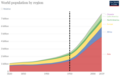 The 20th century saw an explosive increase in human population, rising from about 1.6 billion in 1900 to over 6 billion by 2000, with the Green Revolution (mid-20th century) being a key factor (from 20th century)
 -
 World powers and empires in 1914, just before the First World War.(from 20th century)
 -
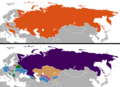 Changes in national boundaries after the end of the Cold War and the dissolution of the Soviet Union in 1991 (from 20th century)
 -
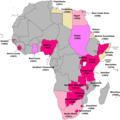 Decolonization of the British Empire in Africa. (from Contemporary history)
 -
 The Empire State Building is an iconic building of the 1930s. (from 20th century)
 -
 The Blue Marble, Earth as seen from Apollo 17 in December 1972. The photograph is taken by LMP Harrison Schmitt. The second half of the 20th century saw humanity’s first space exploration. (from 20th century)
 -

-
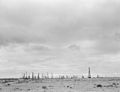 Oil field in California, US, in 1938. The first modern oil well is drilled in 1848 by the Russian engineer F.N. Semyonov, on the Apsheron Peninsula north-east of Baku. (from 20th century)
 -
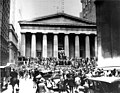 The Wall Street Crash of 1929 was a major factor contributing to the Great Depression (from 20th century)
 -
 Hong Kong, under British administration from 1842 to 1997, is one of the original Four Asian Tigers. (from 20th century)
 -

-
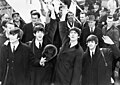 The Beatles in 1964, widely regarded as one of the most influential bands in Western popular music. (from 20th century)
 -

-
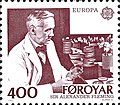 A stamp commemorating Alexander Fleming. His discovery of penicillin changed the world of medicine by introducing the age of antibiotics. (from 20th century)
 -
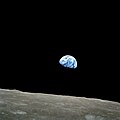 Earthrise, taken on 24 December 1968 by the American astronaut William Anders during the Apollo 8 space mission. It is the first photograph taken of Earth from lunar orbit. (from 20th century)
 -
 The Siege of Leningrad during World War II is widely considered one of the most lethal sieges in history (from 20th century)
 -
-
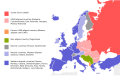 The division of Europe during the Cold War (from Contemporary history)
 -

-
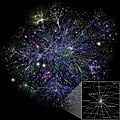 A visualization of the various routes through a portion of the Internet. Partial map of the Internet based in 2005 (from Contemporary history)
 -
 Map of territorial changes in Europe after World War I (as of 1923). (from 20th century)
 -
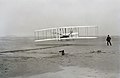 First flight of the Wright brothers‘ Wright Flyer on 7 December 1903 in Kitty Hawk, North Carolina, US; Orville piloting with Wilbur running at wingtip. (from 20th century)
 -
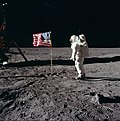 Photograph of the American astronaut Buzz Aldrin during the first moonwalk in 1969, taken by Neil Armstrong. The relatively young aerospace engineering industries rapidly grew in the 66 years after the Wright brothers’ first flight. (from 20th century)


Related portals


Related WikiProjects

Topics
- 16th century
- 17th century
- 18th century
- 19th century
- 20th century
- 21st century
- A History of the Modern World
- Christianity in the modern era
- Contemporary archaeology
- Contemporary history
- Early modern period
- Modern Europe
- Fin de siècle
- Industrial Revolution
- Interwar period
- Late modern period
- Modern literature
- Modern languages
- Modern reenactment
- Modern philosophy
- Modern warfare
- The Journal of Modern History
- Modern history of East Asian martial arts
- Modern history of Los Angeles
- War on terror
Countries
- Modern Cambodia
- History of Cyprus since 1878
- History of modern Egypt
- Modern history of Fiji
- History of India (1947–present)
- Modern history of Iraq
- Modern history of Saudi Arabia
- History of modern Serbia
- Modern history of Syria
- History of modern Tunisia
- Modern history of Ukraine
- Modern history of Wales
- Modern history of Yemen
France
- Early modern France
- Ancien Régime
- Valois-Orléans kings – 1498–1515
- Valois-Angoulême kings – 1515–1589
- Bourbon kings – 1589–1792
- France in the long nineteenth century
- History of France (1900 to present)
- Third Republic – 1870–1940
- Free France & Vichy France – 1940–1944
- Provisional Republic – 1944–1946
- Fourth Republic – 1946–1958
- Fifth Republic – 1958–present
Germany
Greece
Ireland
Italy
- Italian unification (1815-1861)
- History of the Kingdom of Italy (1861–1946)
- History of the Italian Republic (1945 to present)
- Years of Lead (Italy) (1969-1988)
- Berlusconi era (2001 to 2011)
Libya
- Tripolitania Vilayet (1864-1911)
- History of Libya as Italian colony (1911-1943)
- World War II and Allied occupation, see Libya during World War II
- Kingdom of Libya (1951-1969)
- Libya under Gaddafi (1969-2011)
Spain
- Early Modern history of Spain
- Habsburg Spain (16th to 17th centuries)
- Bourbon Spain (18th century)
- 19th-century Spain
- Restoration (Spain) (1874–1931)
- 20th-century Spain
- Second Spanish Republic (1931–1939)
- Francoist Spain (1936–1975)
- History of Spain (1975–present)
United Kingdom
Subcategories

Associated Wikimedia
The following Wikimedia Foundation sister projects provide more on this subject:
-
 Commons
Free media repository -
 Wikibooks
Free textbooks and manuals -
 Wikidata
Free knowledge base -
 Wikinews
Free-content news -
 Wikiquote
Collection of quotations -
 Wikisource
Free-content library -
 Wikiversity
Free learning tools -
 Wiktionary
Dictionary and thesaurus


Discover Wikipedia using portals
-

-

-

-

-

-

-

-

-

-

-
 Random portal
 -


