| Main | Topics and categories | Tasks and projects |
The Politics portal

Politics is the set of activities that are associated with making decisions in groups, or other forms of power relations among individuals, such as the distribution of status or resources. The branch of social science that studies politics and government is referred to as political science.
Politics may be used positively in the context of a “political solution” which is compromising and non-violent, or descriptively as “the art or science of government”, but the word often also carries a negative connotation. The concept has been defined in various ways, and different approaches have fundamentally differing views on whether it should be used extensively or in a limited way, empirically or normatively, and on whether conflict or co-operation is more essential to it.
A variety of methods are deployed in politics, which include promoting one’s own political views among people, negotiation with other political subjects, making laws, and exercising internal and external force, including warfare against adversaries. Politics is exercised on a wide range of social levels, from clans and tribes of traditional societies, through modern local governments, companies and institutions up to sovereign states, to the international level.
In modern states, people often form political parties to represent their ideas. Members of a party often agree to take the same position on many issues and agree to support the same changes to law and the same leaders. An election is usually a competition between different parties.
A political system is a framework which defines acceptable political methods within a society. The history of political thought can be traced back to early antiquity, with seminal works such as Plato‘s Republic, Aristotle‘s Politics, Confucius‘s political manuscripts and Chanakya‘s Arthashastra. (Full article…)
Selected article

A Vindication of the Rights of Woman is a 1791 book of feminist philosophy by Mary Wollstonecraft. In it, Wollstonecraft responds to the educational and political theorists of the eighteenth century who wanted to deny women an education. She argues that women ought to have an education commensurate with their position in society, claiming that women are essential to the nation because they educate its children and because they could be “companions” to their husbands, rather than mere wives. Instead of viewing women as ornaments to society or property to be traded in marriage, Wollstonecraft maintains that they are human beings deserving of the same fundamental rights as men. Wollstonecraft was prompted to write the Rights of Woman by Charles Maurice de Talleyrand-Périgord’s 1791 report to the French National Assembly which stated that women should only receive a domestic education; she used her commentary on this specific event to launch a broad attack against sexual double standards and to indict men for encouraging women to indulge in excessive emotion. Wollstonecraft wrote the Rights of Woman hurriedly in order to respond directly to ongoing events; she intended to write a more thoughtful second volume, but she died before completing it.
Featured picture

Annkathrin Kammeyer (born 1990) is a German Social Democratic politician. She became a Member of the Hamburg Parliament on 7 March 2011, the youngest person ever elected to that body.
 Featured lists –

-


Map of Lycoming County, Pennsylvania with municipal labels showing cities and boroughs (red) and townships (white)
There are 52 municipalities in Lycoming County, Pennsylvania. Under Pennsylvania law, counties have three main types of incorporated municipalities, of which Lycoming County has one city, nine boroughs and 42. As of the most recent United States Census (2020), Pennsylvania has 67 counties, which contain 1,547 townships, 955 boroughs (and 2 towns), and 56 cities. There are no unincorporated areas in the county, since all territory in Pennsylvania is incorporated.
The 52 incorporated municipalities in Lycoming County are the subject of the first list, which gives their names and etymologies, dates settled and incorporated, what they were formed from, area, population in 2020, and a map of their location within the county. Twenty other Pennsylvania counties were formed from or contain land originally in Lycoming County. The second list is of the 21 townships which were formerly incorporated in Lycoming County, and now are part of these other counties. It gives the same information as the first list, based on the current status of these townships. (Full article…) -
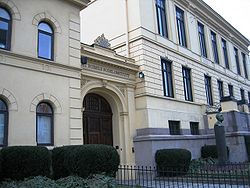
The Norwegian Nobel Institute assists the Norwegian Nobel Committee in selecting recipients of the Nobel Peace Prize and in organising the annual award in Oslo.
The Norwegian Nobel Committee awards the Nobel Peace Prize annually “to the person who shall have done the most or the best work for fraternity between nations, for the abolition or reduction of standing armies and for the holding and promotion of peace congresses.” As dictated by Alfred Nobel‘s will, the award is administered by the Norwegian Nobel Committee and awarded by a committee of five people elected by the Parliament of Norway.
Each recipient receives a medal, a diploma, and a monetary award prize (that has varied throughout the years). It is one of the five prizes established by the 1895 will of Alfred Nobel (who died in 1896), awarded for outstanding contributions in chemistry, physics, literature, physiology or medicine. (Full article…) -

Priestley, painted late in life by Rembrandt Peale (c. 1800)
Joseph Priestley (1733–1804) was a British natural philosopher, Dissenting clergyman, political theorist, theologian, and educator. He is best known for his discovery, simultaneously with Antoine Lavoisier, of oxygen gas.
A member of marginalized religious groups throughout his life and a proponent of what was called “rational Dissent,” Priestley advocated religious toleration and equal rights for Dissenters. He argued for extensive civil rights in works such as the important Essay on the First Principles of Government, believing that individuals could bring about progress and eventually the Millennium; he was the foremost British expounder of providentialism. Priestley also made significant contributions to education, publishing, among other things, The Rudiments of English Grammar, a seminal work on English grammar. In his most lasting contributions to education, he argued for the benefits of a liberal arts education and of the value of the study of modern history. In his metaphysical works, Priestley “attempt[ed] to combine theism, materialism, and determinism,” a project that has been called “audacious and original.” (Full article…) -
The Song dynasty (960–1279) was an imperial dynasty of China that succeeded the period referred to as Five Dynasties and Ten Kingdoms period (907–960) and preceded the Yuan dynasty (1271–1368), which conquered the Song dynasty in 1279. The conventional division into the Northern Song dynasty (960–1127) and Southern Song dynasty (1127–1279) is created by the conquest of northern China by the Jin dynasty (1115–1234) in 1127 and the consequent shift of the capital from Bianjing (present-day Kaifeng) in the north to Lin’an (present-day Hangzhou) in the south.
Below is a complete list of Song emperors, including their temple names, posthumous names, given names, and era names. The dynasty was founded by Zhao Kuangyin, who became Emperor Taizu (r. 960–976) and concluded with the death of Zhao Bing (r. 1278–1279). The last emperor of the Northern Song was Emperor Qinzong (r. 1126–1127), while the first Southern Song emperor was Emperor Gaozong (r. 1127–1162). (Full article…) -
 Indiana’s congressional districts since 2023
These are tables of congressional delegations from Indiana to the United States House of Representatives and the United States Senate.
Since its statehood in 1816, the U.S. state of Indiana has sent congressional delegations to the United States Senate and United States House of Representatives. Each state elects two senators statewide to serve for six years, and their elections are staggered to be held in two of every three even-numbered years—Indiana’s Senate election years are to Classes I and III. Before the Seventeenth Amendment in 1913, senators were elected by the Indiana General Assembly. Members of the House of Representatives are elected to two-year terms, one from each of Indiana’s nine congressional districts. Before becoming a state, the Indiana Territory elected delegates at-large and sent three to Congress, but the territorial delegates were restricted from voting on legislation. (Full article…) -
The governor of Alaska (Iñupiaq: Alaaskam kavanaa) is the head of government of Alaska. The governor is the chief executive of the state and is the holder of the highest office in the executive branch of the government as well as being the commander in chief of the Alaska’s state forces.
Twelve people have served as governor of the State of Alaska over 14 distinct terms, though Alaska had over 30 civilian and military governors during its long history as a United States territory. Only two governors, William A. Egan and Bill Walker, were born in Alaska. Two people, Egan and Wally Hickel, have been elected to multiple non-consecutive terms as governor. Hickel is also noted for a rare third party win in American politics, having been elected to a term in 1990 representing the Alaskan Independence Party. The longest-serving governor of the state was Egan, who was elected three times and served nearly 12 years. The longest-serving territorial governor was Ernest Gruening, who served over 13 years. (Full article…) -
The governor of Washington is the head of government of Washington and commander-in-chief of the state’s military forces. The officeholder has a duty to enforce state laws, the power to either approve or veto bills passed by the Washington Legislature and line-item veto power to cancel specific provisions in spending bills. The Washington governor may also convene the legislature on “extraordinary occasions”.
Washington Territory had 14 territorial governors from its organization in 1853 until the formation of the state of Washington in 1889. Territorial governors were appointed by the president of the United States. Elisha P. Ferry had the longest term of eight years and went on to become the state’s first governor. William H. Wallace was appointed governor but never took office due to being elected as the territory’s congressional delegate. George Edward Cole was appointed governor and took office, but his appointment was never ratified by the U.S. Senate and he was replaced as governor after four months. (Full article…) -
The governor of Arizona is the head of government of the U.S. state of Arizona. As the top elected official, the governor is the head of the executive branch of the Arizona state government and is charged with faithfully executing state laws. The governor has the power to either approve or veto bills passed by the Arizona State Legislature; to convene the legislature; and to grant pardons, with the exception of cases of impeachment. The governor is also the commander-in-chief of the state’s military forces. Arizona is one of the few states that currently does not have a governor’s mansion or other official residence.
Twenty-four people have served as governor over 28 distinct terms. All of the repeat governors were in the state’s earliest years, when George W. P. Hunt and Thomas Edward Campbell alternated as governor for 17 years and, after a two-year gap, Hunt served another term. One governor, Evan Mecham, was impeached by the Arizona House of Representatives and subsequently removed from office following his conviction in the Arizona Senate. Another, Fife Symington, resigned upon being convicted of a felony. The longest-serving governor was Hunt, who was elected seven times and served just under fourteen years. The longest single stint was that of Bruce Babbitt, who was elected to two four-year terms after succeeding to the office following the death of his predecessor, Wesley Bolin, serving nearly nine years total. Bolin had the shortest tenure, dying less than five months after succeeding as governor. Arizona has had five female governors, the most in the United States, and was the first—and until 2019 (when Michelle Lujan Grisham succeeded Susana Martinez in neighboring New Mexico) the only—state where female governors served consecutively. (Full article…) -
There are 23 counties in the U.S. state of Wyoming. There were originally five counties in the Wyoming Territory: Laramie and Carter, established in 1867; Carbon and Albany established in 1868; and Uinta, an annexed portion of Utah and Idaho, extending from Montana (including Yellowstone Park) to the Wyoming–Utah boundary. On July 10, 1890, Wyoming was admitted to the Union with thirteen counties in it. Ten more counties were created after statehood.
Two counties were renamed after their creation. Carter County was renamed Sweetwater County on December 1, 1869. Pease County, formed in 1875, was renamed Johnson County in 1879. (Full article…) -

Map of Sullivan County, Pennsylvania with Municipal Labels showing Boroughs (red) and Townships (white)
Sullivan County, Pennsylvania, United States, is divided into 13 incorporated municipalities. State law defines the two kinds of municipalities present in the county: four boroughs and nine townships. In the 2010 census, the population of Sullivan County was 6,428, making it an “Eighth Class County”, defined by Pennsylvania law as “having a population of less than 20,000 inhabitants”. Its county seat is Laporte, which was the smallest county seat in Pennsylvania by population, as of 2001.
Sullivan County is located in north central Pennsylvania, about 123 miles (198 km) northwest of Philadelphia and 195 miles (314 km) east-northeast of Pittsburgh. The county covers 452 square miles (1,170 km2), of which 450 square miles (1,165 km2) is land and 2 square miles (5.2 km2) (0.53%) is water. Its municipalities range in size from the borough of Dushore with 0.9 square miles (2.3 km2) to Davidson Township with 78.2 square miles (203 km2). Cherry Township has the highest population of any municipality (1,705 or 26.5% of the county total as of 2010), while the borough of Eagles Mere has the lowest population (120 or 1.9%). (Full article…) -

Map of Maryland (highlighted in red) within the United States
The Maryland House of Delegates is the lower house of the Maryland General Assembly, the state legislature of the U.S. State of Maryland. Three delegates are elected from each district, though some districts are divided into sub-districts. In the original state constitution, four delegates were elected from each county to one-year terms, and two were elected from each of the major early cities of Baltimore and Annapolis. Reforms in the 1830s, however, led to the apportionment of delegates by population rather than geography, and by 1922, delegates served four year terms. The modern system of apportionment of seats began in 1972, when 47 districts of roughly equal population were identified, although sub-districts were created to ensure local representation for areas with too little population to warrant an entire district.
Delegates are elected in even years when the President of the United States is not being elected, similar to most other state offices in Maryland. The most recent election was in November 2022. Delegates are not term-limited. (Full article…) -
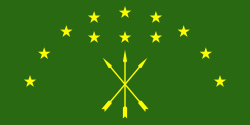
The Republic of Adygea, an enclave within Krasnodar Krai located at the foothills of the Caucasus Mountains, is a federal subject of Russia. It was originally established in 1922 as the Cherkess (Adyghe) Autonomous Oblast within the Russian SFSR for the Adyghe (Circassian) majority that lived in the area. As of the 2010 Census, Adyghe people accounted for 25.2% of the republic‘s population (107,048 people), while Russians accounted for the majority 63.6% (270,714 people).
Since establishing and maintaining the structure of the administrative divisions of the federal subjects is not explicitly specified in the Constitution of Russia as the responsibility of the federal government, this task falls within the scope of the responsibilities of the Republic of Adygea itself. Changes to the administrative-territorial structure of the republic are authorized by the State Council. (Full article…) -

The President of the Indian National Congress is the chief executive of the Indian National Congress (INC), one of the principal political parties in India, founded by retired British civil servant Allan Octavian Hume. Constitutionally, the president is elected by an electoral college composed of members drawn from the Pradesh Congress Committees and members of the All India Congress Committee (AICC). In the event of any emergency because of any cause such as the death or resignation of the president elected as above, the most senior general secretary discharges the routine functions of the president until the Working Committee appoints a provisional president pending the election of a regular president by the AICC. The president of the party has effectively been the party’s national leader, head of the party’s organisation, head of the Working Committee, the chief spokesman, and all chief Congress committees.
After the party’s foundation in December 1885, Womesh Chandra Banerjee became its first president. From 1885 to 1933, the presidency had a term of one year only. From 1933 onwards, there was no such fixed term for the president. During Jawaharlal Nehru‘s premiership, he rarely held the Presidency of INC, even though he was always head of the Parliamentary Party. Despite being a party with a structure, Congress under Indira Gandhi did not hold any organisational elections after 1978. In 1978, Gandhi split from the INC and formed a new opposition party, popularly called Congress (I), which the national election commission declared to be the real Indian National Congress for the 1980 general election. Gandhi institutionalised the practice of having the same person as the Congress president and the prime minister of India after the formation of Congress (I). Her successors Rajiv Gandhi and P. V. Narasimha Rao also continued that practice. Nonetheless, in 2004, when the Congress was voted back into power, Manmohan Singh became the first and only prime minister not to be the president of the party since establishment of the practice of the president holding both positions. (Full article…) -
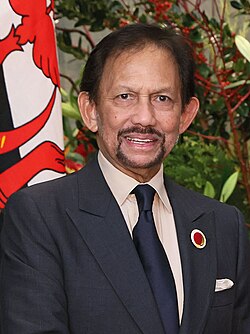
A monarch is the head of a monarchy, a form of government in which a state is ruled by an individual who normally rules for life or until abdication, and typically inherits the throne by birth. Monarchs may be autocrats (as in all absolute monarchies) or may be ceremonial figureheads, exercising only limited or no reserve powers at all, with actual authority vested in a legislature and/or executive cabinet (as in many constitutional monarchies). In many cases, a monarch will also be linked with a state religion. Most states only have a single monarch at any given time, although a regent may rule when the monarch is a minor, not present, or otherwise incapable of ruling. Cases in which two monarchs rule simultaneously over a single state, as is the current situation in Andorra, are known as coregencies.
A variety of titles are applied in English; for example, “king” and “queen”, “prince” and “princess”, “grand duke” and “grand duchess”, “emperor” and “empress”. Although they will be addressed differently in their local languages, the names and titles in the list below have been styled using the common English equivalent. Roman numerals, used to distinguish related rulers with the same name, have been applied where typical. (Full article…) -
The governor of West Virginia is the head of government of West Virginia and the commander-in-chief of the state‘s military forces. The governor has a duty to enforce state laws, and the power to either approve or veto bills passed by the West Virginia Legislature, to convene the legislature at any time, and, except when prosecution has been carried out by the House of Delegates, to grant pardons and reprieves.
Since West Virginia was admitted to the Union on June 20, 1863, during the American Civil War, 37 men have served as governor. Two, Arch A. Moore Jr. (West Virginia’s 28th and 30th governor) and Cecil H. Underwood (West Virginia’s 25th and 32nd governor), served two nonconsecutive terms in office. The longest-serving governor was Moore, who served for three terms over twelve years. The state’s first governor after admission into the Union, Arthur I. Boreman, served the most consecutive terms, resigning a week before the end of his third term. Before the state’s admission, Francis Harrison Pierpont, the “Father of West Virginia,” was elected governor during the Wheeling Convention of 1861. Daniel D.T. Farnsworth was senate president at the time; he filled the last seven days of Boreman’s term and remains the shortest-serving governor. Underwood has the unusual distinction of being both the youngest person to be elected as governor (age 34 upon his first term in 1957) and the oldest to both be elected and serve (age 74 upon his second term in 1997; age 78 at the end of his second term in 2001). The current governor is Republican Patrick Morrisey, who assumed office on January 13, 2025. (Full article…)


Selected quote

Selected biography

Elizabeth II (born 1926) is the constitutional monarch of 16 sovereign states known as the Commonwealth realms, head of the 54-member Commonwealth of Nations, and head of state of the Crown Dependencies and British Overseas Territories. Her father, George VI, acceded to the throne in 1936 on the abdication of his brother Edward VIII. She began public duties during the Second World War, in which she served in the Auxiliary Territorial Service. On George VI’s death in 1952, she became Head of the Commonwealth and Queen of seven independent Commonwealth countries: the United Kingdom, Canada, Australia, New Zealand, South Africa, Pakistan, and Ceylon. Her coronation service in 1953 was the first to be televised. Since her accession, the number of her realms has varied as territories gained independence and some realms became republics. In 1947 she married Prince Philip, Duke of Edinburgh, with whom she has four children: Charles, Anne, Andrew, and Edward. Her reign of 74 years is the second-longest for a British monarch; only Queen Victoria has reigned longer. Elizabeth’s Silver and Golden Jubilees were celebrated in 1977 and 2002; her Diamond Jubilee is being celebrated during 2012.
Did you know (auto-generated) –

- … that after being arrested for organizing a general strike in 1920, S. Girinis was sent to the Soviet Union following a Soviet-Lithuanian exchange of political prisoners?
- … that 42 years after Jilly Cooper‘s How to Stay Married was first published, she described it as “terribly politically incorrect”?
- … that Laurence Sterne was told to burn all copies of his pamphlet that depicts his patron’s rival with a toilet on his head?
- … that United States president Joe Biden began his political career by unseating an incumbent county councilman?
- … the 2025 student elections at 15 constituent campuses of Tribhuvan University could not be held due to political conflicts between student organizations?
- … that in his first month in the job, Wali Mohammad Itoo suspended all 23 opposition representatives when they questioned his integrity as the speaker of the Jammu and Kashmir Legislative Assembly?
More did you know…

- …that the public activist group Citizen Action shut down in 1997 due to the effects of a labor union election campaign funds scandal?
- …that four member states of the European Union have de jure opt-outs and do not participate fully in all common policies?
- …that Cornelius, Oregon is named after pioneer Thomas R. Cornelius, who served in both the Territorial and State legislatures?
- …that the Society of the Friends of Peasants had significant influence on the Danish Constitution of 1849?
- …that although U.S. President Barack Obama is Christian, high-ranked al-Qaida member Ayman al-Zawahiri has falsely claimed that Obama secretly “pray[s] the prayers of the Jews“?
- …that tiao-kuai is the quasi-federal administration system in China?
In this month
- April 1, 1979 – Iran‘s government becomes an Islamic Republic by a 98% vote, overthrowing the Shah officially.
- April 9, 1948 – the period known as La Violencia begins with the assassination of Colombian Liberal Party leader Jorge Eliécer Gaitán. For the next ten years Liberals, Communists and Conservatives would fight each other in the conflict.
- April 9, 2003 – Government of Saddam Hussein overthrown by American forces in Iraq.
- April 19, 2006 – Han Myung-sook becomes South Korea‘s first female Prime Minister.
- April 24, 2005 – Presidential elections in Togo return Faure Gnassingbe to power two months after he was installed by the military following the death of his father, Gnassingbé Eyadéma.
- April 28, 1937 – Saddam Hussein, the President of Iraq was born.
- April 30, 1945 – Adolf Hitler and his wife Eva Braun, commit suicide as the Red Army approached the Führerbunker in Berlin. Karl Dönitz succeeds Hitler as President of Germany; Joseph Goebbels succeeds Hitler as Chancellor of Germany.
News and Current events

- August 11: 4 local government areas in New South Wales, Australia locked down after COVID-19 case
- August 11: Australia: AstraZeneca vaccine access expanded by Victorian government
- August 1: Australia: Victorian lockdown lifted
- July 29: Tunisia’s president dismisses prime minister, suspends parliament
- July 25: Australia: Wikinews interviews Reg Kidd, mayor of the City of Orange, about COVID-19 lockdown and local government
- July 23: South Australia enters week-long lockdown to contain COVID-19 Delta variant spread
- July 21: Technological University Dublin senior lecturer Dr Lorcan Sirr speaks to Wikinews on housing market in Ireland
- July 21: Three rural councils in New South Wales, Australia enter 7-day lockdown
- July 21: Australia: Victoria lockdown extended by a week with 85 active cases recorded
- July 15: California governor signs new state budget, eligible Californians to get stimulus payments
Topics and categories
General images
-

-
 Montenegro’s former president Milo Đukanović is often described as having strong links to Montenegrin mafia. (from Political corruption)
 -
 Sir Halford Mackinder’s Heartland concept showing the situation of the “pivot area” established in the Theory of the Heartland. He later revised it to mark Northern Eurasia as a pivot while keeping area marked above as Heartland. (from Geopolitics)
 -

-
 Detail from Corrupt Legislation (1896) by Elihu Vedder. Library of Congress Thomas Jefferson Building, Washington, D.C. (from Political corruption)
 -
-
 Elizabeth Warren and Bernie Sanders campaigning for extended US Medicare coverage in 2017. (from Health politics)
 -
 The logo and slogan for change.org (from Politics and technology)
 -
 Candlelight protest against South Korean President Park Geun-hye in Seoul, South Korea, January 2017 (from Political corruption)
 -
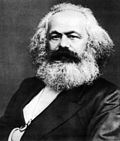 Karl Marx and his theory of Communism, developed with Friedrich Engels, proved to be one of the most influential political ideologies of the 20th century. (from History of political thought)
 -
 US Military Police officer restraining and sedating prisoner while a soldier holds him down (from Political corruption)
 -
 This is the divide of the different political parties in Estonia where in the 2013 elections, over 133,000 people (roughly 21.2% of participating voters) voted over the Internet. The 2013 elections were also the first elections to allow vote verification with mobile devices. (from Politics and technology)
 -
 Protesters in support of American whistleblower Edward Snowden, Berlin, Germany, August 2014 (from Political corruption)
 -
 World map with the concepts of Heartland and Rimland applied (from Geopolitics)
 -
 Savka Dabčević-Kučar, Croatian Spring participant; Europe’s first female prime minister (from Civil and political rights)
 -
 Reformers like the American Joseph Keppler depicted the Senate as controlled by the giant moneybags, who represented the nation’s financial trusts and monopolies. (from Political corruption)
 -
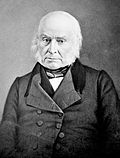 The sixth president of the United States, John Quincy Adams‘ “corrupt bargain” of 1824 is an example of patronage. (from Political corruption)
 -
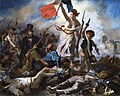 Eugène Delacroix’s Liberty Leading the People (1830, Louvre), a painting created at a time where old and modern political philosophies came into violent conflict. (from History of political thought)
 -
 A memorial to the Great Famine (Ireland), a famine event in Ireland that faced elongated suffering from the UK’s domestic policy failures at the time under the Prime Ministers Sir Robert Peel and Lord John Russell. (from Health politics)
 -

-
 Countries with politicians, public officials or close associates implicated in the Panama Papers leak on April 15, 2016 (from Political corruption)
 -

-
 Malaysia’s former Prime Minister Najib Razak was found guilty in the corruption trial over the multi-billion-dollar 1MDB scandal. He is currently serving his sentence in Kajang Prison. (from Political corruption)
 -
 Ferdinand Marcos (pictured with his daughter Imee) was a Philippine dictator and kleptocrat. His regime was infamous for its corruption. (from Political corruption)
 -
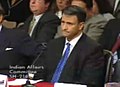 American lobbyist and businessman Jack Abramoff was at the center of an extensive corruption investigation. (from Political corruption)
 -
 Russia handing over the symbolic relay baton for the hosting rights of the 2022 FIFA World Cup to Qatar in June 2018 (from Political corruption)
 -
 Division of the world according to Haushofer’s pan-regions doctrine (from Geopolitics)
 -
 A world map distinguishing countries of the world as federations (green) from unitary states (blue), a work of political science (from Political science)
 -

-
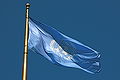 The Flag of the United Nations flying at United Nations Plaza in the Civic Center, San Francisco, California. The UN is one of the key organizations in the process of the political globalization. (from Political globalization)


Related portals


Associated Wikimedia
The following Wikimedia Foundation sister projects provide more on this subject:
-
 Commons
Free media repository -
 Wikibooks
Free textbooks and manuals -
 Wikidata
Free knowledge base -
 Wikinews
Free-content news -
 Wikiquote
Collection of quotations -
 Wikisource
Free-content library -
 Wikiversity
Free learning tools -
 Wiktionary
Dictionary and thesaurus


