The Computer Programming Portal

Computer programming or coding is the composition of sequences of instructions, called programs, that computers can follow to perform tasks. It involves designing and implementing algorithms, step-by-step specifications of procedures, by writing code in one or more programming languages. Programmers typically use high-level programming languages that are more easily intelligible to humans than machine code, which is directly executed by the central processing unit. Proficient programming usually requires expertise in several different subjects, including knowledge of the application domain, details of programming languages and generic code libraries, specialized algorithms, and formal logic.
Auxiliary tasks accompanying and related to programming include analyzing requirements, testing, debugging (investigating and fixing problems), implementation of build systems, and management of derived artifacts, such as programs’ machine code. While these are sometimes considered programming, often the term software development is used for this larger overall process – with the terms programming, implementation, and coding reserved for the writing and editing of code per se. Sometimes software development is known as software engineering, especially when it employs formal methods or follows an engineering design process. (Full article…)
Selected articles –
-
 In computing, a compiler is software that translates computer code written in one programming language (the source language) into another language (the target language). The name “compiler” is primarily used for programs that translate source code from a high-level programming language to a low-level programming language (e.g., assembly language, object code, or machine code) to create an executable program.
There are many different types of compilers which produce output in different useful forms. A cross-compiler produces code for a different central processing unit (CPU) or operating system than the one on which the cross-compiler itself runs. A bootstrap compiler is often a temporary compiler, used for compiling a more permanent or better optimized compiler for a language.
Related software include decompilers, programs that translate from low-level languages to higher-level ones; programs that translate between high-level languages, usually called source-to-source compilers or transpilers; language rewriters, usually programs that translate the form of expressions without a change of language; and compiler-compilers, compilers that produce compilers (or parts of them), often in a generic and reusable way so as to be able to produce many differing compilers. (Full article…) -
In C++ computer programming, allocators are a component of the C++ Standard Library. The standard library provides several data structures, such as list and set, commonly referred to as containers. A common trait among these containers is their ability to change size during the execution of the program. To achieve this, some form of dynamic memory allocation is usually required. Allocators handle all the requests for allocation and deallocation of memory for a given container. The C++ Standard Library provides general-purpose allocators that are used by default; however, custom allocators may also be supplied by the programmer.
Allocators were invented by Alexander Stepanov as part of the Standard Template Library (STL). They were originally intended as a means to make the library more flexible and independent of the underlying memory model, allowing programmers to utilize custom pointer and reference types with the library. However, in the process of adopting STL into the C++ standard, the C++ standardization committee realized that a complete abstraction of the memory model would incur unacceptable performance penalties. To remedy this, the requirements of allocators were made more restrictive. As a result, the level of customization provided by allocators is more limited than was originally envisioned by Stepanov.
Nevertheless, there are many scenarios where customized allocators are desirable. Some of the most common reasons for writing custom allocators include improving performance of allocations by using memory pools, and encapsulating access to different types of memory, like shared memory or garbage-collected memory. In particular, programs with many frequent allocations of small amounts of memory may benefit greatly from specialized allocators, both in terms of running time and memory footprint. (Full article…) -

Ada is a structured, statically typed, imperative, and object-oriented high-level programming language, inspired by Pascal and other languages. It has built-in language support for design by contract (DbC), extremely strong typing, explicit concurrency, tasks, synchronous message passing, protected objects, and non-determinism. Ada improves code safety and maintainability by using the compiler to find errors in favor of runtime errors. Ada is an international technical standard, jointly defined by the International Organization for Standardization (ISO), and the International Electrotechnical Commission (IEC). As of May 2023, the standard, ISO/IEC 8652:2023, is called Ada 2022 informally.
Ada was originally designed by a team led by French computer scientist Jean Ichbiah of Honeywell under contract to the United States Department of Defense (DoD) from 1977 to 1983 to supersede over 450 programming languages then used by the DoD. Ada was named after Ada Lovelace (1815–1852), who has been credited as the first computer programmer. (Full article…) -
Prolog is a logic programming language that has its origins in artificial intelligence, automated theorem proving, and computational linguistics.
Prolog has its roots in first-order logic, a formal logic. Unlike many other programming languages, Prolog is intended primarily as a declarative programming language: the program is a set of facts and rules, which define relations. A computation is initiated by running a query over the program.
Prolog was one of the first logic programming languages and remains the most popular such language today, with several free and commercial implementations available. The language has been used for theorem proving, expert systems, term rewriting, type systems, automated planning, and question answering as well as its original intended field of use, natural language processing. (Full article…) -

PHP is a general-purpose scripting language geared towards web development. It was created by Danish-Canadian programmer Rasmus Lerdorf in 1993 and released in 1995. The PHP reference implementation is now produced by the PHP Group. PHP was originally an abbreviation of Personal Home Page, but it now stands for the recursive backronym PHP: Hypertext Preprocessor.
PHP code is usually processed on a web server by a PHP interpreter implemented as a module, a daemon or a Common Gateway Interface (CGI) executable. On a web server, the result of the interpreted and executed PHP code—which may be any type of data, such as generated HTML or binary image data—can form the whole or part of an HTTP response. Various web template systems, web content management systems, and web frameworks exist that can be employed to orchestrate or facilitate the generation of that response. PHP can be used for programming tasks outside the web context, though non-web uses are rare. PHP code can also be directly executed from the command line.
The standard PHP interpreter, powered by the Zend Engine, is free software released under the PHP License. PHP has been widely ported and can be deployed on most web servers on a variety of operating systems and platforms. (Full article…) -
Steven Paul Jobs (February 24, 1955 – October 5, 2011) was an American businessman, inventor, and investor. A pioneer of the personal computer revolution of the 1970s and 1980s, Jobs co-founded Apple Inc. with his early business partner Steve Wozniak as Apple Computer Company in 1976. After the company’s board of directors fired him in 1985, he founded NeXT the same year and purchased Pixar in 1986, becoming its chairman and majority shareholder until 2007. Jobs returned to Apple in 1997 as CEO, where he was closely involved with the creation and promotion of many of the company’s most influential products until his resignation in 2011.
Jobs was born in San Francisco in 1955 and adopted shortly afterward. He attended Reed College in 1972 before withdrawing that same year. In 1974, he traveled through India, seeking enlightenment before later studying Zen Buddhism. He and Wozniak co-founded Apple in 1976 to further develop and sell Wozniak’s Apple I personal computer. Together, the duo gained fame and wealth a year later with the production and sale of the Apple II, one of the first highly successful mass-produced microcomputers.
Jobs saw the commercial potential of the Xerox Alto in 1979, which was mouse-driven and had a graphical user interface (GUI). This led to the development of the largely unsuccessful Apple Lisa in 1983, followed by the breakthrough Macintosh 128K in 1984, the first mass-produced computer with a GUI. The Macintosh launched the desktop publishing industry in 1985 (for example, the Aldus PageMaker) with the addition of the Apple LaserWriter, the first laser printer to feature vector graphics and PostScript. (Full article…) -

Portion of the calculating machine with a printing mechanism of the analytical engine, as displayed at the Science Museum (London)
The analytical engine was a proposed digital mechanical general-purpose computer designed by the English mathematician and computer pioneer Charles Babbage. It was first described in 1837 as the successor to Babbage’s difference engine, which was a design for a simpler mechanical calculator.
The analytical engine incorporated an arithmetic logic unit, control flow in the form of conditional branching and loops, and integrated memory, making it the first design for a general-purpose computer that could be described in modern terms as Turing-complete. In other words, the structure of the analytical engine was essentially the same as that which has dominated computer design in the electronic era. The analytical engine is one of the most successful achievements of Charles Babbage.
Babbage was never able to complete construction of any of his machines due to conflicts with his chief engineer and inadequate funding. It was not until 1941 that Konrad Zuse built the first general-purpose computer, Z3, more than a century after Babbage had proposed the pioneering analytical engine in 1837. (Full article…) -

Logo since August 2012
Microsoft is a computer technology corporation founded on April 4, 1975, by Bill Gates and Paul Allen in Albuquerque, New Mexico. It is best known for the Windows operating system, the Office productivity software suite, the Microsoft 365 subscription service, the Xbox video gaming brand, the Bing search engine, and the Azure cloud computing platform.
In 1980, Microsoft formed a partnership with IBM to bundle Microsoft’s operating system with IBM computers; with that deal, IBM paid Microsoft a royalty for every sale. In 1985, IBM requested Microsoft to develop a new operating system for their computers called OS/2. Microsoft produced that operating system, but also continued to sell their own alternative, which proved to be in direct competition with OS/2. Windows eventually overshadowed OS/2 in terms of sales. When Microsoft launched several Windows versions in the 1990s, they had captured over 90% market share of the world’s personal computers.
As of June 30, 2015, Microsoft has a global annual revenue of US$86.83 billion (~$112 billion in 2024) and 128,076 employees worldwide. It develops, manufactures, licenses, and supports a wide range of software products for computing devices. (Full article…) -
COBOL (Common Business-Oriented Language; /ˈkoʊbɒl, –bɔːl/) is a compiled English-like computer programming language designed for business use. It is an imperative, procedural, and, since 2002, object-oriented language. COBOL is primarily used in business, finance, and administrative systems for companies and governments. COBOL is still widely used in applications deployed on mainframe computers, such as large-scale batch and transaction processing jobs. Many large financial institutions were developing new systems in the language as late as 2006, but most programming in COBOL today is purely to maintain existing applications. Programs are being moved to new platforms, rewritten in modern languages, or replaced with other software.
COBOL’s design was started in 1959 by CODASYL and was partly based on the programming language FLOW-MATIC, designed by Grace Hopper. It was created as part of a US Department of Defense effort to create a portable programming language for data processing. It was originally seen as a stopgap, but the Defense Department promptly pressured computer manufacturers to provide it, resulting in its widespread adoption. It was standardized in 1968 and has been revised five times. Expansions include support for structured and object-oriented programming. The current standard is ISO/IEC 1989:2023.
COBOL statements have prose syntax such asMOVE x TO y, which was designed to be self-documenting and highly readable. However, it is verbose and uses over 300 reserved words compared to the succinct and mathematically inspired syntax of other languages. (Full article…) -
Java is a high-level, general-purpose, memory-safe, object-oriented programming language. It is intended to let programmers write once, run anywhere (WORA), meaning that compiled Java code can run on all platforms that support Java without the need to recompile. Java applications are usually compiled to bytecode that can run on any Java virtual machine (JVM) regardless of the underlying computer architecture. The syntax of Java is similar to C and C++, but has fewer low-level facilities than either of them. The Java runtime provides dynamic abilities (such as reflective programming (reflection) and runtime code modification) usually unavailable in traditional compiled languages.
Java gained popularity shortly after its release, and has been a popular programming language since then. Java was the third most popular programming language in 2022 according to GitHub. Although still widely popular, there has been a gradual decline in use of Java in recent years with other languages using JVM gaining popularity.
Java was designed by James Gosling at Sun Microsystems. It was released in May 1995 as a core component of Sun’s Java platform. The original and reference implementation Java compilers, virtual machines (VMs), and class libraries were released by Sun under proprietary licenses. As of May 2007, in compliance with the specifications of the Java Community Process, Sun had relicensed most of its Java technologies under the GPL-2.0-only license. Oracle, which bought Sun in 2010, offers its own HotSpot Java virtual machine. However, the official reference implementation is the OpenJDK JVM, which is open-source software used by most developers and is the default JVM for almost all Linux distributions. (Full article…) -
Laboratory Virtual Instrument Engineering Workbench (LabVIEW) is a graphical system design and development platform produced and distributed by National Instruments, based on a programming environment that uses a visual programming language. It is widely used for data acquisition, instrument control, and industrial automation. It provides tools for designing and deploying complex test and measurement systems.
The visual (aka graphical) programming language is called “G” (not to be confused with G-code). It is a dataflow language originally developed by National Instruments. LabVIEW is supported on a variety of operating systems (OSs), including macOS and other versions of Unix and Linux, as well as Microsoft Windows.
The latest versions of LabVIEW are LabVIEW 2024 Q3 (released in July 2024) and LabVIEW NXG 5.1 (released in January 2021). National Instruments released the free for non-commercial use LabVIEW and LabVIEW NXG Community editions on April 28, 2020. (Full article…) -

Flowchart of an algorithm to find the greatest common divisor of two numbers.
In mathematics and computer science, an algorithm (/ˈælɡərɪðəm/ ⓘ) is a finite sequence of mathematically rigorous instructions, typically used to solve a class of specific problems or to perform a computation. Algorithms are used as specifications for performing calculations and data processing. More advanced algorithms can use conditionals to divert the code execution through various routes (referred to as automated decision-making) and deduce valid inferences (referred to as automated reasoning).
In contrast, a heuristic is an approach to solving problems without well-defined correct or optimal results. For example, although social media recommender systems are commonly called “algorithms”, they actually rely on heuristics as there is no truly “correct” recommendation.
As an effective method, an algorithm can be expressed within a finite amount of space and time and in a well-defined formal language for calculating a function. Starting from an initial state and input, a computation occurs at each step, eventually producing output and terminating. The transition between states can be non-deterministic; randomized algorithms incorporate random input. (Full article…) -
Forth is a stack-oriented programming language and interactive integrated development environment designed by Charles H. “Chuck” Moore and first used by other programmers in 1970. Although not an acronym, the language’s name in its early years was often spelled in all capital letters as FORTH. The FORTH-79 and FORTH-83 implementations, which were not written by Moore, became de facto standards, and an official technical standard of the language was published in 1994 as ANS Forth. A wide range of Forth derivatives existed before and after ANS Forth. The free and open-source software Gforth implementation is actively maintained, as are several commercially supported systems.
Forth typically combines a compiler with an integrated command shell, where the user interacts via subroutines called words.
Words can be defined, tested, redefined, and debugged without recompiling or restarting the whole program. All syntactic elements, including variables, operators, and control flow, are defined as words. A stack is used to pass parameters between words, leading to a Reverse Polish notation style. (Full article…) -

D, also known as dlang, is a multi-paradigm system programming language created by Walter Bright at Digital Mars and released in 2001. Andrei Alexandrescu joined the design and development effort in 2007. Though it originated as a re-engineering of C++, D is now a very different language. As it has developed, it has drawn inspiration from other high-level programming languages. Notably, it has been influenced by Java, Python, Ruby, C#, and Eiffel.
The D language reference describes it as follows: (Full article…) -

Ruby is a general-purpose programming language designed with an emphasis on programming productivity and simplicity. In Ruby, everything is an object, including primitive data types. Development of the language began in the mid-1990s by Yukihiro “Matz” Matsumoto in Japan.
Ruby is interpreted, high-level, and dynamically typed; its interpreter uses garbage collection and just-in-time compilation. It supports multiple programming paradigms, including procedural, object-oriented, and functional programming. According to the creator, Ruby was influenced by Perl, Smalltalk, Eiffel, Ada, BASIC, and Lisp. (Full article…)


Selected images
-
 Stephen Wolfram is a British-American computer scientist, physicist, and businessman. He is known for his work in computer science, mathematics, and in theoretical physics.
 -
 Margaret Hamilton standing next to the navigation software that she and her MIT team produced for the Apollo Project.
 -
 A view of the GNU nano Text editor version 6.0
 -

-
 This image (when viewed in full size, 1000 pixels wide) contains 1 million pixels, each of a different color.
 -
 Partial view of the Mandelbrot set. Step 1 of a zoom sequence: Gap between the “head” and the “body” also called the “seahorse valley”.
 -
 Ada Lovelace was an English mathematician and writer, chiefly known for her work on Charles Babbage‘s proposed mechanical general-purpose computer, the Analytical Engine. She was the first to recognize that the machine had applications beyond pure calculation, and to have published the first algorithm intended to be carried out by such a machine. As a result, she is often regarded as the first computer programmer.
 -
 Animation of a Non-uniform rational B-spline surface. Modeled and rendered in Cobalt.
 -
 Grace Hopper at the UNIVAC keyboard, c. 1960. Grace Brewster Murray: American mathematician and rear admiral in the U.S. Navy who was a pioneer in developing computer technology, helping to devise UNIVAC I. the first commercial electronic computer, and naval applications for COBOL (common-business-oriented language).
 -
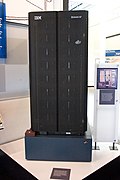 Deep Blue was a chess-playing expert system run on a unique purpose-built IBM supercomputer. It was the first computer to win a game, and the first to win a match, against a reigning world champion under regular time controls. Photo taken at the Computer History Museum.
 -
 A lone house. An image made using Blender 3D.
 -
 Bill Gosper‘s Glider Gun in action
 -
 Partial map of the Internet based on the January 15, 2005 data found on opte.org. Each line is drawn between two nodes, representing two IP addresses. The length of the lines are indicative of the delay between those two nodes. This graph represents less than 30% of the Class C networks reachable by the data collection program in early 2005.
 -
 Output from a (linearised) shallow water equation model of water in a bathtub. The water experiences 5 splashes which generate surface gravity waves that propagate away from the splash locations and reflect off of the bathtub walls.
 -
 A head crash on a modern hard disk drive
 -
 An IBM Port-A-Punch punched card
 -
-
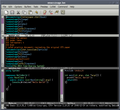
 GNOME Shell, GNOME Clocks, Evince, gThumb and GNOME Files at version 3.30, in a dark theme


Did you know? –

- … that both Thackeray and Longfellow bought paintings by Fanny Steers?
- … that it took a particle accelerator and machine-learning algorithms to extract the charred text of PHerc. Paris. 4 without unrolling it?
- … that a 2021 investigation found that algorithmic amplification on TikTok could steer users towards self-harm content within hours?
- … that Tennyson once quoted Catullus 96 to Thackeray while they dined?
- … that the Gale–Shapley algorithm was used to assign medical students to residencies long before its publication by Gale and Shapley?
- … that Hans-Joachim Hacker worked at a state-owned food processing plant before joining the Volkskammer and Bundestag?
Subcategories

WikiProjects

- There are many users interested in computer programming, join them.
Computer programming news
- 3 May 2026 –
- The Russian Ministry of Industry and Trade will restrict supplies of popular computers starting 27 May 2026. (Reporter)
- 15 April 2026 –
- Shoe company Allbirds announces it will be pivoting to providing computing infrastructure for artificial intelligence, with plans to rename itself to “NewBird AI”. The company’s shares rose nearly 600% on the news. (CNBC)
Topics


| Fields |
| ||||||
|---|---|---|---|---|---|---|---|
| Concepts |
| ||||||
| Orientations | |||||||
| Models |
| ||||||
| Related fields | |||||||


Related portals


Associated Wikimedia
The following Wikimedia Foundation sister projects provide more on this subject:
-
 Commons
Free media repository -
 Wikidata
Free knowledge base -
 Wikiquote
Collection of quotations -
 Wikisource
Free-content library -
 Wikiversity
Free learning tools -
 Wiktionary
Dictionary and thesaurus


