Science and Engineering South (SES, previously SES-5)[1] is a consortium of seven public research-intensive universities in the Southeast of England, who pool their resources and facilities[2] to further research in the fields of science and engineering.[3]
Consortium
Its members accounted for a third of all EPSRC spending in 2013, when the consortium was formed.[4] King’s College London joined the consortium in 2016, becoming the sixth member institution.[5] By March 2017, Queen Mary University of London had joined the consortium. The University of Cambridge, one of the founder institutions, rejoined in 2019 after leaving in 2017.[6]
SES enables a network of high-performance computers available for research and scientific calculations across all its member universities, such as the 12,000 core IRIDIS Intel Westmere supercomputer cluster.[7]
Universities
| University | Undergraduate students (2024/25)[8] | Postgraduate students (2024/25)[8] | Total students (2024/25)[8] | Total academic staff (2024/25)[9] | Total income (2024/25, £ millions)[10] |
Research income (2024/25, £ millions)[10] |
|---|---|---|---|---|---|---|
| East of England | ||||||
| University of Cambridge | 13,345 | 9,220 | 22,565 |
6,180 |
2,457 | 593 |
| Greater London | ||||||
| Imperial College London | 12,080 | 10,440 | 22,525 |
4,730 |
1,474 | 446 |
| King’s College London | 23,200 | 17,670 | 40,870 |
6,355 |
1,377 | 261 |
| Queen Mary University of London | 16,520 | 8,120 | 24,640 |
3,750 |
730 | 161 |
| University College London | 25,705 | 25,610 | 51,315 |
10,400 |
2,163 | 557 |
| South East England | ||||||
| University of Oxford | 14,355 | 11,865 | 26,225 |
8,005 |
2,829 | 801 |
| University of Southampton | 17,645 | 8,140 | 25,785 |
2,965 |
738 | 141 |
-
 Imperial College London
(Faculty Building) -
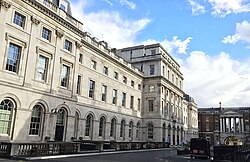 King’s College London
(King’s Building) -
 University of Oxford
(Thom Building) -
 Queen Mary University of London
(The Queens’ Building) -
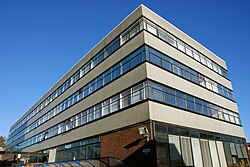 University of Southampton
(Institute of Sound and Vibration Research) -
 University College London
(Engineering Building)


References
- ^ “SES-5 article on UCL website”. 9 May 2013. Retrieved 9 May 2013.
- ^ “Equipment sharing”.
- ^ “SES-5 article on UCL website”. 9 May 2013. Retrieved 9 May 2013.
- ^ “Research heavyweights deny ganging up”. 9 May 2013. Retrieved 9 May 2013.
- ^ “King’s College London Joins SES”. SES. 1 March 2016. Retrieved 5 August 2016.
- ^ “About”. SES. Retrieved 13 March 2017.
- ^ “Science and Engineering South”. Archived from the original on 12 May 2015.
- ^ a b c “Where do HE students study?”. Higher Education Statistics Agency. Students by HE provider: HE student enrolments by HE provider. Retrieved 27 January 2026.
- ^ “Who’s working in HE?”. Higher Education Statistics Agency. Staff numbers by HE provider: HE staff by HE provider and activity standard occupational classification. Retrieved 19 February 2026.
- ^ a b “What is the income of HE providers?”. Higher Education Statistics Agency. Retrieved 21 March 2026.